7 Reasons for Open Bite in Children: [+ 6 Treatment Options]
Do your child’s front teeth stay apart when they close their mouth?
Maybe you notice a small gap between their upper and lower teeth. Your child may also struggle to bite into certain foods. These signs can point to an open bite.
An open bite is a type of bite problem that affects how the teeth come together. Several factors can contribute to this condition, including oral habits and jaw development.
At Palm Valley Pediatric Dentistry & Orthodontics, we help families understand their child’s teeth, bite, and jaw development. Our Orthodontic Care services address many common bite and alignment concerns.
So, what causes an open bite? How can you tell if your child has one? And what treatment options can help?
Let’s take a closer look.
What Is an Open Bite?
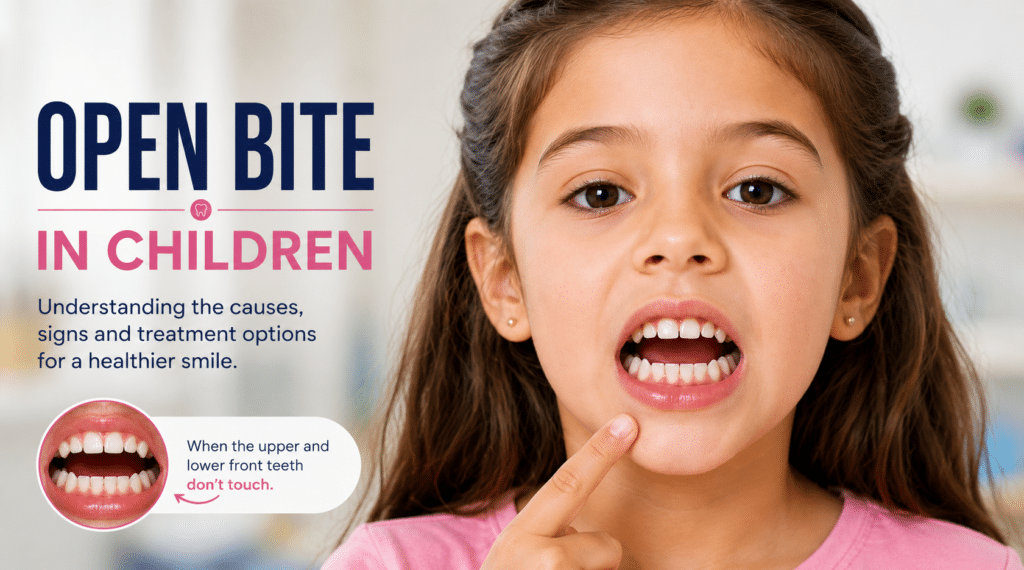
An open bite happens when some upper and lower teeth do not touch when your child closes their mouth.
The gap often appears between the front teeth. Dentists call this an anterior open bite. A posterior open bite affects the back teeth instead.
The American Association of Orthodontists describes an open bite as a condition where upper and lower teeth do not meet properly.
An open bite can affect more than your child’s smile. It can also make biting and chewing harder for some children.
The effect depends on the type and severity of the open bite. An orthodontist can examine your child’s teeth and jaws to understand the problem.
What Does an Open Bite Look Like?
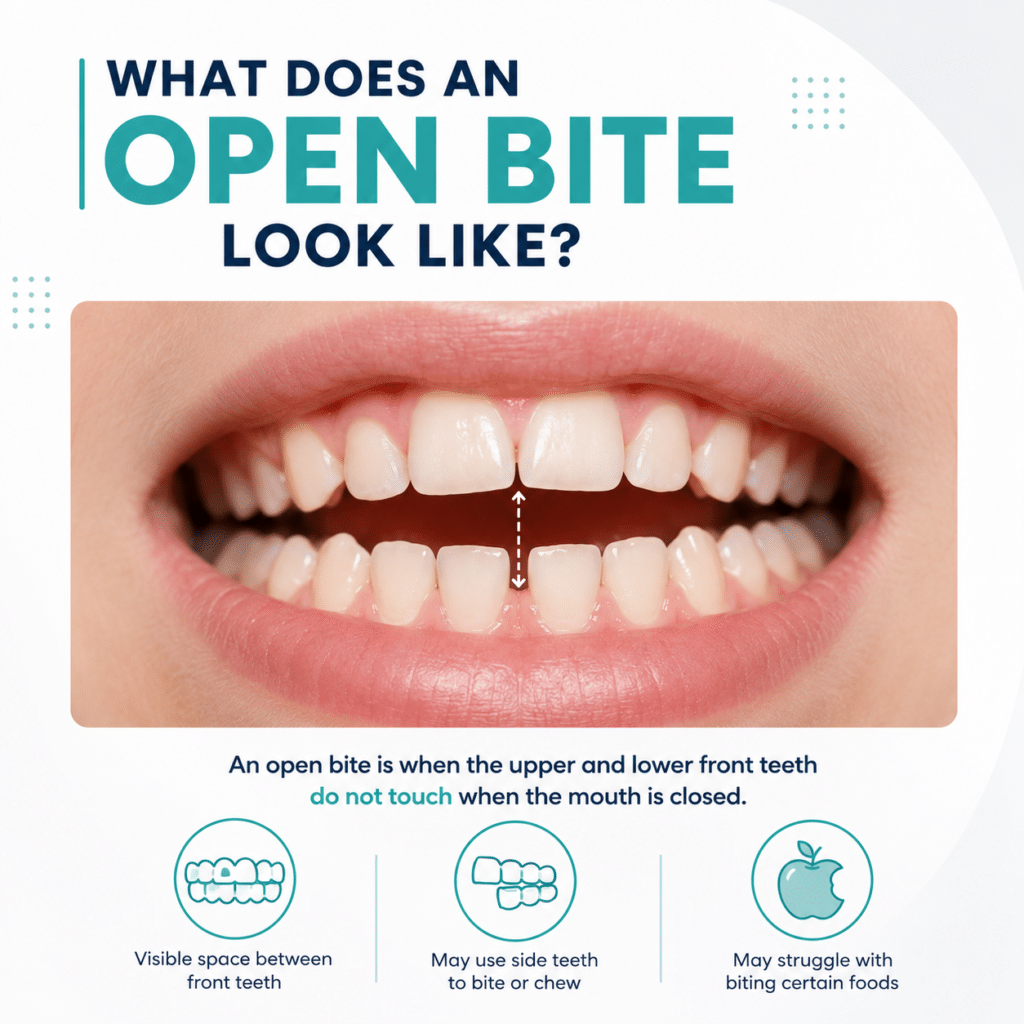
An open bite can become easier to notice when your child closes their mouth.
The upper and lower front teeth may remain apart. You may see a visible space between them when your child bites down.
Some children may have a small gap. Others may have a larger opening between their front teeth.
Your child may also use their side teeth to bite food. They may struggle with foods that require the front teeth.
These signs do not automatically confirm an open bite. An orthodontist should examine your child’s bite before making a diagnosis.

Is Your Child’s Smile on the Right Track?
Early dental visits aren’t just about cleaning teeth, they’re about catching problems before they become costly and painful. Our pediatric specialists create personalized care plans that grow with your child, from their very first tooth through their teen years.
Gentle, kid-friendly care in a welcoming environment.
What Causes an Open Bite?
An open bite can develop for several reasons. Causes may include oral habits, tooth position, jaw growth, or a combination of factors.
The development of an open bite is multifactorial. Prolonged oral habits can also contribute to certain bite changes. Here are some common causes.
1- Thumb or Finger Sucking
Prolonged thumb or finger sucking can affect developing teeth and jaws. A child’s thumb can repeatedly press against the front teeth, which may change their position over time.
A child who continues thumb sucking as their permanent teeth develop may develop an open space between the front teeth.
2- Prolonged Pacifier Use
Pacifiers can provide comfort for young children. However, prolonged pacifier use can affect the position of developing teeth.
A child who uses a pacifier for several years may develop changes in the front teeth. These changes can contribute to an open bite in some children.
3- Tongue Positioning Habits
Tongue position can affect how the front teeth develop. Some children push their tongue against their front teeth while swallowing.
A child may place their tongue between the upper and lower front teeth during swallowing. Repeated pressure can affect the position of the developing teeth.
4- Abnormal Swallowing Patterns
Some children use an unusual tongue position when they swallow. This pattern can place repeated pressure against the front teeth.
A child may push their tongue forward instead of keeping it behind the front teeth.
5- Jaw Growth Patterns
Jaw growth can also influence how the upper and lower teeth come together. Some children naturally develop jaw relationships that contribute to an open bite.
For example, a child’s jaws may grow in a way that leaves space between the front teeth.
6- Airway or Breathing Concerns
Mouth breathing can occur alongside certain orthodontic problems. Airway and nasal concerns may also affect oral development.
For example, a child with ongoing nasal congestion may breathe through their mouth more often. Mouth breathing does not automatically cause an open bite.
7- Differences in Tooth Development
Teeth do not always develop and erupt in exactly the same way. Differences in tooth position or eruption can affect how the upper and lower teeth meet.
Some teeth may erupt in positions that leave a gap between the upper and lower teeth.
How Does an Orthodontist Diagnose an Open Bite?
Your orthodontist starts with a detailed examination of your child’s teeth and bite. They also check the jaw relationship, growth, and dental development.
The diagnosis usually follows a few simple steps.
1. Check the Teeth and Bite
The orthodontist first looks at how your child’s upper and lower teeth come together. They check for gaps, tooth position, and other bite problems.
They may ask your child to close their mouth and bite down. This helps the orthodontist see where the teeth touch and where they remain apart.
2. Examine the Jaws
The orthodontist checks how your child’s upper and lower jaws relate. They also look at jaw growth and facial development.
This step helps show whether jaw growth contributes to the open bite.
3. Ask About Oral Habits
Your orthodontist may ask about thumb sucking, pacifier use, tongue position, or swallowing habits. These habits can affect how the teeth develop.
For example, a child may push their tongue against the front teeth while swallowing. This information can help the orthodontist understand possible causes.
4. Check Tooth Development
The orthodontist looks at how your child’s teeth have developed and erupted. They check whether any teeth sit in unusual positions.
They also consider your child’s age and stage of dental development.
5. Use Dental Images When Needed
Your orthodontist may take photographs or X-rays during the evaluation. These images can provide more information about the teeth and jaws.
Digital scans can also create detailed 3D images of your child’s teeth. PVPD uses digital scanning technology to support orthodontic treatment planning.
6. Look at Overall Growth
Your child’s facial growth can affect how the teeth and jaws fit together. The orthodontist considers this growth when evaluating an open bite.
They also look at your child’s overall orthodontic needs. These details help the orthodontist understand the problem and plan the right treatment.
How Is an Open Bite Treated?
Treatment depends on your child’s age, growth, and the cause of the open bite.
Some children may only need observation, while others may need active orthodontic treatment.
Your orthodontist will choose the approach that best fits your child’s needs. Treatment may also involve more than one step, depending on how your child’s teeth and jaws develop.
1- Habit Correction
Some open bites develop alongside habits such as thumb sucking or prolonged pacifier use. In these cases, the orthodontist may address the habit before moving the teeth.
For example, the team may help your child stop a habit that puts pressure on the front teeth. This can give the teeth a better chance to develop normally.
2- Orthodontic Appliances
Some children may need an orthodontic appliance to help correct an open bite. The appliance depends on your child’s age, dental development, and treatment needs.
An appliance may help guide the teeth or control an oral habit. Your orthodontist will explain how the appliance works and how your child should use it.
Not every child needs an appliance. Your orthodontist will recommend one only when it can support your child’s treatment.
3- Braces
Braces can help move teeth into better positions. They may form part of an open bite treatment plan for older children and teens.
The orthodontist uses braces to guide the teeth gradually. Your child will need regular appointments during treatment.
Braces may also follow another stage of treatment. For example, the orthodontist may address an oral habit before using braces.
4- Clear Aligners
Some teens may receive clear aligners such as Invisalign Express to help move their teeth. Aligners use a series of removable trays to change tooth position gradually.
Your teen needs to wear the aligners as instructed. Following the treatment plan can help keep treatment on track.
Your orthodontist will decide if clear aligners suit your teen’s bite and overall orthodontic needs.
5- Growth Guidance
Your child’s growth can affect how the teeth and jaws develop. Younger children may benefit from treatment that considers their ongoing growth.
The orthodontist may monitor your child’s development before starting active treatment. This approach can help determine the right time for orthodontic care.
Treatment timing depends on your child’s individual growth and dental development.
6- Functional Treatment
Some children may have tongue or swallowing habits that affect their bite. The orthodontist may consider these factors when planning treatment.
Your child may push their tongue against the front teeth while swallowing. The orthodontist may recommend additional support when this habit affects treatment.
Does Your Child Have an Open Bite?
An open bite can affect how your child bites, chews, or speaks.
Several factors can contribute to this bite problem. These factors can include oral habits, tooth position, and jaw development.
The right treatment depends on your child’s individual needs.
At Palm Valley Pediatric Dentistry & Orthodontics, we help families understand these concerns. We provide child-friendly orthodontic care in a comfortable environment.
A proper evaluation gives you clear answers about your child’s bite. It can also help your orthodontist decide whether your child needs treatment now or later.
If you notice a gap between your child’s front teeth, do not ignore it.
Schedule your child’s orthodontic consultation to learn whether your child needs treatment.
Give Your Child the Gift of a Healthy Smile
PVPD doesn’t just treat teeth; we build lasting relationships with families. More confident kids. More comfortable appointments. More reasons to smile. Our patients leave happier and healthier, visit after visit.
Serving families across Scottsdale, because every child deserves a great smile.
People Also Ask
Can an Open Bite Correct Itself?
Some open bites can improve after a child stops a harmful oral habit. An orthodontist can monitor your child’s bite before recommending treatment. Not every open bite corrects without treatment.
Is Open Bite Treatment Painful?
Your child may feel pressure or temporary soreness during treatment. Most children adjust to orthodontic appliances with time. Contact your orthodontist if your child experiences severe pain.
How Long Does Open Bite Treatment Take?
Treatment time varies based on your child’s age, growth, and bite. Some children need shorter treatment, while others need longer care. Your orthodontist can provide a better estimate after an examination.
Can an Open Bite Come Back After Treatment?
Yes, an open bite can return after treatment in some children. Oral habits and tongue posture can affect the results. Retainers and follow-up visits can help maintain the treatment results.
What Can Parents Do at Home?
Help your child follow the orthodontist’s instructions and keep appliances clean. Tell the orthodontist about thumb sucking, tongue habits, or mouth breathing. Do not try to correct an open bite with home methods.
Is an Open Bite a Reason to Worry?
An open bite does not automatically mean something serious. However, it can affect how your child bites, chews, or speaks. An orthodontic evaluation can show whether your child needs treatment.
Pediatric Dental Specialist at PVPD
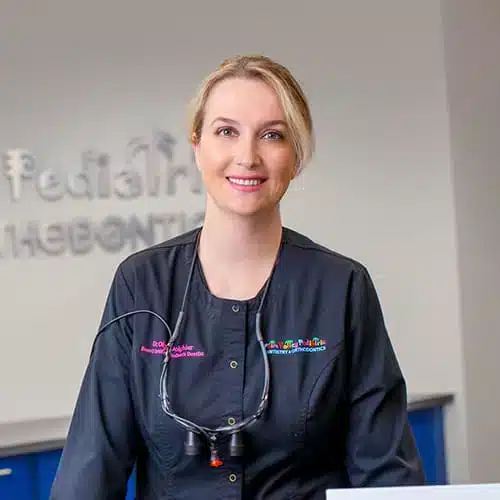
Dr. Olga
Dr. Olga brings years of specialized pediatric dental expertise and a genuine passion for children’s oral health to the PVPD team. She specializes in creating anxiety-free dental experiences and early-intervention care strategies that set children up for a lifetime of healthy smiles.
Medically reviewed by Dr. Olga Dolghier, DDS, Pediatric Dentist at Palm Valley Pediatric Dentistry & Orthodontics.