

5 Different Types of Braces Used in Orthodontics – Best Choice?
Are you curious about the different types of braces used in orthodontics?
Any orthodontics issue can be challenging as it needs your time, money, energy, and patience to recover from it.
Most of the problems start from misalignment and bite-size issues due to childhood habits such as tongue tie, thumb sucking, or any other. Orthodontic braces come in handy to treat such problems and come in various materials, sizes, and forms tailored to individual needs.
Palm Valley Pediatric Dentistry & Orthodontics offers the best orthodontics services for infants, kids, and teenagers, from deep cleaning to braces installment and removal. The most crucial step is deciding the correct braces for your teeth according to your dental needs.
Consult our professionals today, get an appointment to consult your problems, and choose the best metal braces for your teeth.
Read: 10 Effective Tips For Cleaning Teeth With Braces

Is Your Child’s Smile on the Right Track?
Early dental visits aren’t just about cleaning teeth, they’re about catching problems before they become costly and painful. Our pediatric specialists create personalized care plans that grow with your child, from their very first tooth through their teen years.
Gentle, kid-friendly care in a welcoming environment.
How do you choose from different types of orthodontic braces?
Choosing the correct type of braces is necessary to achieve your dental health goals. While selecting the right pair of braces, you must look into several factors, such as:
- Severity of orthodontics issue
- Aesthetics
- Budget
- Lifestyle
- Maintenance
- Aftercare
- Time frame
Apart from this, it would help if you discussed any other questions that are on your mind with your dentist. Look for all the options available, from self-ligating braces to ceramic braces, and choose wisely with your orthodontist consultation.

Deciding which type of braces is best suited for a particular patient can be overwhelming — but it doesn’t have to be!

Different types of braces used commonly
With advancements in the medical field, dentistry has also evolved over the last few years. Now, you can choose from various options according to your preferences.
If you want to keep aesthetics with the braces, you must select the invisible braces to feel confident in public.
Likewise, here we share a list of brace types to help you decide easily.
1- Metal Braces
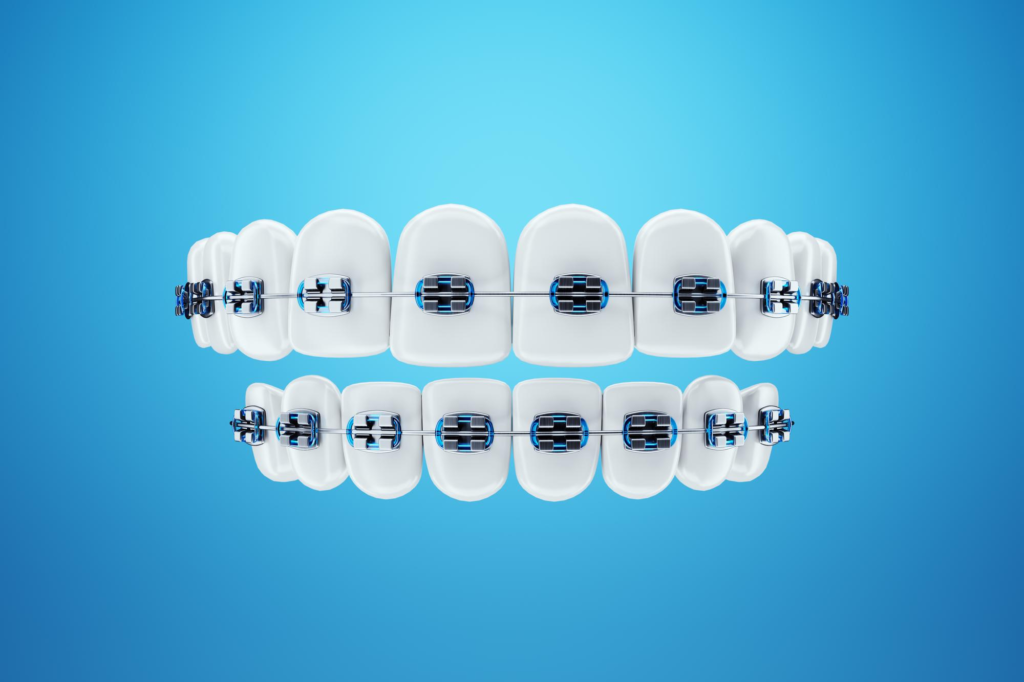
The most commonly used braces are made with stainless steel, and each bracket is bonded with the adhesive known as metal braces.
An orthodontist fixes these braces with glue and places a thin archwire over the shelves. They are tightened according to your oral goals and help shift the teeth over time.
Read: Clear Braces Vs Metal Braces: Which Is Right For You?

Metal braces come in traditional aesthetics, such as silver and gold. In addition, patients can add brackets of any color to make them more fun and a personal choice to wear.
2- Ceramic Braces
They are considered aesthetically pleasing braces, the best alternative to metal braces. Ceramic braces come with explicit or tooth-colored material that is less visible and makes people feel confident in public gatherings.

Ceramic braces work perfectly fine to move teeth, gradually move the teeth, and help the patient achieve their oral health goals. Moreover, ceramic braces cost somewhere between $3000 to $7000, depending upon the type of brackets you choose.
Note that ceramic braces have a drawback: They are more fragile than metal braces. So, maximum care is needed to handle the braces in your teeth.
However, the pros outweigh the cons as it is more comfortable to wear and invisible than metal braces.
3- Self-ligating Braces
Self-ligating braces are similar to traditional metal braces. Still, one significant difference that makes them distinct is that they have an in-built system to hold the archwire on teeth instead of the tiny elastic bands.

The self-ligating braces slide together, reducing overall treatment time with fewer readjusting visits.
The braces type is less visible in the teeth than metal and ceramic braces, lowering the risk of irritation and pain due to elastics.
Choosing this type of braces is one of the best as the braces are easy to wear, efficient for moving teeth, and less visible.
4- Lingual Braces
Lingual braces are another excellent choice for patients who are uncomfortable with the structure of metal and ceramic braces. These braces are placed behind the teeth, which makes them nearly invisible when worn.
One major characteristic is that they need customization depending on the patient’s teeth’ size, structure, and morphology.

The braces are slightly more expensive than all other types but offer an outstanding balance between aesthetics and effectiveness.
Lingual braces make the best choice to straighten the teeth and adjust bite sizes for athletes, models, social media celebrities, influencers, and magicians who don’t want to show their braces on screen.
5- Invisalign
Another type of customizable braces for patients includes Invisalign, made from smooth and comfortable plastic that is easy to wear for more than 20 hours a day. These invisible braces best achieve the desired results within six months to 2 years.

Invisible braces offer an excellent treatment option for patients with bite issues who want to adjust their alignment.
In addition, Invisalign braces are best for aesthetics. They are easily removable for brushing and flossing after a meal.
Choosing The Right One For You
When choosing a type of braces, the best option is to follow your dentist’s recommendation. Metal braces are the most classic, yet less aesthetically pleasing, way to straighten your teeth.
Ceramic braces offer a more discrete appearance and can blend with the color of your teeth better than metal.
Self-ligating braces use a sliding mechanism instead of elastics, providing faster treatment time than traditional braces.

Lingual braces are completely hidden from view as they are placed behind your teeth, while Invisalign provides a comfortable and virtually invisible method of straightening your teeth.
Give Your Child the Gift of a Healthy Smile
PVPD doesn’t just treat teeth; we build lasting relationships with families. More confident kids. More comfortable appointments. More reasons to smile. Our patients leave happier and healthier, visit after visit.
Serving families across Scottsdale, because every child deserves a great smile.
For aesthetic purposes, ceramic and lingual braces are great alternatives; however, many people find ceramics easier to use and maintain than other braces.
Wrapping up:
While choosing the braces, select the one that fits according to your oral health goals, as that’s what matters in the end.
Additionally, consult a well-experienced orthodontist before choosing any type. Consult PVPD orthodontists for all your braces-type concerns and learn more about the side effects of teeth braces in the long term.
FAQs
Which type of braces is best?
Choosing the best braces from different types of braces is difficult. You can select the braces Depending on your needs, such as bite adjustment issues, teeth alignment, and aesthetics.
Remember to consult a dentist before making a final decision.
What are the three categories of orthodontics?
The first category deals with teeth straightening and aesthetic problems due to over-spacing or overcrowding of teeth.
The second category of orthodontics deals with appearance and bit issues.
The highest type of orthodontics deals not only with teeth straightening bite problems but also with jaw alignment.
What are two types of metal braces?
The two types of metal braces include the ones that are traditional and are available with gold and silver brackets with archwires.
The other type of metal brace is self-ligating, which needs a bonding adhesive to hold the teeth.
Which type of braces are more expensive?
The most expensive type of braces is Invisalign, as they are invisible and easy to carry for longer.
Moreover, the braces are easily removable for brushing and flossing, which makes them stand above all in comfort, aesthetics, and price.
Which braces work the fastest?
Currently, clear aligners work the fastest as compared to all other types.
Depending on your dental issues and treatment needs, Invisalign treatment can take only several months without lingering.
Pediatric Dental Specialist at PVPD

Dr. Olga
Dr. Olga brings years of specialized pediatric dental expertise and a genuine passion for children’s oral health to the PVPD team. She specializes in creating anxiety-free dental experiences and early-intervention care strategies that set children up for a lifetime of healthy smiles.
Medically reviewed by Dr. Olga Dolghier, DDS, Pediatric Dentist at Palm Valley Pediatric Dentistry & Orthodontics.


