
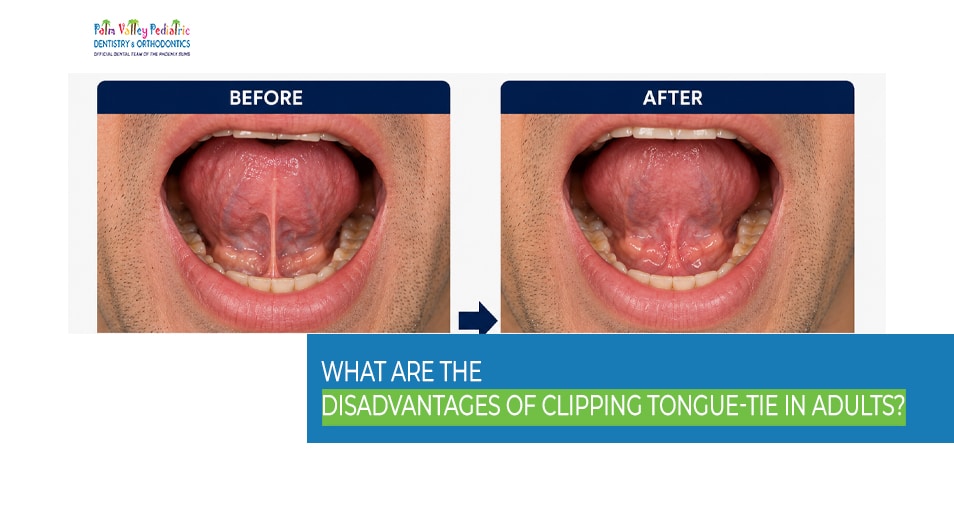
What are the Disadvantages of Clipping Tongue-Tie in Adults?
The disadvantages of clipping a tongue-tie in adults may include temporary pain, swelling, bleeding, speech discomfort, risk of infection, scar tissue formation, and tongue soreness during recovery.
In some cases, adults may also require speech therapy or tongue exercises after treatment to support proper healing and improve mobility.
This article is based on guidance from the dental team at Palm Valley Pediatric Dentistry & Orthodontics, which provides tongue-tie evaluations and laser release treatment for children and adults using advanced laser technology and patient-focused care.
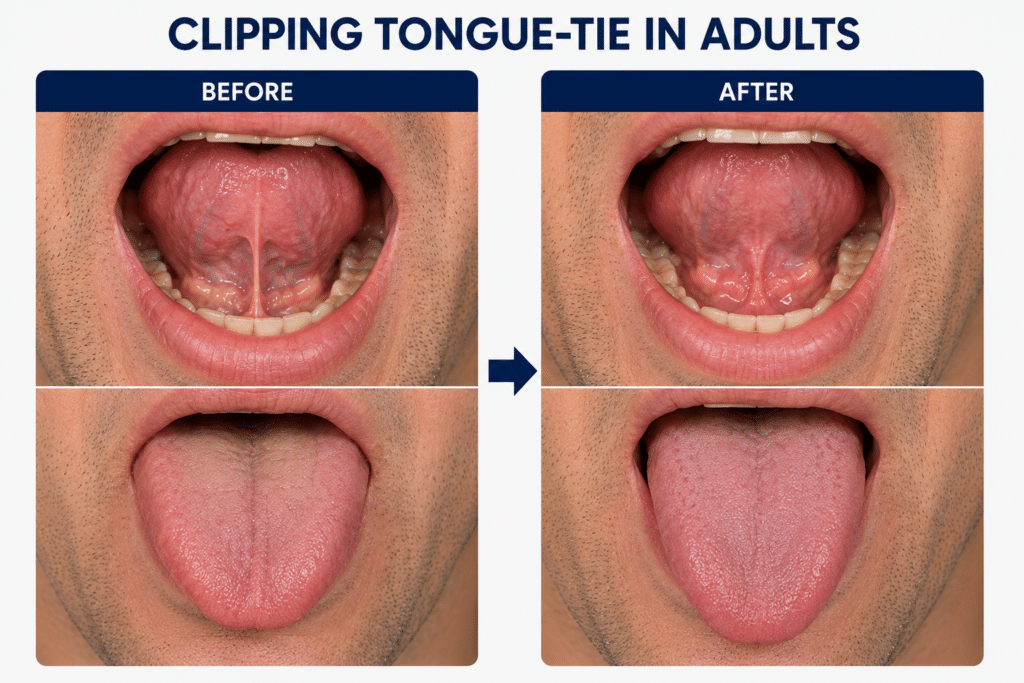
What Is Tongue-Tie in Adults?
Tongue-tie happens when the small band of tissue under the tongue is unusually tight or restrictive. This tissue attaches the tongue to the bottom of the mouth and can limit normal tongue movement.
Many adults are born with tongue-tie without realizing it may contribute to speech, swallowing, breathing, or jaw tension issues.
Other common adult tongue-tie challenges are:
What Is Tongue-Tie Clipping or Release?
Tongue-tie release treatment involves loosening or removing the frenulum tissue under the tongue to improve movement.
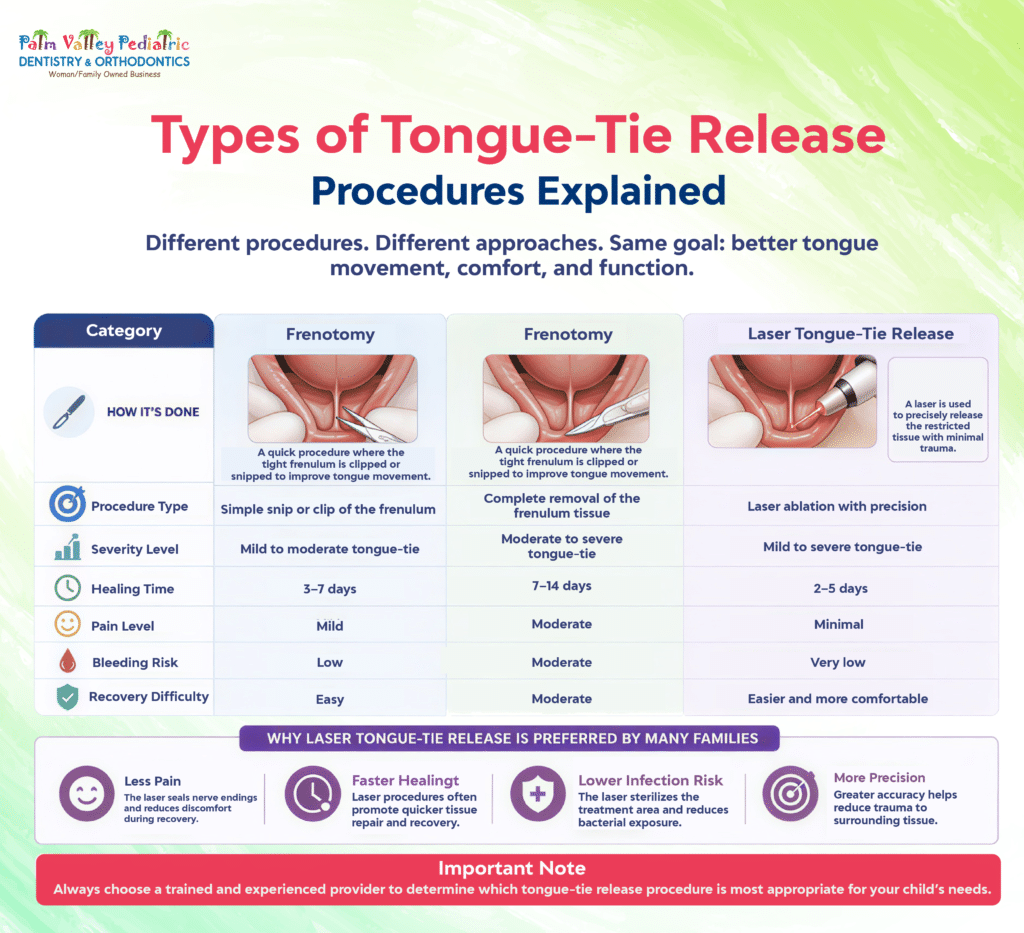
The procedures for tongue-tie release are:
Frenotomy
Frenotomy is a simple procedure for the less severe cases. In this treatment, restricted tissues are released with scissors.
Frenectomy
It is performed when the frenulum is thicker and significantly restricted. It removes part or all of the restrictive frenulum tissue and requires a slightly longer healing.
Laser Tongue-Tie Release
It is the most modern option. It includes a soft laser to release the tissues. The following are numerous benefits of having a Laser Tongue-Tie Release:
Many state-of-the-art facilities use advanced laser technologies such as LightScalpel CO2 laser technology to make tongue-tie release as comfortable and efficient as possible. Laser procedures are often preferred for improved precision and recovery.
Disadvantages of Clipping Tongue-Tie in Adults
Many adults live with tongue-tie for years before seeking treatment for speech discomfort, jaw tension, swallowing issues, or limited tongue movement. Releasing a tongue-tie can improve tongue movement and support better oral function.
While the procedure can improve movement, understanding the recovery process and possible side effects is important.
This guide covers tongue-tie release in adults, including potential disadvantages, a week-by-week recovery timeline, and tips for the best outcome.
Adults often experience a longer recovery because muscles and speech patterns are more established.
Temporary Pain and Discomfort
Temporary soreness is common because the tissue under the tongue is highly sensitive. Most discomfort happens within the first 24 to 48 hours and normally improves over the next few days.
These can happen right after the treatment:
Swelling and inflammation
Some swelling under the tongue is normal after the procedure and usually improves within a few days.
Staying hydrated and choosing soft foods can help reduce irritation and make recovery more comfortable.
Speech Adjustment Period
Many adults experience temporary speech changes as their tongues adjust to increased movement. It is the common effect of chipped tongue-tie in adults. It is important to understand that this can also happen after the procedure.
This happens because the tongue and surrounding muscles have adapted to restricted movement over time.
After release, your tongue suddenly has more room to move, and your muscles and speech patterns are still adjusting to the increased movement.
Difficulty Eating During Recovery
For the first few days, tenderness and chewing discomfort may make eating uncomfortable.
Soft foods like soup, yogurt, and porridge can reduce the discomfort and make it manageable.
Risk of Reattachment
Reattachment is one of the biggest concerns after tongue-tie release. It can occur if you neglect proper stretching exercises or aftercare, causing the tissue to heal too tightly again.
Proper stretching exercises and aftercare help reduce the risk of reattachment.
Following your dentist’s stretching and aftercare instructions greatly reduces the risk of reattachment.
Muscle Soreness in Your Jaw and Neck
Jaw and neck soreness may occur as muscles adjust to improved tongue movement.
This typically settles down as your muscles adapt. For a short time after the procedure, you may notice:
Emotional Adjustment
Emotional changes can occur after the procedure, mainly because the mouth is adjusting to moving differently.
| Recovery Stage | What to Expect |
| First Few Days | Soreness, swelling, mild discomfort |
| First 2 Weeks | Improved healing and tongue mobility |
| Long-Term Recovery | Muscle retraining and speech adaptation |

Is Your Child’s Smile on the Right Track?
Early dental visits aren’t just about cleaning teeth, they’re about catching problems before they become costly and painful. Our pediatric specialists create personalized care plans that grow with your child, from their very first tooth through their teen years.
Gentle, kid-friendly care in a welcoming environment.
Recovery Requires Exercises and Therapy
Many patients use stretching exercises and muscle training during recovery to increase flexibility and reduce tension.
These exercises help improve swallowing patterns, reduce tension, and lower the risk of reattachment.
The most common therapies that benefit adults the most are:
Is Tongue-Tie Release More Difficult for Adults Than Children
Yes, tongue-tie release is more difficult for adults than for children. The recovery process can be longer because established muscle habits take time to change.
But still, the treatment is highly beneficial.
| Factor | Children | Adults |
| Muscle Habits | Still developing | Years of compensation |
| Healing | Faster | Slower |
| Speech Changes | Minimal | More noticeable |
| Long-Term Results | Excellent | Excellent with proper care |
FAQs
Is tongue-tie surgery painful for adults?
Most adults experience some soreness and discomfort for the first few days. Laser procedures may reduce discomfort and recovery time, with pain usually settling within one to two weeks.
How long does adult tongue-tie recovery take?
Initially, healing, such as soreness, discomfort, and pain, takes 1 to 2 weeks. But full muscle adaptation may take longer.
Can tongue-tie grow back after clipping?
Reattachment may occur without proper aftercare and stretching exercises.
Can tongue-tie affect jaw pain?
Yes, restricted tongue movement can lead to jaw pain and muscle tension. It takes 1 to 2 weeks to recover properly.
Is laser tongue-tie release better?
Laser tongue-tie release is often preferred for its precision and faster recovery. It is the most modern option and is used efficiently nowadays.
Pediatric Dental Specialist at PVPD

Dr. Olga
Dr. Olga brings years of specialized pediatric dental expertise and a genuine passion for children’s oral health to the PVPD team. She specializes in creating anxiety-free dental experiences and early-intervention care strategies that set children up for a lifetime of healthy smiles.
Medically reviewed by Dr. Olga Dolghier, DDS, Pediatric Dentist at Palm Valley Pediatric Dentistry & Orthodontics.


