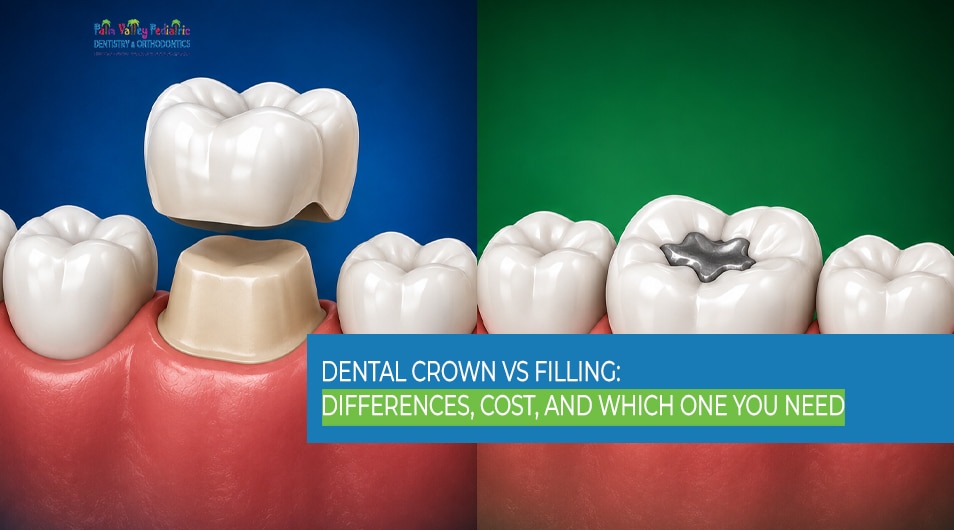
Dental Crown vs Filling: Differences, Cost, and Which One You Need
A filling is best for small cavities and minor tooth damage. A crown is used when a tooth is severely weakened, cracked, or heavily decayed. Crowns offer more protection, while fillings preserve more natural tooth structure.
Most people only have a basic understanding of crowns and fillings and are unsure how they differ.
Dental fillings and crowns both restore and protect the teeth, but they’re not interchangeable. This guide explains the difference between dental crowns and fillings.
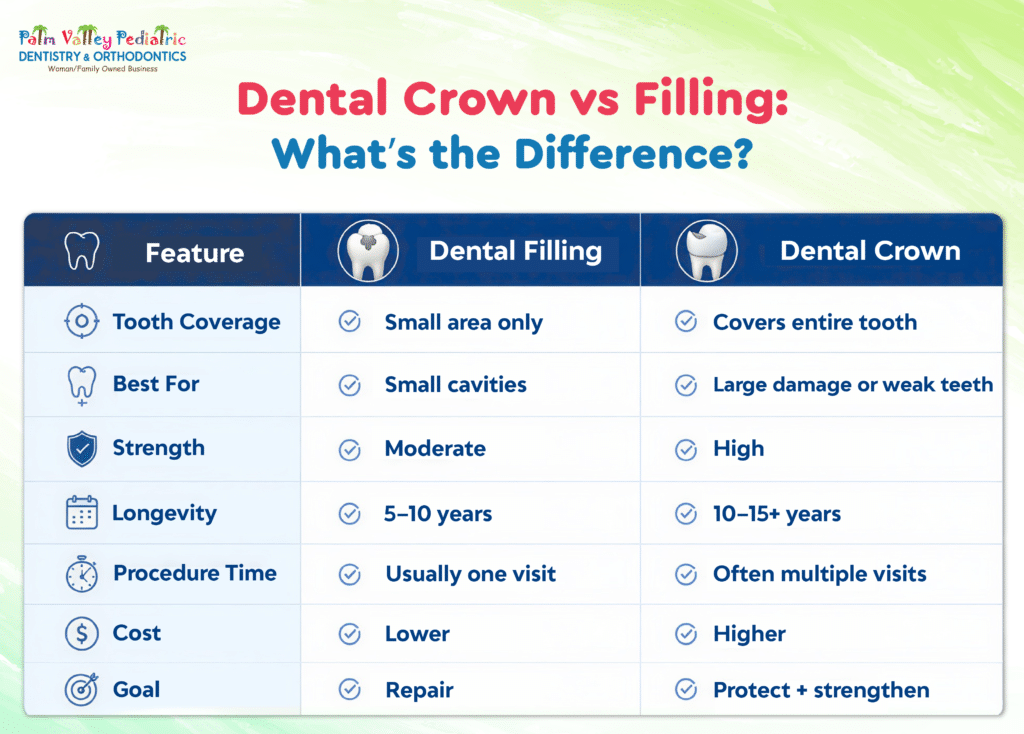
Crown vs Filling: Quick Answer
- Fillings repair small cavities and minor damage.
- Crowns cover and protect severely damaged or weakened teeth.
- Fillings preserve more natural tooth structure.
- Crowns provide stronger long-term protection.
What is a Dental Filling
Dentists commonly use dental fillings to repair teeth damaged by small cavities, minor cracks, fractures, or early-stage decay.
Your dentist removes the decayed portion of the tooth, cleans the area, and fills it with a durable material to restore and protect the tooth. Dentists typically complete this procedure in a single appointment.
When Dentists Recommend Fillings
This treatment is recommended when:
- A small to medium cavity in the tooth
- The damage is limited to one or two surfaces of the tooth.
- A minor chip or crack doesn’t compromise the internal structure.
- The decay is still in its early stages.
Types of Dental Filling
These are the most common types of dental fillings that are in practice:
- Composite resin: It is a natural tooth color that blends seamlessly. It typically lasts around 10 to 15 years.
- Amalgam (silver fillings): A durable metal alloy commonly used for back teeth because of its durability.
- Ceramic: A custom-made, aesthetic, and resistant to staining, but it can be more costly.
- Gold fillings: Extremely durable and long-lasting, lasts for 15-20 years on average, and sometimes more. It is less common due to the cost and appearance.
Not sure whether you have a cavity or just a stain? Our guide on tooth cavity vs. stains explains how to tell the difference and when to see a dentist.

Is Your Child’s Smile on the Right Track?
Early dental visits aren’t just about cleaning teeth, they’re about catching problems before they become costly and painful. Our pediatric specialists create personalized care plans that grow with your child, from their very first tooth through their teen years.
Gentle, kid-friendly care in a welcoming environment.
What is a Dental Crown
A dental crown is a custom-made cap, sized to your tooth, that covers the entire visible portion of the tooth down to the gumline. It restores a tooth’s size, shape, strength, and appearance after significant damage and decay.
The process usually requires two dental visits. During the first visit, the dentist prepares the tooth. During the second visit, the dentist places and permanently cements the fabricated crown. Dental crowns are suitable for children and adults.
When Dentists Recommend a Crown
When these issues affect the teeth, dentists usually recommend a dental crown.
- Severe decay has damaged the tooth.
- A large cavity prevents the dentist from treating the tooth with a filling.
- An existing filling has failed.
- Cracks and fractures have damaged the tooth.
- The dentist has performed a root canal, and the tooth requires reinforcement.
- A tooth bridge needs support from neighboring teeth.
Types of Dental Crown
Dentists worldwide commonly use these types of dental crowns.
- Porcelain or ceramic: It is ideal for front teeth because it closely matches the natural appearance of teeth.
- Zirconia: It is suitable for both front and back teeth. Zirconia is extremely strong and natural-looking.
- Porcelain-fused-to-metal (PFM): Besides its durability, it may show metal along the gumline over time.
- Metal (gold or alloy): The most durable option, but less common because of its appearance.
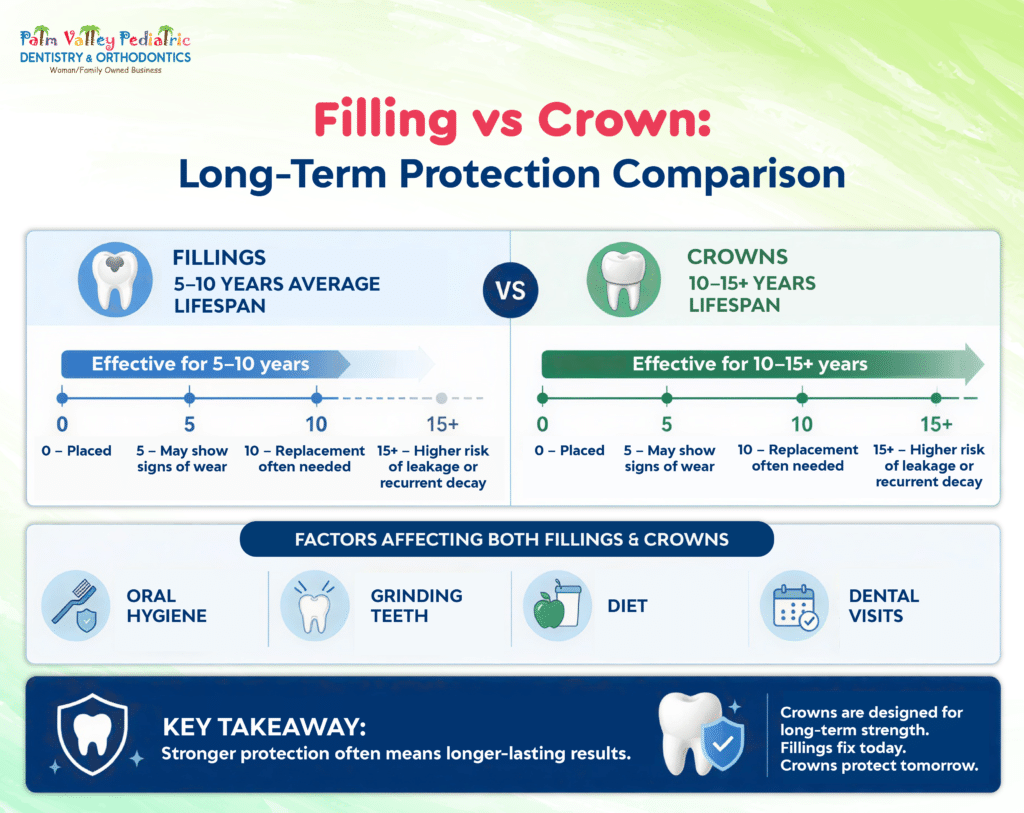
Key Difference: Crown vs Filling
| Feature | Dental Filling | Dental Crown |
| Damage Level | Small / Minor | Large / Severe |
| Cost | Lower | Higher |
| Durability | 5–10 years | 10–15+ years |
| Procedure | Simple, requires one visit | Complex usually needs two visits or more |
| Total Coverage area | Only the damaged area | A cap covers the entire tooth |
| Natural Tooth Preserved | More tooth is preserved, less invasive | Less tooth is preserved. |
| For Children (Baby Teeth) | A filling is used for small cavities in baby teeth | A crown for children helps to cope with severely decayed or damaged baby teeth |
When You Need a Filling vs. a Crown
Are you having a small cavity or facing early-stage tooth decay?
A filling is usually enough to treat minor decay or small cavities. However, when damage weakens or affects a large portion of the tooth, the dentist may recommend a crown. In these cases, a filling alone cannot provide enough protection. As a result, dentists often recommend a crown when:
- A large cavity has damaged the tooth.
- The filling fell out.
- The patient underwent a root canal procedure.
- A fracture damaged the tooth.
- Chips or cracks damaged the tooth.
Pros and Cons of a Dental Filling and a Crown
Pros of Dental Filling
Here are the advantages of filling
- Cost effective
- Prevent further damage
- Preserve the tooth intact
- Required one visit to complete
Cons of Dental Filling
Below are the disadvantages of dental fillings:
- Less durable than the crown
- Not suitable for extensive damage
Pros of Dental Crowns
These are the advantages of having a dental crown:
- Restores the strength of the damaged teeth
- Offer long-term durability
- Improves the appearance of the tooth
- Prevent further decay of the teeth
Cons of Dental Crowns
These are the disadvantages of a dental crown:
- Requires removal of more natural tooth structure
- Higher upfront cost
- Involves a longer procedure.
How to know which option is right for you?
At Palm Valley Pediatric Dentistry & Orthodontics, dentists typically recommend fillings for early tooth decay because they preserve more of the natural tooth structure. Crowns are often recommended after root canal treatment or severe tooth fractures to restore strength and help prevent tooth loss.
The right treatment depends on the condition of the tooth and your dentist’s evaluation. The dentist makes the clinical judgment after examining the affected tooth through X-rays and visual inspection.
When the damage remains limited, a filling provides an appropriate conservative solution and helps maintain the tooth’s overall structure. It preserves more of your natural tooth. To avoid the high risk of damage, a crown is the gold standard for long-term protection.
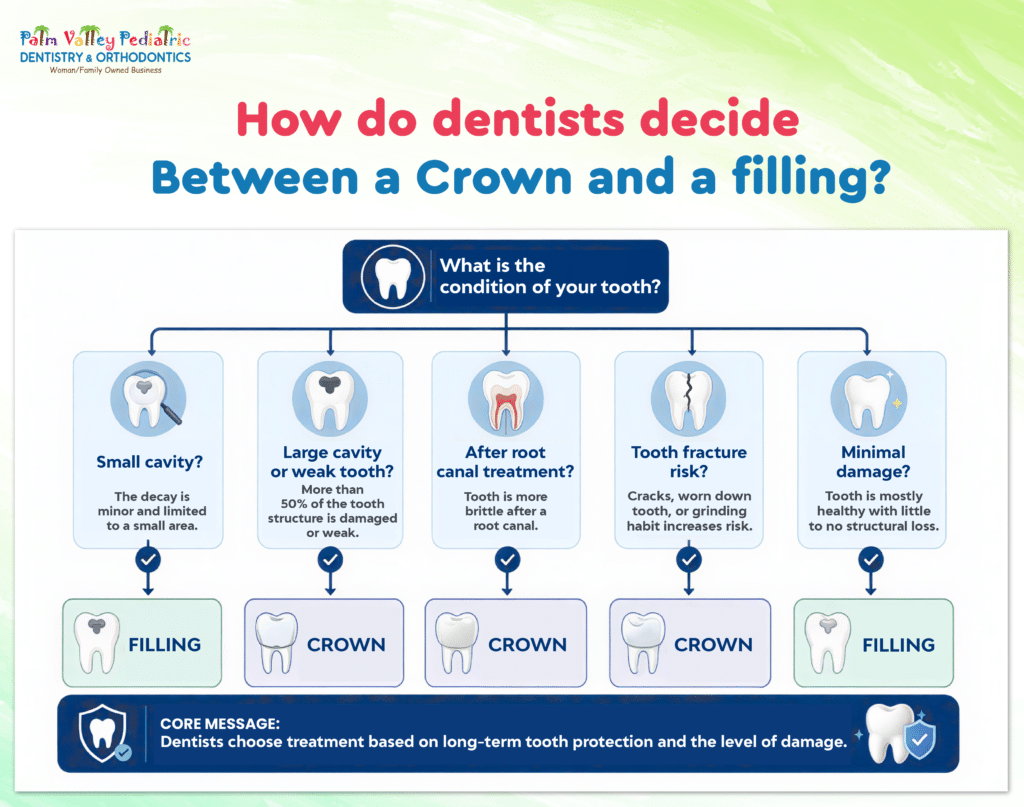
However, the basic knowledge helps you find which option you align with and can assist you in having an informed conversation with your dentist
What Happens If You Delay Treatment
If you do not diagnose the damage early and treat it properly, you may face serious consequences over time.
- A decayed tooth can develop into a dental abscess, causing severe infection, leading to swelling, pain, and even pus.
- Severe damage can make the tooth impossible to save.
- A simple procedure can become expensive if not treated in time.
- Deep decay may reach the nerve, requiring a root canal.
If you are unsure whether your tooth needs a filling or a crown, schedule an appointment with the dental team at Palm Valley Pediatric Dentistry & Orthodontics, Scottsdale. A dental exam and X-ray can help determine the safest and most effective long-term treatment for your tooth.
Is Your Child’s Smile on the Right Track?
Early dental visits aren’t just about cleaning teeth, they’re about catching problems before they become costly and painful. Our pediatric specialists create personalized care plans that grow with your child, from their very first tooth through their teen years.
Gentle, kid-friendly care in a welcoming environment.
FAQs
Is it better to have a filling or a crown?
A filling is better for small cavities, while a crown is recommended for severely damaged or weakened teeth.
Why do dentists recommend crowns?
If the damage is too large, dentists recommend crowns. Crowns help restore and protect severely damaged or weakened teeth.
Why is a root canal expensive?
A root canal is expensive because it cleans the interior of the tooth. This treatment requires time and multiple steps to complete.
Will a tooth rot under a crown?
Sometimes, it can. If you don’t maintain the proper oral hygiene prescribed by your dentists as aftercare. This can happen, and decay can still develop underneath a crown if oral hygiene is neglected.
Are fillings permanent?
No filing is permanent; they last 10-15 years and need to be replaced after that.
Do crowns hurt?
No, the procedure is done under anesthesia, so you won’t feel pain during treatment. But you may experience discomfort for some time after the procedure.
Can children get dental crowns?
Yes, to protect the baby’s teeth. Children can get a dental crown treatment to prevent further damage.
Pediatric Dental Specialist at PVPD

Dr. Olga
Dr. Olga brings years of specialized pediatric dental expertise and a genuine passion for children’s oral health to the PVPD team. She specializes in creating anxiety-free dental experiences and early-intervention care strategies that set children up for a lifetime of healthy smiles.
Medically reviewed by Dr. Olga Dolghier, DDS, Pediatric Dentist at Palm Valley Pediatric Dentistry & Orthodontics.