

Can You Chew Gum With Braces? 10 Dr. Olga’s Tips
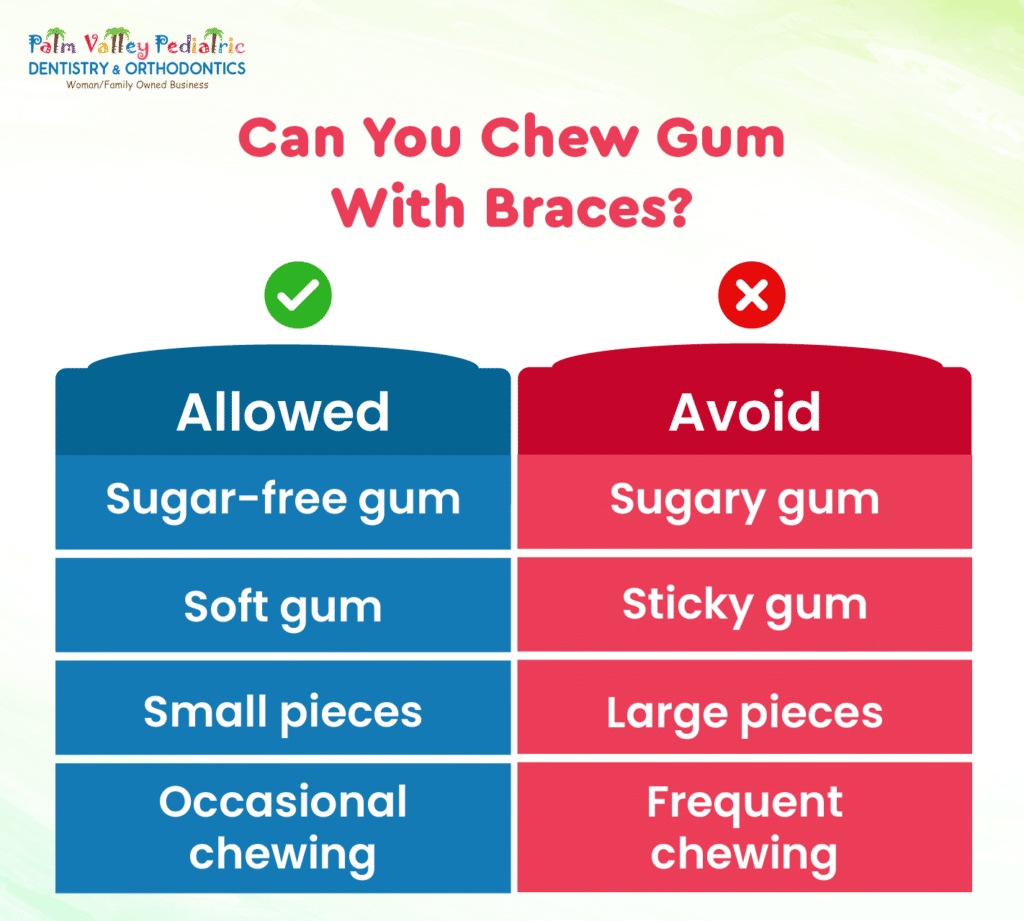
You can chew gum with braces, but only if it is sugar-free, soft, and non-sticky.
Orthodontists no longer recommend completely avoiding gum because modern braces are stronger, and certain types of gum can even support oral health by increasing saliva production and reducing plaque buildup.
Choose the right gum and chew it carefully. Sticky, hard, or sugary gum can pull off brackets, bend wires, and increase the risk of cavities, which may delay your treatment.
This guidance is based on recommendations from the orthodontic team at Palm Valley Pediatric Dentistry and Orthodontics, a pediatric dental and orthodontic clinic serving families in Scottsdale.
Quick Answer: Is Gum Safe With Braces?
Many people assume chewing gum is completely off-limits with braces, but that is not entirely true.
You can chew gum safely if it is soft, sugar-free, and non-sticky. The wrong gum can snap a wire, loosen a bracket, or leave sticky residue that is hard to remove.
A simple rule to remember is this: if the gum feels hard, thick, sticky, or sugary, it is better to avoid it.
Key Takeaways!
- Many orthodontists now allow sugar-free gum with braces.
- Always follow your orthodontist’s advice first.
- Xylitol gum may help lower plaque and support healthy teeth.
- Avoid sticky, sugary, and bubble gums.
- If gum gets stuck, remove it gently and clean the area thoroughly.

Is Your Child’s Smile on the Right Track?
Early dental visits aren’t just about cleaning teeth, they’re about catching problems before they become costly and painful. Our pediatric specialists create personalized care plans that grow with your child, from their very first tooth through their teen years.
Gentle, kid-friendly care in a welcoming environment.
Is It Safe to Chew Gum With Braces?
Yes, in many cases, chewing gum with braces is safe, but it depends on the type of gum you choose.
Modern braces are stronger and more durable than older braces, which is why many orthodontists now allow gum in moderation.
The safest choice is soft, sugar-free gum because it is less likely to stick to brackets or pull on wires.
Still, every patient is different, so it is always best to follow your orthodontist’s advice.
Why Orthodontists Once Advised Against Gum?
For years, orthodontists told patients to avoid gum completely. That advice made sense at the time because older braces were more delicate and gum often caused problems. The biggest concerns were:
- Gum sticking to brackets
- Gum pulling on wires
- Bent or loose braces
- Sugar getting trapped around teeth
Sticky, sugary gum can make it harder to keep braces clean, increasing the risk of plaque buildup and cavities.
What Do Current Research and Orthodontists Say?
Today, research shows that sugar-free gum may offer some benefits for oral health.
Current research shows that sugar-free gum can support oral health, which is one reason many orthodontists have become more open to it during braces treatment.
The American Dental Association explains that chewing sugar-free gum increases saliva flow. This helps wash away food particles and acids, which can reduce the risk of cavities, especially when braces make cleaning more difficult.
Xylitol, a sweetener used in many sugar-free gums, may reduce harmful bacteria linked to tooth decay.
Many orthodontists now recommend soft, sugar-free gum because modern braces are stronger and less likely to be damaged by gentle chewing.
The main rule is to avoid sticky, sugary, or bubble gum and always follow your orthodontist’s advice.
What Types of Gum Are Safe With Braces?
Not all gum is suitable during orthodontic treatment. The safest options share a few important characteristics.
The best gum for braces should be free from added sugar, soft in texture, low in stickiness, easy to chew, and used only for short periods.
Sugar-Free Gum
The American Dental Association recommends sugar-free gum because it can help lower the risk of cavities. Sugar-free gum does not feed the bacteria that cause plaque, making it a safer option for people with braces.
Dentists often recommend gum sweetened with xylitol because it helps reduce cavity-causing bacteria and supports enamel protection during orthodontic treatment.
Soft, Non-Sticky Gum
Soft gum that is not sticky places less strain on brackets and is less likely to cling to wires. This lowers the chance of bending wires or loosening brackets.
Recommended Sugar-Free Gum Brands
Some commonly recommended brands include Orbit, Trident, Extra, Spry, and PUR.
When you are unsure, choose gum clearly labeled sugar-free and gentle on teeth. Small choices like this protect your braces and help keep your treatment on schedule.
What Gum Should You Avoid With Braces?
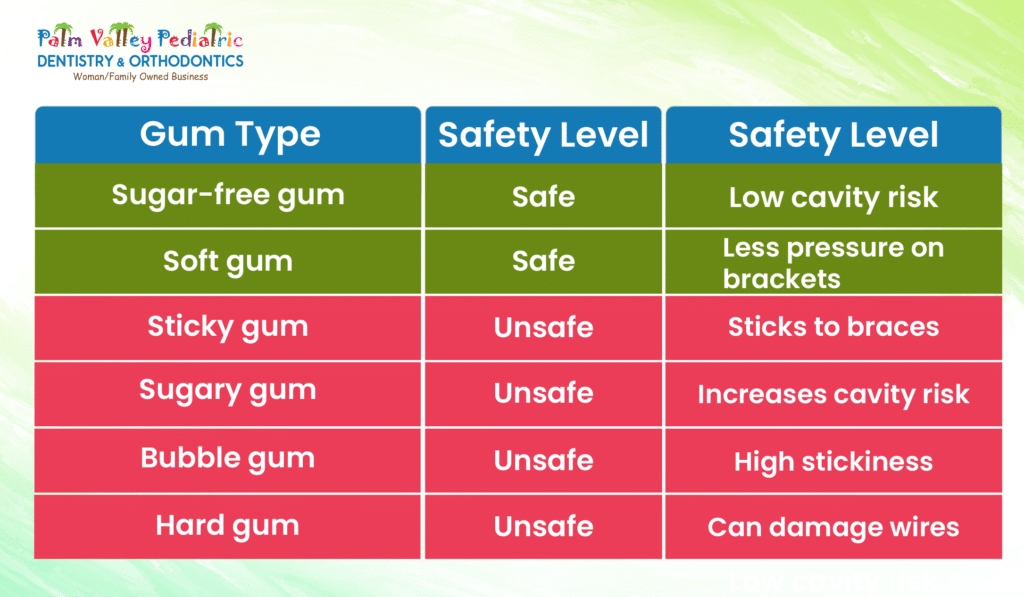
Certain types of gum can cause problems and should be avoided.
Sticky Gum
Sticky gum causes the most problems because it can wrap around brackets and place constant tension on wires.
Hard Gum
Hard gum creates excessive force on teeth and increases the risk of broken brackets or bent wires.
Sugary Gum
Sugary gum increases the risk of tooth decay because sugar feeds harmful bacteria. During orthodontic treatment, this risk increases because brackets and wires create more places for plaque to accumulate.
Thick or Very Chewy Gum
Bubble gum is often thicker and stickier, which increases the risk of pulling brackets loose or bending wires.
| Gum Type | Safe With Braces? | Why or Why Not |
| Sugar-Free Gum | Yes | Soft, less sticky, and better for oral health |
| Xylitol Gum | Yes | Helps reduce bacteria and plaque while protecting teeth |
| Sugary Gum | No | Increases cavity risk and can trap sugar around braces |
| Sticky Gum | No | Can stick to brackets and pull on wires |
| Bubble Gum | No | Thick and stretchy, which can damage braces |
5 Benefits of Chewing Sugar-Free Gum With Braces
Beyond simply freshening your breath, sugar-free gum can offer a few practical benefits while you are wearing braces. When chosen carefully, it can actually support your oral health instead of working against it.
One of the biggest advantages is that chewing gum increases saliva production.
Saliva acts like your mouth’s natural cleaning system, helping wash away leftover food particles and reducing the buildup of harmful bacteria around brackets and wires.
Some of the main benefits include:
- Helps with dry mouth: Braces can sometimes cause dry mouth, especially after adjustments. Chewing sugar-free gum can increase moisture and make your mouth feel more comfortable.
- Loosens trapped food particles: Food often gets stuck around brackets and wires. Gum can help dislodge small particles before you brush or floss.
- Freshens breath: Mint-based sugar-free gums can help reduce bad breath, especially after meals when brushing right away is not possible.
- Reduces acid buildup: Sugar-free gum helps stimulate saliva, which can neutralize acids that weaken enamel and lead to cavities.
- Supports better oral hygiene: Xylitol-sweetened gum may help reduce cavity-causing bacteria, making it a safer choice during orthodontic treatment.
Some gum products also carry dental safety seals, which means they meet recognized oral health standards and are considered safe for regular use.
Risks of Chewing Gum With Braces
Even when you choose a safer gum, there are still some risks to keep in mind. The way you chew and the condition of your braces can make a big difference.
Braces create extra surfaces where gum can stick, and if you are not careful, even a small mistake can lead to damage.
Possible risks of chewing gum with braces include:
- Broken brackets: Sticky or tough gum can pull on brackets, loosening them from the teeth.
- Bent wires: Hard chewing or thick gum can put pressure on the archwire and affect how your braces work.
- Plaque buildup: If gum contains sugar or leaves residue behind, it can increase plaque around brackets and make cleaning harder.
- Longer treatment time: Damaged brackets or wires mean extra orthodontist visits, which can slow down your progress.
- Jaw soreness: Chewing too much gum, especially after adjustments, can make already sensitive teeth and gums feel worse.
The safest approach is moderation.
Choosing the right gum and paying attention to how your braces feel can help you avoid these problems and stay on track with your treatment.
What Happens If Gum Gets Stuck in Braces?
If gum sticks to your braces, do not panic.
Start by rinsing your mouth with warm water to loosen it. Then try gently removing it with floss or a soft toothbrush. Avoid using sharp objects because they can damage your brackets or gums.
If you still cannot remove it, contact your orthodontist for help.
When Should You Avoid Chewing Gum?
There are certain situations where chewing gum is not a good idea.
Right after getting braces, you may feel cold sensitivity, and chewing can increase discomfort.
After adjustments, when wires are tightened, it is often better to wait 24 to 48 hours before chewing gum.
If you have loose brackets, chewing can make the problem worse.
If you have cuts or sores inside your mouth from braces, gum may irritate those areas and slow healing.
6 Tips for Chewing Gum Safely With Braces
If you want to chew gum while wearing braces, a few simple habits can help you avoid damage.
- Start with a small piece instead of using a large amount. This puts less pressure on your brackets.
- Always choose soft, sugar-free gum. This is the safest option for braces.
- Chew slowly and avoid aggressive chewing. Fast, forceful chewing can bend wires or loosen brackets.
- Keep it short. A few minutes is usually enough. The longer you chew, the more pressure you place on your braces.
- Pay attention to how your braces feel. If something feels loose, sore, or uncomfortable, stop chewing.
- Once you are done, rinse your mouth or, if possible, brush your teeth. This helps remove leftover gum particles and prevents plaque buildup.
Can You Chew Gum With Rubber Bands, Aligners, or Retainers?
With Rubber Bands
Gum can be chewed with braces, but it is safer to remove rubber bands first. Elastics apply steady pressure to move teeth, and chewing while wearing them can add extra strain to brackets and wires.
Orthodontists often recommend removing them before chewing gum and putting them back afterward.
With Clear Aligners
Always remove aligners before chewing gum. Gum can stick to the trays and may affect how they fit.
Chewing with aligners can also distort their shape, which may interfere with tooth movement.
With a Retainer
If your retainer is removable, take it out before chewing gum.
For fixed retainers, chew carefully and avoid thick or sticky gum to reduce the risk of bending the wire or trapping debris.
How to Choose the Right Gum When You Have Braces?
Not all gum is suitable during orthodontic treatment. The safest options share a few important characteristics.
Look for gum that is free of added sugar, soft in texture, low in stickiness, easy to chew, and meant for short-term use.
Gum sweetened with xylitol is often recommended because it helps control bacteria and supports healthier teeth while braces are in place.
If you still have questions and are looking for the best pediatric orthodontist services, book your appointment via Palm Valley Pediatric Dentistry & Orthodontics.
Is Your Child’s Smile on the Right Track?
Early dental visits aren’t just about cleaning teeth, they’re about catching problems before they become costly and painful. Our pediatric specialists create personalized care plans that grow with your child, from their very first tooth through their teen years.
Gentle, kid-friendly care in a welcoming environment.
People Also Ask
Is Orbit Gum Safe to Use With Braces?
Most varieties of Orbit gum can be used with braces if they are sugar-free and chewed gently. Many formulas are designed to be softer and less likely to stick to brackets. Still, limit chewing time and avoid gum if any part of your braces feels loose or if your teeth are sore after an adjustment.
Can kids chew gum with braces?
Yes, kids can chew gum with braces if it is sugar-free, soft, and non-sticky. Parents should remind children to chew gently and avoid large pieces to reduce the risk of breaking a bracket or bending a wire.
Can Chewing Gum Damage Your Braces?
Yes, gum can damage braces if it is very sticky, too hard, or chewed with too much force. These types of gum can pull brackets loose or bend wires, which may require a repair visit and extend treatment time.
What gum is best for braces?
The best gum for braces is sugar-free, soft, and non-sticky, especially xylitol-sweetened gum. Xylitol helps reduce harmful oral bacteria and lowers the risk of cavities.
Can chewing gum cause cavities?
Yes, sugary gum can increase the risk of cavities because sugar feeds the bacteria that cause plaque buildup around brackets and wires. Sugar-free gum, when used in moderation, may actually help protect teeth by stimulating saliva and neutralizing acids.
How do you remove gum from braces?
You can rinse it with warm water and use a combination of careful brushing, interdental cleaners, and floss. If it’s truly stuck, your orthodontist has special tools to clean it.
Is gum allowed after a braces adjustment?
In most cases, it is better to wait about 24 to 48 hours after a braces adjustment before chewing gum. Teeth and gums are often sensitive during this period, and chewing too soon can increase discomfort or place extra stress on the brackets and wires.
Pediatric Dental Specialist at PVPD

Dr. Olga
Dr. Olga brings years of specialized pediatric dental expertise and a genuine passion for children’s oral health to the PVPD team. She specializes in creating anxiety-free dental experiences and early-intervention care strategies that set children up for a lifetime of healthy smiles.
Medically reviewed by Dr. Olga Dolghier, DDS, Pediatric Dentist at Palm Valley Pediatric Dentistry & Orthodontics.


