8 Causes of Bad Breath in Babies & Ways to Fix at Home
Bad breath in babies can surprise parents when they expect their little one’s breath to smell naturally sweet. An occasional unpleasant smell may come from something simple. But persistent bad breath can sometimes point to an oral health problem, dry mouth, congestion, tooth decay, or another condition that needs attention.
Parents can prevent many causes of baby bad breath with simple daily oral care.
You can start caring for your baby’s mouth from birth. Before your baby’s first tooth appears, gently clean the gums with a soft, clean cloth. Once the first tooth erupts, brush it twice a day with a soft, child-sized toothbrush and a tiny smear of fluoride toothpaste.
If you have concerns about your baby’s oral health, talk to one of our Pediatric Dentists or schedule a visit with our team.
Why Does My Baby’s Breath Smell?
Bad breath, also called Halitosis, can happen when bacteria, food or milk residue, dry mouth, or another underlying issue affects the mouth or throat.
Healthy babies do not usually have persistent foul-smelling breath.
If you notice an unpleasant smell once in a while, check your baby’s mouth and clean the gums or teeth gently.
If the smell continues despite good oral care, talk with your baby’s pediatrician or pediatric dentist.
Your baby’s age also matters. A newborn with no teeth needs different oral care from a toddler with several primary teeth.
The American Academy of Pediatrics recommends cleaning a baby’s gums from birth and starting twice-daily brushing with a rice-grain-sized smear of fluoride toothpaste as soon as the first tooth appears.
Book your first consultation for free today.
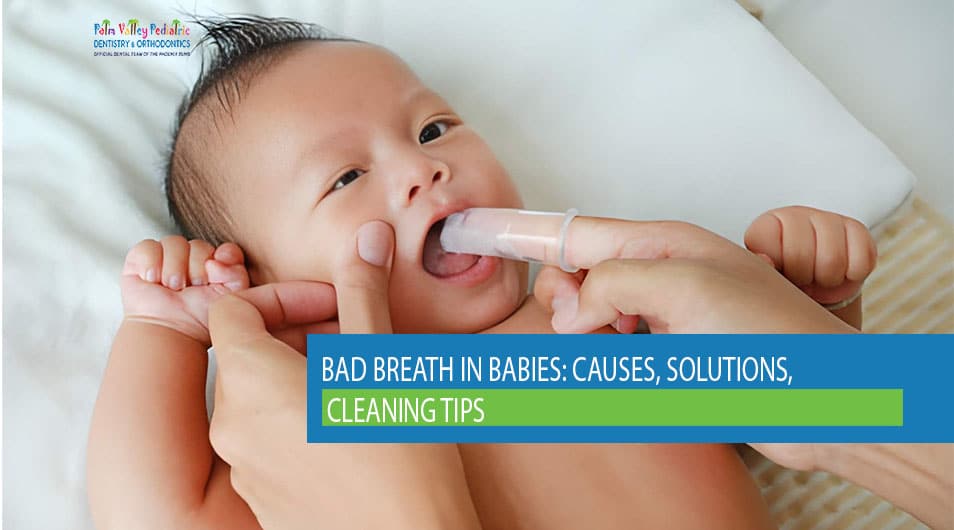
Although it is rare, poor oral hygiene makes baby breath stink. So, taking care of all these factors that can cause lousy baby breath is necessary to diagnose and treat it as soon as possible.
If you are also a new mother, this blog is for you. This blog will share how to treat a baby’s bad breath from six months to two years.
Read: 10 Effective Remedies To Cure Gum Disease Without A Dentist

Is Your Child’s Smile on the Right Track?
Early dental visits aren’t just about cleaning teeth, they’re about catching problems before they become costly and painful. Our pediatric specialists create personalized care plans that grow with your child, from their very first tooth through their teen years.
Gentle, kid-friendly care in a welcoming environment.
8 Common Causes of Bad Breath in Babies
Several factors can contribute to unpleasant breath in babies and toddlers. Let’s look at each cause more closely.
1. Milk and Food Residue
Milk and food can remain around your baby’s gums, tongue, and teeth. Bacteria can interact with these residues and contribute to an unpleasant smell.
This does not mean that breast milk or formula itself causes bad breath. Instead, regular oral cleaning helps remove residue and reduce the buildup of bacteria.
Once your baby’s first tooth appears, brush the teeth twice a day.
Avoid putting your baby to sleep with a bottle because prolonged exposure to milk or other liquids can increase the risk of tooth decay.
2. Poor Oral Hygiene
Your baby needs oral care even before the first tooth appears.
Before teeth erupt, gently wipe your baby’s gums with a clean, soft cloth. After the first tooth appears, use a soft, age-appropriate toothbrush twice a day.
Good oral hygiene removes plaque and food residue that can contribute to bad breath and tooth decay.
3. Tooth Decay
Even baby teeth can develop cavities.
Tooth decay can cause an unpleasant smell, particularly when bacteria build up around damaged teeth. Cavities can also cause sensitivity, pain, discoloration, or difficulty eating.
Parents can lower the risk of early childhood tooth decay by brushing their child’s teeth twice a day with fluoride toothpaste. It will limit exposure to sugary foods and drinks.
4. Dry Mouth and Mouth Breathing
Saliva helps keep the mouth clean. When the mouth becomes dry, bacteria can build up more easily and contribute to bad breath.
Babies may breathe through their mouths when nasal congestion makes nose breathing difficult. Colds, allergies, or other nasal problems can therefore contribute to a dry mouth and unpleasant breath.
If your baby regularly breathes through their mouth or has ongoing nasal congestion, ask your pediatrician about the cause.
5. Nasal Congestion, Allergies, and Infections
A stuffy nose can make babies breathe through their mouths. This can dry the mouth and make unpleasant breath more noticeable.
Infections can also contribute to bad breath. For example, tonsillitis can cause bad breath along with symptoms such as a sore throat, fever, difficulty swallowing, swollen tonsils, or white patches on the tonsils.
If your baby has persistent congestion, fever, difficulty swallowing, unusual tiredness, or other signs of illness, contact their pediatrician.
6. Acid Reflux
Some babies experience gastroesophageal reflux, which can bring stomach contents back toward the mouth.
Reflux can contribute to an unpleasant smell in some children. However, parents should not assume that reflux causes every case of baby bad breath.
If your baby repeatedly spits up, appears uncomfortable during or after feeding, refuses feeds, or has poor weight gain, discuss these symptoms with your pediatrician.
7. Teething
Teething can change your baby’s mouth.
During teething, babies may produce more saliva, chew on objects, and experience tender or irritated gums. These changes can make the mouth smell different for a short time.
However, persistent or strong bad breath should not automatically be blamed on teething. If the odor continues, have your baby’s mouth checked.
8. Pacifiers, Toys, and Other Objects
Babies love exploring the world with their mouths. They often chew or suck on pacifiers, teethers, toys, and other objects.
These items can collect saliva, food residue, and bacteria. Keeping them clean can support good oral hygiene.
Clean pacifiers, teethers, and mouthed toys according to the manufacturer’s cleaning instructions. Also wash your baby’s hands regularly.
You do not need to prevent a baby from mouthing every safe object. Mouthing forms a normal part of infant development. Instead, keep objects that enter your baby’s mouth clean and age-appropriate.

Give Your Child the Gift of a Healthy Smile
PVPD doesn’t just treat teeth; we build lasting relationships with families. More confident kids. More comfortable appointments. More reasons to smile. Our patients leave happier and healthier, visit after visit.
Serving families across Scottsdale, because every child deserves a great smile.
How to Fix Bad Breath in a Baby?
The best way to treat your baby’s bad breath depends on the cause. Simple daily oral care can remove food residue, reduce bacteria, and keep your baby’s mouth healthy.
1- Clean Your Baby’s Gums
Before your baby’s first tooth appears, gently wipe the gums with a clean, soft cloth. This removes milk residue and helps you start a healthy oral care routine early.
2- Brush Baby Teeth Twice a Day
Once your baby’s first tooth appears, brush it twice a day with a soft, child-sized toothbrush. Use a rice-grain-sized amount of fluoride toothpaste for children under 3.
3- Limit Sugary Foods and Drinks
Frequent sugary foods and drinks can feed bacteria in your child’s mouth and increase the risk of cavities. Offer sugary foods and drinks less often and choose healthy options for regular snacks.
4- Avoid Bedtime Bottles
Do not put your baby to bed with a bottle. Milk or other drinks can stay around the teeth while your baby sleeps, which can increase the risk of tooth decay and bad breath.
5- Keep Pacifiers and Toys Clean
Babies often put pacifiers, teethers, and toys in their mouths. Clean these items regularly to remove saliva, food residue, and bacteria that can contribute to an unpleasant smell.
6- Check for Mouth Breathing
A blocked nose can cause your baby to breathe through their mouth.
Mouth breathing can dry the mouth and allow bacteria to build up, so talk to your pediatrician if your baby often breathes through their mouth.
7- Take Your Baby for a Dental Visit
Schedule your child’s first dental visit by their first birthday or within six months of the first tooth appearing. Early dental visits help your pediatric dentist check developing teeth and teach you how to care for your child’s smile.
How Can You Clean Your Baby’s Mouth?
Good oral hygiene starts before the first tooth.
Before the First Tooth
Gently wipe your baby’s gums with a clean, soft cloth. You can make this part of your baby’s morning and bedtime routine.
This simple habit helps you become comfortable caring for your baby’s mouth before teeth appear.
After the First Tooth Appears
Once you see the first tooth, you should choose a soft, infant-sized toothbrush. Apply a rice-grain-sized smear of fluoride toothpaste. Brush the tooth gently twice a day. Pay attention to all tooth surfaces. Continue helping your child brush as they grow.
Children need an adult’s help with brushing because young children cannot clean their teeth effectively on their own.

When Should You Take Your Baby to a Dentist?
You do not need to wait for a dental problem before taking your baby to the dentist. Schedule a first dental visit by your baby’s first birthday or within six months of the first tooth appearing.
An early visit helps the dentist check your baby’s teeth and gums and show you how to care for them.
Take your baby to the dentist if they have:
- Bad breath that does not go away
- Tooth spots or cavities
- Swollen or bleeding gums
- Tooth or mouth pain
- Trouble eating
- Frequent mouth breathing
- Signs of an infection
Call your pediatrician if bad breath comes with fever, vomiting, trouble swallowing, poor feeding, or other signs of illness.

Give Your Child the Gift of a Healthy Smile!
Healthy dental habits start early. Cleaning your baby’s gums, brushing their first teeth, and regular dental visits can help protect their growing smile.
At Palm Valley Pediatric Dentistry & Orthodontics, we provide child-friendly dental care from infancy through childhood. Book your child’s appointment today and give their smile a healthy start!
People Also Ask
Is it normal for babies to have bad breath?
Occasional changes can happen, but persistent bad breath is not typical. Clean your baby’s mouth regularly, and see a pediatric dentist or pediatrician if the smell continues.
How do I get rid of my baby’s bad breath?
Clean your baby’s gums with a soft, clean cloth. Once teeth appear, brush them twice daily with a soft toothbrush and a rice-grain-sized amount of fluoride toothpaste.
Does baby breath smell during teething?
Teething can temporarily change how your baby’s mouth smells. Persistent bad breath, however, needs a dental or medical check.
Can milk cause bad breath in babies?
Milk itself does not usually cause bad breath, but milk or food residue can remain in the mouth and contribute to an unpleasant smell. Clean your baby’s gums and brush erupted teeth regularly.
Can a pacifier cause bad breath?
A dirty pacifier can collect bacteria and food residue that contribute to bad breath. Clean pacifiers regularly according to the manufacturer’s instructions.
Is it normal for a 2-year-old to have bad breath?
Persistent bad breath is not typical. Cavities, plaque, food residue, dry mouth, mouth breathing, allergies, or infections can cause it. A pediatric dentist can find the cause.
Should I use mouthwash for my baby?
No. Babies generally do not need mouthwash. Clean their gums and brush their teeth with fluoride toothpaste once teeth appear.
Pediatric Dental Specialist at PVPD

Dr. Olga
Dr. Olga brings years of specialized pediatric dental expertise and a genuine passion for children’s oral health to the PVPD team. She specializes in creating anxiety-free dental experiences and early-intervention care strategies that set children up for a lifetime of healthy smiles.
Medically reviewed by Dr. Olga Dolghier, DDS, Pediatric Dentist at Palm Valley Pediatric Dentistry & Orthodontics.