4 Benefits of Laser Teeth Cleaning Over Traditional Method
Dental care continues to improve as dentists use new technology to make treatment more precise and comfortable. Laser dentistry is one of these technologies. Dentists can use dental lasers for certain procedures involving the teeth, gums, and other soft or hard tissues in the mouth.
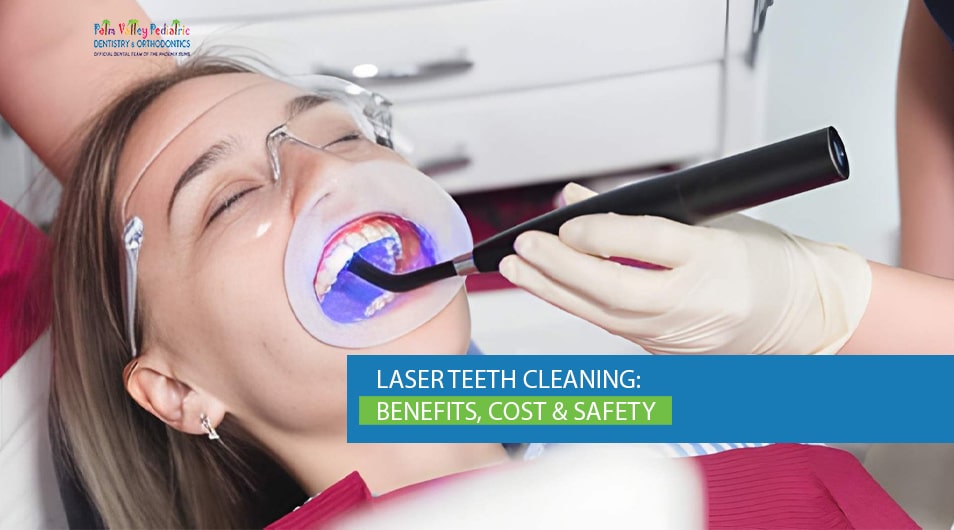
Laser dental treatment uses focused light energy to treat specific areas.
Depending on the type of laser and the dental procedure, a dentist may use it for gum treatment, soft-tissue procedures, tooth treatment, or other dental care.
Laser treatment does not replace every traditional dental procedure. Your dentist will choose the right method based on your oral health, the condition being treated, and the type of care you need.
At Palm Valley Pediatric Dentistry & Orthodontics (PVPD), our Pediatric Dentists provide age-appropriate dental care based on your child’s needs.
From routine cleanings and preventive care to advanced treatments, we help children feel comfortable while keeping their growing smiles healthy.
What Is Laser Teeth Cleaning?
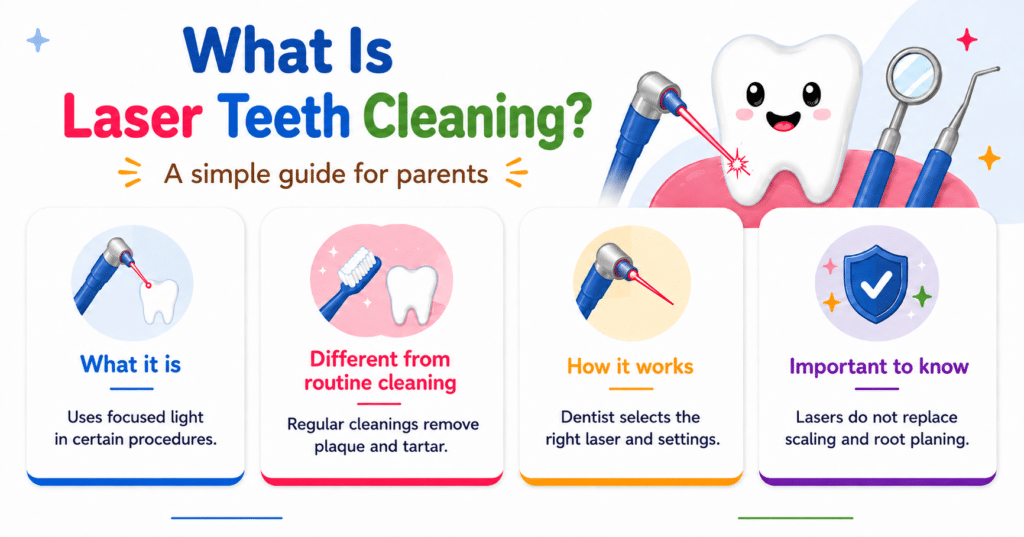
Laser teeth cleaning uses focused light energy as part of certain dental procedures. A dentist can use a dental laser to target specific tissue while treating the teeth or gums.
The term “laser cleaning” can describe different treatments, so it does not always mean a routine dental cleaning. A regular professional cleaning removes plaque and tartar from the teeth, while deeper gum treatment may involve scaling and root planing below the gumline.
Dentists may use lasers as an alternative or complementary tool for certain dental procedures.
The American Academy of Pediatric Dentistry supports laser use for certain dental procedures in children when performed by trained professionals.
How Does Laser Dental Cleaning Work?
A dental laser produces a focused beam of light energy. The dentist selects the appropriate laser and settings based on the tissue and treatment.
During certain procedures, the laser can help remove or treat targeted tissue. The dentist may still use traditional dental instruments when the procedure requires them.
For gum disease treatment, for example, laser treatment does not automatically replace scaling and root planing.
We recommend scaling and root planing as the initial nonsurgical treatment for periodontitis.
The exact process depends on your dental condition and the type of laser your dentist uses.
For babies and young children, infant and baby dental care plays an important role in maintaining healthy teeth and gums from an early age.
Read: Explore 4 Types Of Dental Cleaning And Their Benefits

Is Your Child’s Smile on the Right Track?
Early dental visits aren’t just about cleaning teeth, they’re about catching problems before they become costly and painful. Our pediatric specialists create personalized care plans that grow with your child, from their very first tooth through their teen years.
Gentle, kid-friendly care in a welcoming environment.
Laser Dental Cleaning vs. Traditional Dental Cleaning
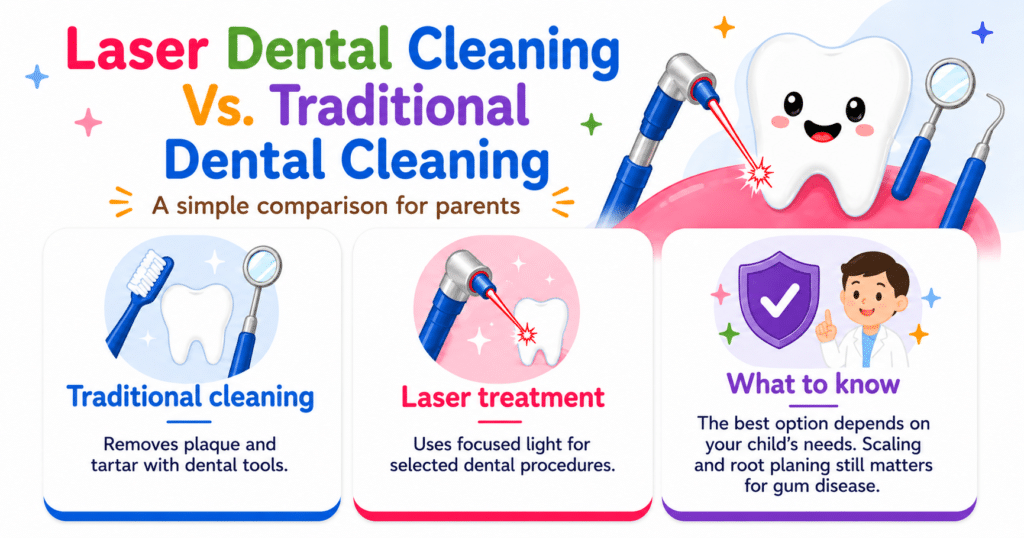
Laser and traditional dental treatments can both help improve oral health, but they work differently.
1- Traditional Dental Cleaning
A routine dental cleaning uses dental instruments to remove plaque and tartar from the teeth.
Your dental hygienist may also polish the teeth and provide advice about brushing and flossing.
If you have gum disease, your dentist may recommend scaling and root planing. This deep cleaning removes plaque and tartar from below the gumline and smooths the tooth roots.
2- Laser Dental Treatment
Laser treatment uses focused light energy to treat selected areas of the mouth. Depending on the procedure, a laser may help treat soft tissue, hard tissue, or gum tissue.
Your dentist may use a laser alone for some procedures or combine it with traditional instruments for others.
Which One Is Better?
There is no single best treatment for everyone. Your dentist will recommend the option that fits your dental condition.
For gum disease, traditional scaling and root planing remains an important part of treatment. Evidence for many lasers used as an additional treatment for periodontitis remains limited or uncertain.
Read: Step By Step Guide To Clean Invisalign Trays – Do’s & Dont’s
Give Your Child the Gift of a Healthy Smile
PVPD doesn’t just treat teeth; we build lasting relationships with families. More confident kids. More comfortable appointments. More reasons to smile. Our patients leave happier and healthier, visit after visit.
Serving families across Scottsdale, because every child deserves a great smile.
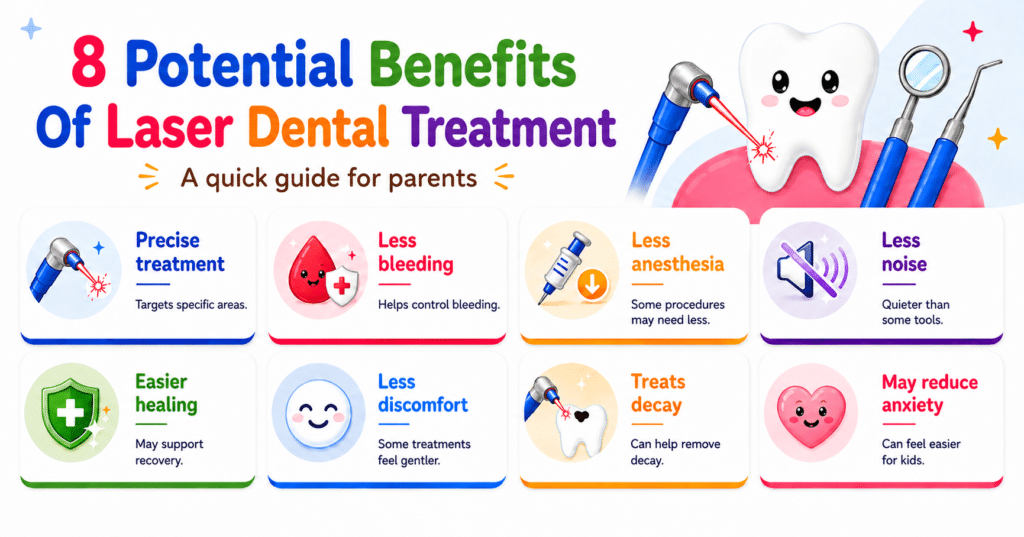
8 Potential Benefits of Laser Dental Treatment
Laser dentistry can offer useful benefits for certain dental procedures. However, the benefits depend on the type of laser and the treatment being performed.
1. Precise Laser Dental Treatment
Dental lasers use focused light energy to treat a specific area of the mouth. This gives the pediatric dentist better control during some laser dental procedures.
For example, a laser may target unhealthy gum tissue without treating more tissue than needed.
The type of laser and dental treatment determine how precise the procedure can be.
2. Less Bleeding During Treatment
Dental lasers can help control bleeding during some gum treatments and other soft-tissue procedures.
This can help the dentist keep the treatment area clear while working. Some procedures may also need fewer or no stitches.
For example, a pediatric dentist may use a laser for certain gum procedures where bleeding control helps the treatment.
3. Less Need for Dental Anesthesia
Some laser dentistry procedures may need little or no local anesthesia. This can help children who feel nervous about dental injections.
For example, certain laser treatments can reduce discomfort during selected tooth or gum procedures.
However, some treatments still need local anesthesia, depending on the procedure and the child’s needs.
4. Less Noise and Vibration
Some dental lasers work without the same noise and vibration that children may experience with a traditional dental drill.
This can make certain pediatric dental treatments feel more comfortable.
For example, some lasers can prepare tooth surfaces without the same contact and vibration as a traditional handpiece.
A quieter dental visit may also help children who feel anxious about dental sounds.
5. Easier Healing After Some Procedures
Laser treatment may support healing after certain soft-tissue dental procedures.
The laser can help control bleeding, and some treatments may not require stitches. These benefits can make recovery easier for some children.
For example, a child may have a simpler recovery after an appropriate laser gum procedure.
6. Less Discomfort After Treatment
Some laser dental treatments may cause less discomfort after the procedure.
The level of comfort depends on the type of laser, the treatment area, and the child’s dental needs.
Some procedures may also reduce the need for pain medicine during recovery.
For example, certain soft-tissue laser treatments may leave a child with less soreness afterward.
7. Helps Treat Tooth Decay
Certain dental lasers can help remove tooth decay during selected restorative treatments.
The dentist can use the laser to target decayed tooth tissue before repairing the tooth.
For example, a dentist may use a dental laser to prepare a tooth before placing a filling.
Lasers do not work for every cavity, so the dentist will choose the right treatment after examining the tooth.
8. May Reduce Dental Anxiety
Dental visits can make children nervous when they expect needles, drills, noise, or vibration.
For suitable procedures, laser dentistry for children may reduce some of these common worries.
A quieter treatment and, in some cases, less need for anesthesia can make the experience easier.
For example, a child who dislikes the sound of a dental drill may feel more comfortable during an appropriate laser procedure.
Are There Any Disadvantages of Laser Dental Treatment?
Laser treatment can be helpful, but it does not work for every dental problem.
Some procedures still require traditional dental instruments. Laser treatment can also cost more than a routine dental cleaning, depending on the procedure, location, dentist, and insurance coverage.
Laser treatment may also cause discomfort, bleeding, or other side effects depending on the procedure.
These procedures can have risks, so trained professionals should perform them with appropriate safety measures.
Your dentist can explain the benefits, limitations, risks, and expected results before treatment.
How Much Does Laser Teeth Cleaning Cost?
In Phoenix, laser teeth cleaning can cost around $300 to $1,000 per session. More advanced laser gum treatments can cost more.
Your final cost depends on the laser treatment, number of teeth treated, condition of your teeth and gums, need for deep cleaning, and insurance coverage.
Because every patient’s needs are different, ask your dentist for a personalized cost estimate before treatment.
Final Verdict!
Laser dentistry can be a useful tool for certain dental procedures, but it is not a replacement for every traditional dental treatment.
Your dentist should choose laser treatment based on your oral health, the procedure you need, and the available evidence.
For gum disease, traditional scaling and root planing remains an important nonsurgical treatment, while lasers may have a role in selected cases.
The PVPD team provides gentle, child-friendly dental care for infants, children, and teens.
Schedule a visit with PVPD today and give your child’s smile a healthy start.
People Also Ask
Is laser teeth cleaning worth it?
Laser treatment can be useful for certain dental procedures, but it is not necessary for everyone. Your dentist can tell you whether it fits your dental needs.
Is laser teeth cleaning painful?
Laser treatment may cause less discomfort during some procedures, but it is not always completely painless. Your experience depends on the treatment and your individual needs.
Is laser teeth cleaning better than regular cleaning?
Not necessarily. Laser treatment and regular cleaning serve different purposes. Your dentist will recommend the right option based on your oral health.
Can laser treatment remove tartar?
Laser treatment does not automatically replace traditional tartar removal. Dentists may still use scaling and other instruments to remove tartar, especially during deep cleaning.
Can children have laser dental treatment?
Yes. The AAPD recognizes lasers for certain dental procedures in children and adolescents. A trained pediatric dental professional should select and use the appropriate laser for the child’s specific needs.
Pediatric Dental Specialist at PVPD
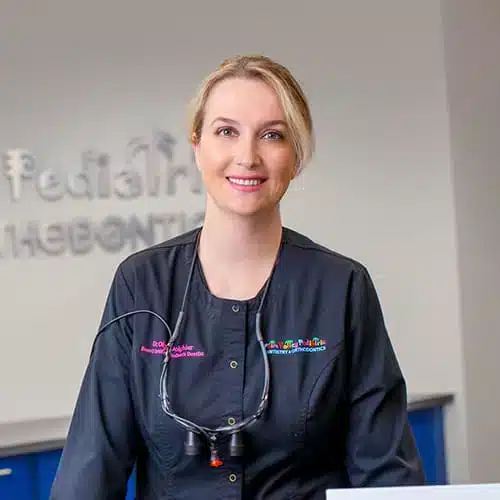
Dr. Olga
Dr. Olga brings years of specialized pediatric dental expertise and a genuine passion for children’s oral health to the PVPD team. She specializes in creating anxiety-free dental experiences and early-intervention care strategies that set children up for a lifetime of healthy smiles.
Medically reviewed by Dr. Olga Dolghier, DDS, Pediatric Dentist at Palm Valley Pediatric Dentistry & Orthodontics.