7-Point Checklist for Infant and Baby Dental Care [Birth to Age 3]
Baby teeth need care from the very first day, even before you see a single tooth.
Wiping your baby’s gums, choosing the right toothbrush, and knowing when to book that first dental visit are all important, and parents should know these from day 1.
Baby teeth are not “practice teeth.” They hold space for adult teeth, help your child chew and speak, and set the stage for a healthy smile later in life.
At Palm Valley Pediatric Dentistry & Orthodontics in Scottsdale, we help parents build simple, easy dental habits from infancy through the toddler years.
When Do Babies Start Getting Teeth?
Each child develops at their own pace, so teething can begin earlier or later depending on the baby.
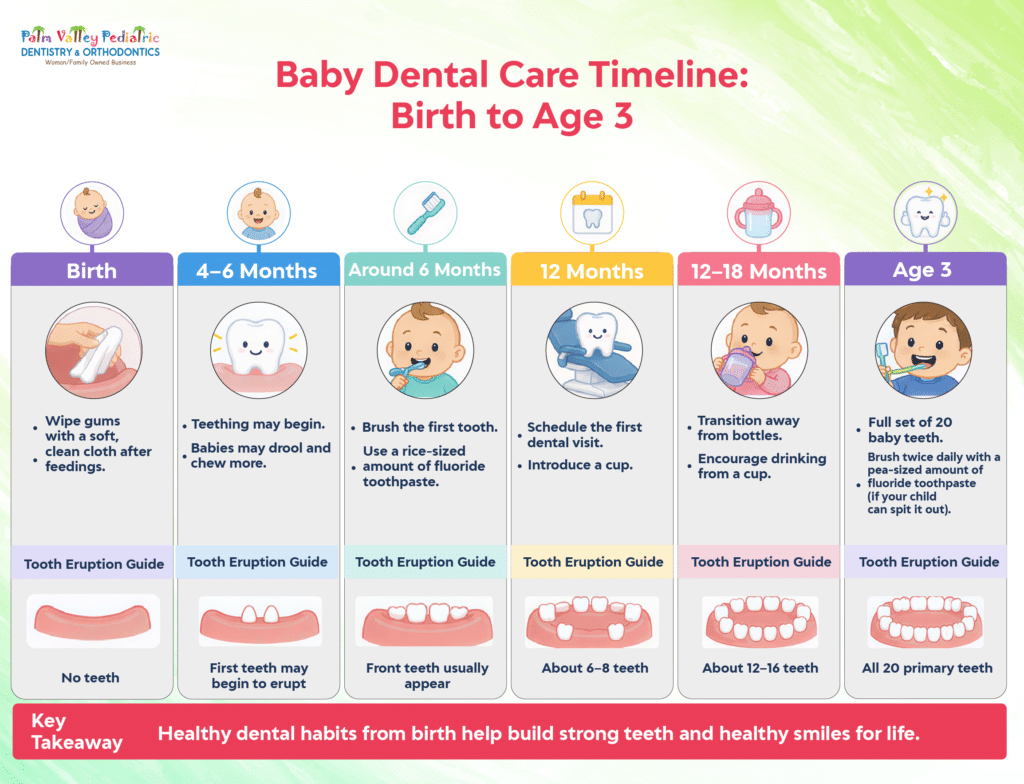
In many cases, a baby’s first tooth appears at about 6 months of age. The earliest teeth are often the two front teeth on the lower jaw.
By the time a child reaches three years old, they usually have a complete set of 20 primary teeth.
These first teeth stay for several years before permanent teeth begin to replace them, which usually starts around age six.
Some infants may begin teething as early as four months, while others might not see their first tooth until nearly twelve months.
Both timelines can still fall within the healthy range.
However, if no teeth appear by around eighteen months, it is a good idea to bring it up during a routine doctor’s visit.

Is Your Child’s Smile on the Right Track?
Early dental visits aren’t just about cleaning teeth, they’re about catching problems before they become costly and painful. Our pediatric specialists create personalized care plans that grow with your child, from their very first tooth through their teen years.
Gentle, kid-friendly care in a welcoming environment.
3 Reasons Baby Teeth Matter So Much
A lot of parents figure baby teeth don’t really matter. They fall out eventually, right? Why stress over something that’s temporary?
That logic doesn’t hold up.
1- Baby Teeth Are Placeholders for Adult Teeth
Baby teeth aren’t just filler until the “real” teeth show up. They are doing an actual job. They hold the space where the permanent tooth underneath is waiting to grow in.
Lose a baby tooth too early from decay, and the surrounding teeth don’t just politely wait for the adult tooth to arrive. They shift. They drift into that open space.
And the American Dental Association (ADA) notes this is one of the most common causes of crowding and misalignment later on.
So that “it’s just a baby tooth” mindset? It can end up costing a lot more down the road. Think orthodontics, think years of a kid in braces that maybe didn’t need to happen.
2- Baby Teeth Do More Than You’d Think
Chewing. Speaking clearly. Smiling without covering their mouth. Baby teeth handle all of it.
According to the American Academy of Pediatric Dentistry (AAPD), baby teeth play a direct role in speech development, since kids use their front teeth to form certain sounds. Lose those too soon, and speech patterns can actually be affected.
3- Cavities in Baby Teeth Are a Real Problem, Not a Minor One
This is a myth that needs to die: a cavity in a baby tooth doesn’t hurt as much as one in an adult tooth.
It absolutely can.
The Mayo Clinic points out that untreated tooth decay in children can lead to pain, infection, and difficulty eating or sleeping, the same as it would in an adult.
And because baby teeth sit so close to the developing adult tooth underneath, an untreated infection doesn’t always stay contained.
It can spread to the gum tissue and reach the permanent tooth before it’s even had a chance to come in.
The Complete Baby Dental Care Routine for Parents!
Most parents wait for that first little tooth to peek through before they think about dental care.
Totally understandable. It’s easy to assume there’s nothing to “care for” when there’s nothing there yet.
But dental care actually starts earlier than that.
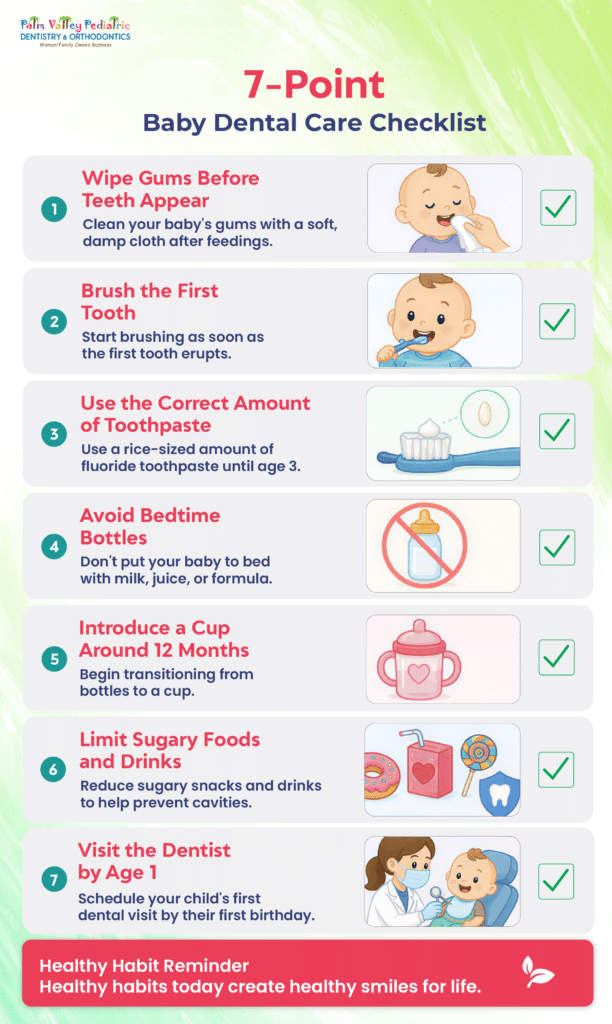
1. Wipe the Gums Before Any Teeth Appear
Technically, dental care starts before your baby has a single tooth.
Even without visible teeth, a baby’s mouth still collects milk residue, which feeds bacteria.
Over time, that bacteria buildup can settle into the gum tissue and, later, affect the teeth as they emerge.
Getting ahead of it early also helps your baby get used to having something in their mouth for “dental care,” so brushing later feels familiar instead of foreign.
After feedings, take a clean, damp washcloth or a soft infant gum wipe and gently rub along your baby’s gums, top and bottom.
You don’t need to scrub. A light, gentle wipe is enough.
Aim for once or twice a day, with the nighttime wipe being the most important, since milk left in the mouth overnight does the most damage.
2. Start Brushing the Moment the First Tooth Shows
The day you spot that first tooth is the day brushing officially starts. Not next week, not “once a few more come in.”
Use a soft-bristled toothbrush designed for infants. Regular adult brushes are too rough for those tiny, brand-new teeth and gums.
Brush gently, twice a day, morning and night, using small circular motions.
Say your baby’s first tooth shows up at 6 months. That same day, brushing begins.
Waiting until “there are more teeth to bother with” gives bacteria a head start on the one tooth that’s already there, and the first teeth are just as vulnerable to decay as the ones that come after.
3. Use the Right Amount of Toothpaste
This part trips up a lot of parents, mostly because it changes as your child grows.
For babies under age 3, use only a tiny bit of fluoride toothpaste, about the size of a grain of rice. Since young children often swallow toothpaste, this small amount is enough to protect their teeth safely.
After age 3, when they can spit it out well, you can use a pea-sized amount.
Using more toothpaste does not clean better and only wastes it.
If a child swallows fluoride toothpaste regularly in larger amounts, it can contribute to a condition called Fluorosis, which causes faint white spots on developing adult teeth.
Not dangerous, but definitely avoidable with the right amount from the start.
4. Watch Bottle and Nighttime Feeding Habits
When a baby falls asleep with a bottle of milk, formula, or juice, that liquid doesn’t just get swallowed and disappear.
It pools around the teeth, especially the front ones, for hours while your baby sleeps.
Sugar sitting on teeth for that long feeds bacteria nonstop, and the damage can happen fast, sometimes within months.
If your toddler always falls asleep with a bottle propped in their mouth, a simple fix is to switch that bedtime bottle to water or gently remove it once they have dozed off.
Breastfeeding at night is gentler on developing teeth than bottle-feeding, since the mechanics of nursing are different, but it’s still smart to wipe your baby’s gums (or brush, once teeth are in) after nighttime feedings as teeth start coming in.
Breast milk still contains natural sugars, and those sugars can affect teeth just like any other sugar over time.
5. Introduce a Cup Around 12 Months
Around your child’s first birthday, start weaning them off the bottle and introduce a cup for drinks instead.
The AAPD recommends transitioning away from bottles by 12 to 18 months.
There are two reasons this matters: it reduces the time sugary liquid spends on the teeth, and it supports healthy oral and jaw development, since prolonged bottle or sippy cup use can affect how the mouth and teeth develop.
Either a sippy cup or a regular open cup works fine here.
6. Limit Sugary Foods and Drinks
Sugar is fuel for the bacteria that cause cavities, and that’s true no matter how young the child is.
Juice, flavored yogurt, crackers, fruit snacks, and other sweet foods can all leave a sugary film behind on baby teeth, even hours after eating.
This doesn’t mean these foods need to disappear from your child’s diet completely. It means giving the mouth a little help afterward.
A simple habit that makes a real difference: after a snack like crackers or juice, offer a few sips of plain water.
It helps rinse away leftover sugar and food particles before they have had much time to sit on the teeth.
If a toothbrush is nearby, even better, but water alone still helps quite a bit.
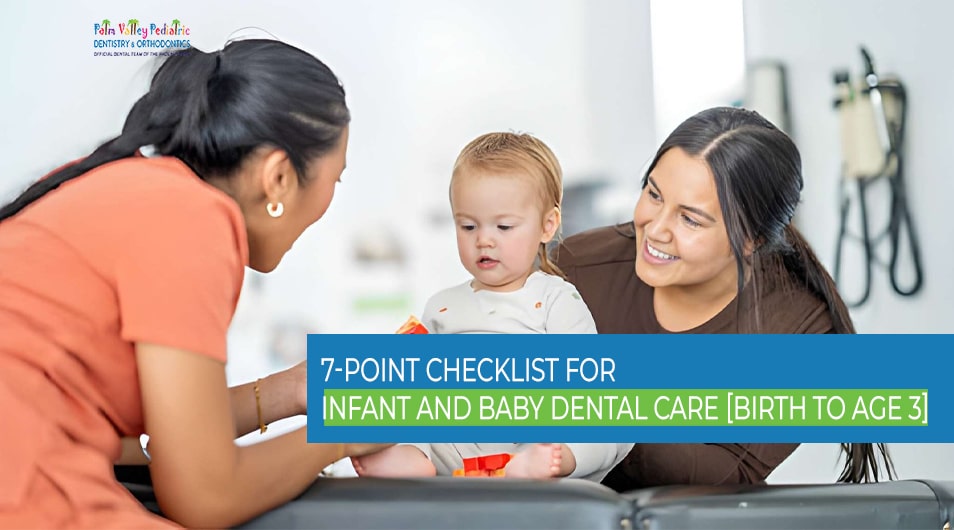
7. Book the First Dental Visit by Age 1
The AAPD recommends scheduling a child’s first dental visit by their first birthday or within 6 months of their first tooth erupting, whichever comes first.
Many parents are surprised by how early this recommendation is.
But the logic makes sense once you think it through: this first visit isn’t about deep cleanings or complicated procedures. It’s short, gentle, and mostly about prevention.
The dentist checks for early warning signs of decay, assesses how the teeth and jaw are developing, and answers any questions you have about feeding habits, teething, or brushing technique.
It’s also about your child. Bringing a baby in early, even with just one or two teeth, helps them get comfortable with the dental office environment long before it’s associated with anything uncomfortable.
Kids who start visiting the dentist early tend to have far less anxiety about dental visits later on, simply because it’s always just been a normal part of life.
5 Signs of a Dental Problem in Babies and Toddlers
Some signs are easy to miss at first. These are the signs parents should watch for.
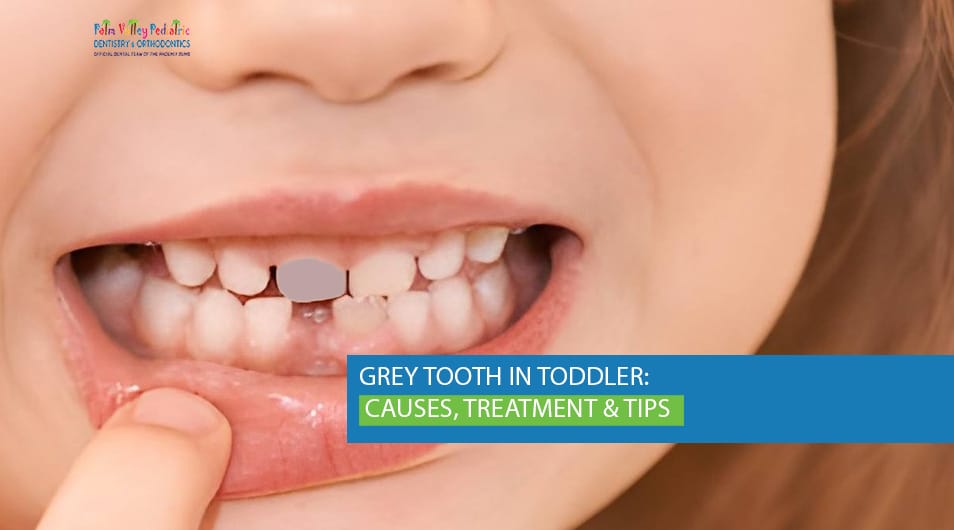
White or chalky spots on the teeth. This can be an early sign of decay starting near the gumline.
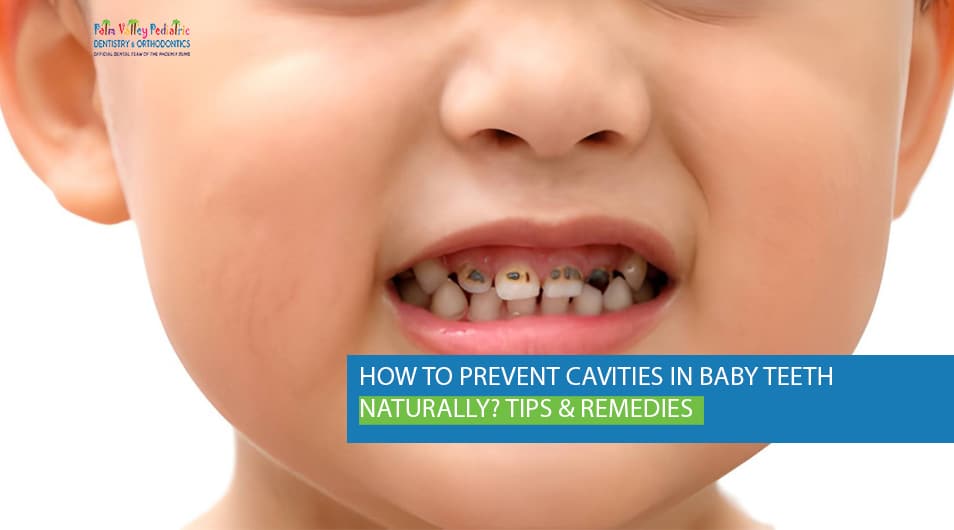
Brown or dark spots on any tooth. Dark spots often mean decay has already started and needs attention.
Swollen or bleeding gums. Some swelling is normal during teething, but redness that does not go away or bleeding during brushing should be checked.
Your baby avoiding certain foods. If your toddler suddenly avoids cold or hard foods, a sore tooth could be the reason.
A tooth that looks chipped, cracked, or discolored. This can happen after a fall or bump and should be checked, even if your baby does not seem upset.
If you notice any of these signs- brown or dark spots, a chipped tooth, swollen gums- it is best not to wait. Small problems are much easier to treat early.
Start Your Baby’s Dental Care Early!
Good dental habits started early can protect your child’s smile for years to come.
At Palm Valley Pediatric Dentistry & Orthodontics in Scottsdale, we make first visits calm and easy for both babies and parents.
We offer gentle pediatric dental care, orthodontic treatment, and same-day emergency appointments for infants, children, and teens.
New patients are always welcome. If your baby has their first tooth or is turning one soon, now is a great time to schedule their First Dental Cleaning.
Pediatric Dental Specialist at PVPD

Dr. Olga
Dr. Olga brings years of specialized pediatric dental expertise and a genuine passion for children’s oral health to the PVPD team. She specializes in creating anxiety-free dental experiences and early-intervention care strategies that set children up for a lifetime of healthy smiles.
Medically reviewed by Dr. Olga Dolghier, DDS, Pediatric Dentist at Palm Valley Pediatric Dentistry & Orthodontics.
People Also Ask
When should I start brushing my baby’s teeth?
Start brushing as soon as the first tooth appears, which is often around 6 months. Use a soft baby toothbrush and a tiny amount of fluoride toothpaste, about the size of a grain of rice.
Do I need to clean my baby’s gums before teeth come in?
Yes. Even before teeth appear, gently wipe your baby’s gums with a clean, wet cloth after feedings. This helps remove germs and gets your baby used to oral care, making brushing easier later.
Can babies get cavities?
Yes, and often sooner than parents expect. The moment a tooth emerges, it’s already at risk. Falling asleep with a bottle or snacking on sugary foods throughout the day are two of the biggest culprits behind early cavities.
Is fluoride toothpaste safe for babies?
It is, as long as the amount stays small. For kids under 3, stick to a rice-grain-sized dab, and keep an eye on brushing time so they don’t swallow more than that tiny bit.
What is baby bottle tooth decay?
This happens when milk, formula, or juice lingers on a baby’s teeth for extended stretches, most commonly when a baby drifts off to sleep with a bottle still in their mouth. The front teeth usually take the hit first, since they’re the ones sitting in that pooled liquid the longest.