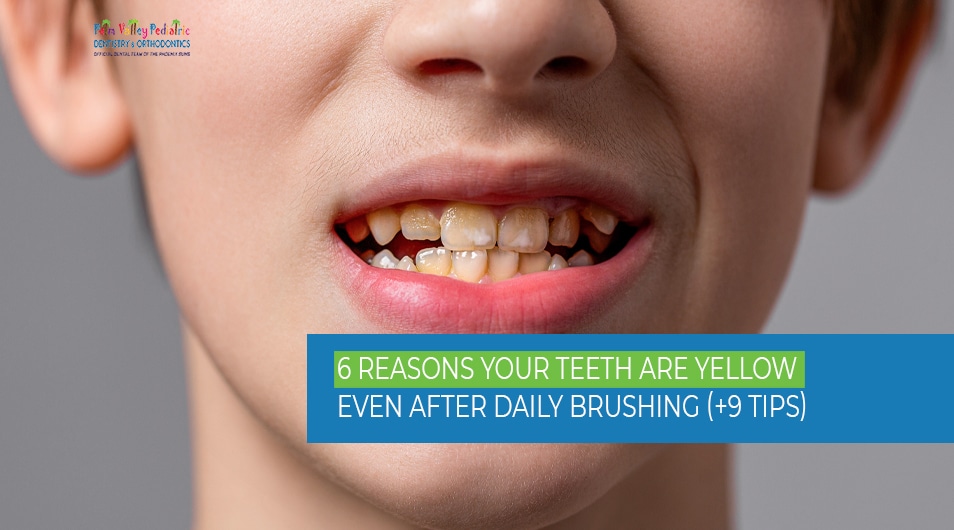
6 Reasons Your Teeth Are Yellow Even After Daily Brushing (+ 9 Tips)
Teeth can look yellow even if you brush every day because stains, enamel wear, and certain foods or habits cannot be fully removed with brushing alone.
Many people get upset when their teeth still look yellow, dull, or stained even though they brush and floss every day.
Because of tooth discoloration, some people start hiding their smile in photos or feel awkward while speaking, laughing, or meeting others.
Even with good oral hygiene, issues like tooth discoloration, plaque buildup, and enamel thinning can make your smile look less bright over time.
At Palm Valley Pediatric Dentistry & Orthodontics, we help families and kids improve dental health and smile appearance.

Is Your Child’s Smile on the Right Track?
Early dental visits aren’t just about cleaning teeth, they’re about catching problems before they become costly and painful. Our pediatric specialists create personalized care plans that grow with your child, from their very first tooth through their teen years.
Gentle, kid-friendly care in a welcoming environment.
6 Reasons Your Teeth are Still Yellow after Brushing
Brushing every day is important for oral hygiene, but it does not always remove all causes of tooth discoloration.
These are simple reasons why your teeth may still look yellow.
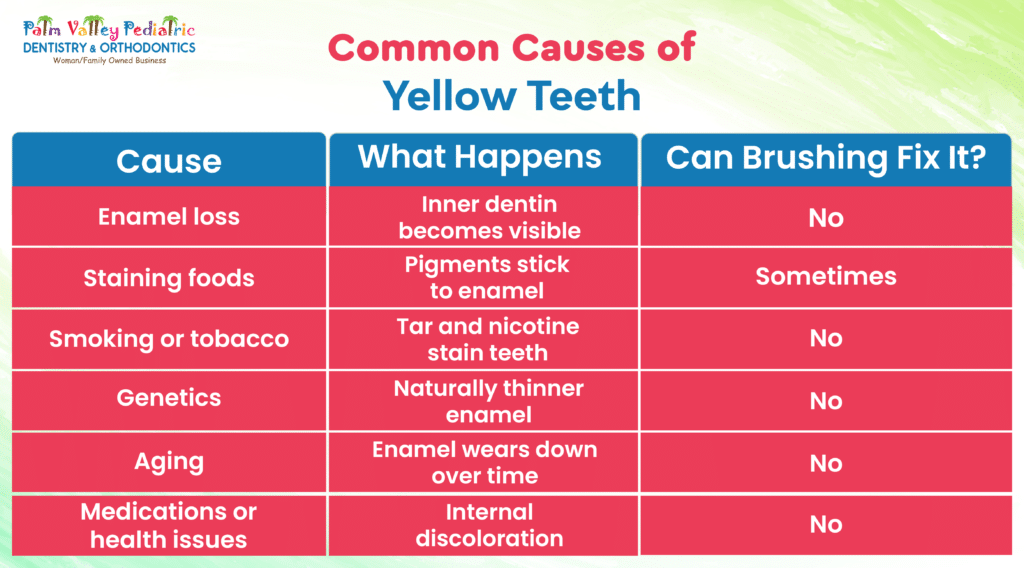
1. Enamel Loss: A Major Reason Teeth Look Yellow
Enamel is the bright outer shield of the tooth. Beneath it is dentin, a layer that naturally looks more yellow.
When enamel gets thinner, the inner color becomes easier to see, so teeth start to look less white. This happens with routine consumption of acidic drinks like soda, citrus juice, and energy drinks.
Brushing too aggressively or using a stiff toothbrush can also wear enamel down.
Once enamel is damaged, it does not grow back, so normal brushing cannot restore that lost whiteness. That is why many people look into ways to restore tooth enamel naturally.
2. Diet and Staining Foods
Your daily diet has a direct effect on tooth color. Coffee, tea, red wine, berries, curry, and dark sauces can all leave stain particles on the enamel.
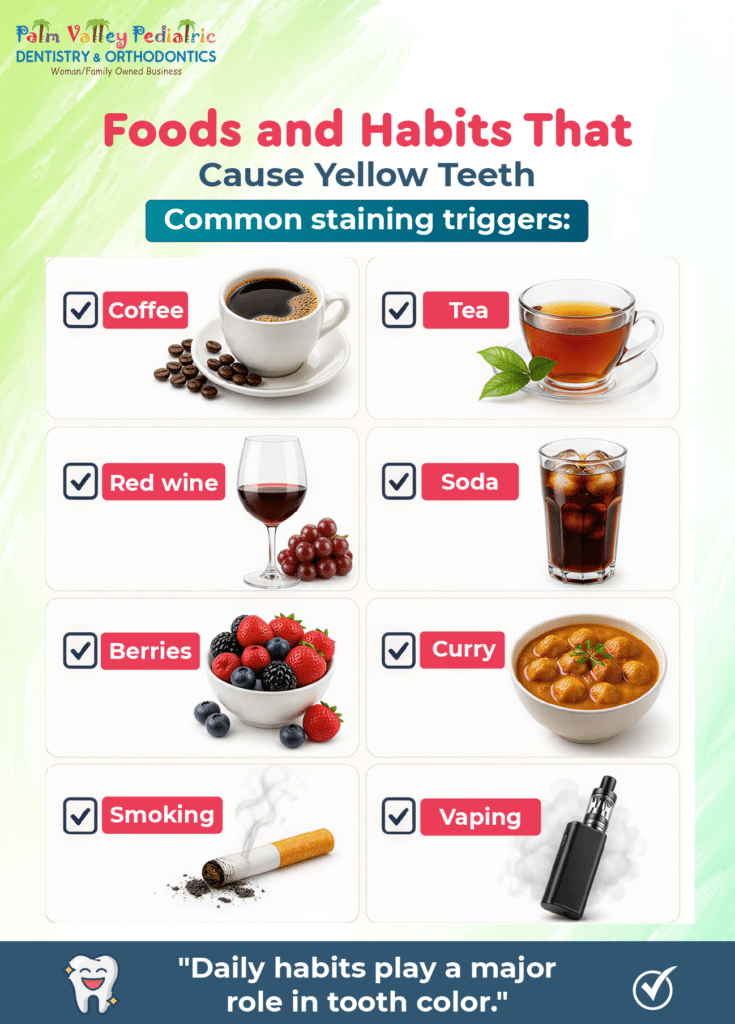
Over time, those pigments settle into the tooth surface and make teeth look yellow, dull, or darker than before.
Even good oral hygiene may not remove all of this buildup if it keeps happening every day.
3. Smoking and Tobacco Use
Smoking, vaping, and chewing tobacco are common causes of stained teeth. Nicotine and tar cling to the enamel and create marks that get worse over time.
At first, the color may look yellow, but later it can turn brown and become much harder to remove.
In many cases, regular brushing is not enough, and professional dental cleaning or teeth whitening may be needed.
4. Genetics: Natural Tooth Color
Sometimes, yellow teeth are not due to poor dental care at all. Genetics can affect the thickness of your enamel and the natural tone of your dentin.
If your enamel is thin by nature, your teeth may appear more yellow even when your oral hygiene routine is good.
This is why some people never get very white teeth naturally.
5. Aging and Natural Wear
As the years pass, teeth go through normal wear.
Enamel becomes thinner from chewing, brushing, and acid exposure. At the same time, dentin often becomes darker.
This combination makes teeth look more yellow with age, even in people who brush, floss, and visit the dentist regularly.
6. Medications & Medical Conditions
Some medicines and medical issues can also lead to tooth discoloration.
Antibiotics like tetracycline, taken during childhood, can cause deep internal stains.
These stains are often yellow, gray, or brown and are hard to treat. Health problems like dry mouth can also affect tooth color. Saliva helps clean the mouth naturally, so when saliva is low, plaque, bacteria, and stains can build up faster.
Other conditions that can impact enamel and cause yellowing include acid reflux (GERD), where stomach acid weakens enamel, and eating disorders like bulimia, which expose teeth to regular acid.
Autoimmune diseases such as Sjögren’s syndrome can also reduce saliva flow and lead to dryness and discoloration.
How to Address Yellow Teeth Despite Brushing?
Brushing is important, but you need a few extra steps to fix yellow teeth and improve your smile.
These are simple ways to reduce tooth discoloration and support better oral health.
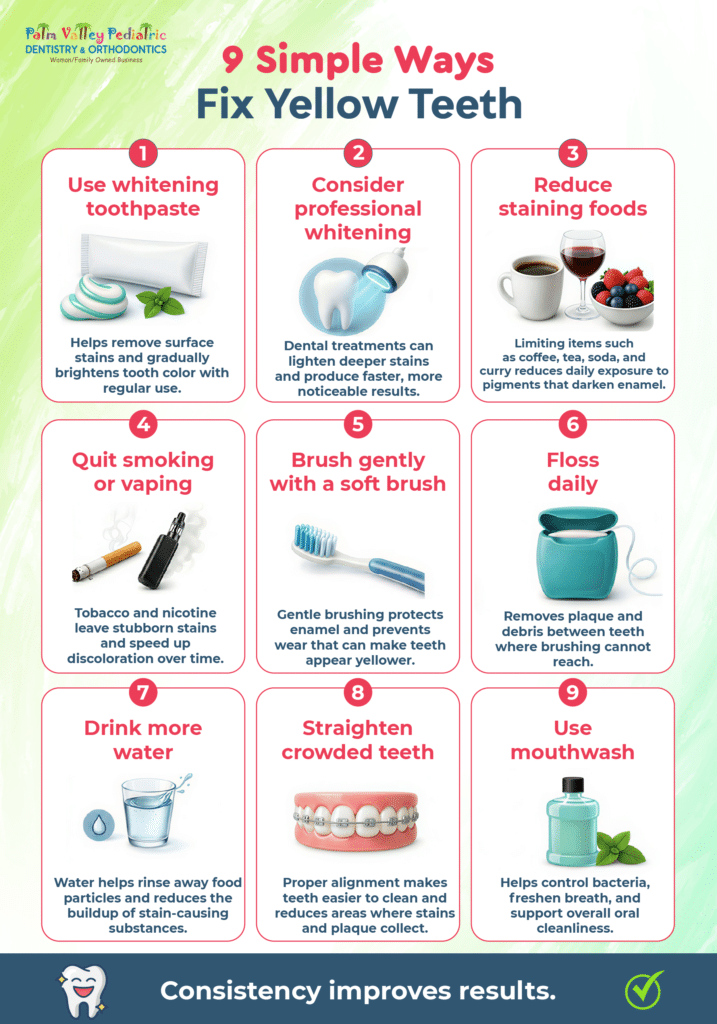
1- Use a Whitening Toothpaste (Start Simple)
A good whitening toothpaste can help lift light surface stains caused by coffee, tea, or everyday food.
These toothpastes gently polish your teeth and may include mild whitening ingredients like hydrogen peroxide.
It will not change your natural tooth color or fix deep stains, but it can make your teeth look cleaner and a bit brighter over time.
2- Choose Professional Teeth Whitening for Tough Stains
When strips, whitening toothpaste, or home kits do not do enough, a dentist can treat deeper tooth stains.
Professional teeth whitening uses stronger dental-grade whitening gel that can lift discoloration from inside the enamel.
It is the best choice for stubborn yellow teeth, long-term staining, and deeper enamel discoloration.
Many people see a cleaner smile after a short treatment plan.
3- Be Careful with Staining Foods and Drinks
Did you know your daily cup of coffee might be the culprit behind your yellow teeth?
Teeth can slowly lose their brightness because of what you eat and drink every day.
Coffee, black tea, red wine, soda, berries, curry, and dark sauces can leave color on the enamel.
Drink water after meals, rinse your mouth after dark beverages, and use a straw when possible.
Give your teeth a little time before brushing after acidic foods, because weak enamel stains more easily.
4- Quit Smoking or Vaping (Big Impact)
Tobacco products are a major reason for yellow teeth.
Nicotine and tar settle on the tooth surface and create strong stains that are difficult to clean at home.
Smoking and vaping can also affect gum health, breath, and overall oral hygiene.
Stopping both can improve the color of your teeth and support a healthier mouth.
5- Fix Your Brushing Habits (Gentle is Better)
A lot of people think strong brushing means better cleaning, but that can actually harm your teeth.
Scrubbing too hard may wear away enamel and make the yellow layer under it easier to see.
Use a soft toothbrush, light pressure, and slow circular movements. Good brushing habits help remove plaque without damaging the tooth surface.
6- Do Not Skip Flossing (It Really Matters)
Your toothbrush misses the narrow spaces between teeth. That is where food, plaque, and bacteria stay trapped.
Over time, this buildup can make teeth look less fresh and less bright.
Daily flossing helps clean those spots and supports better oral health, cleaner teeth, and a brighter smile.
7- Drink More Water (Support Natural Cleaning)
Water helps keep your mouth cleaner throughout the day. It washes away leftover food, reduces acid, and supports saliva, which helps protect enamel.
A dry mouth gives plaque and stains more chances to build up.
Drinking enough water is a simple way to support clean teeth and healthy gums.
8- Straighten Crooked Teeth if Needed
When teeth overlap or sit too close together, they are harder to clean well. That can lead to plaque buildup, staining, and uneven tooth color.
Braces or clear aligners can improve alignment and make brushing and flossing easier. Straight teeth often look cleaner because there is less hidden buildup.
9- Add a Mouthwash to Your Routine
Mouthwash can support your daily dental routine by lowering bacteria, helping with bad breath, and reducing plaque.
Some formulas are also made for stain control or enamel support. It should not replace brushing and flossing, but it can be a useful extra step for better oral hygiene and fresher breath.
Is Your Child’s Smile on the Right Track?
Early dental visits aren’t just about cleaning teeth, they’re about catching problems before they become costly and painful. Our pediatric specialists create personalized care plans that grow with your child, from their very first tooth through their teen years.
Gentle, kid-friendly care in a welcoming environment.
Final Note!
Yellow teeth can still happen even if you brush daily.
For kids, teens, and adults, yellow teeth can affect confidence and may also point to early dental issues.
At PVPD, we find the cause of tooth discoloration and treat it. Book your visit today and let’s start working toward a healthier smile.
People Also Ask
Can brushing alone whiten my teeth?
Brushing alone helps maintain oral hygiene and can remove surface stains, but it’s not always enough to whiten yellow teeth, especially if the discoloration is deep or caused by enamel erosion.
How can I prevent yellow teeth in the future?
Avoiding acidic foods and beverages, quitting smoking, brushing twice a day with fluoride toothpaste, and scheduling routine dental cleanings are all ways to prevent yellow teeth.
How long does it take to use toothpaste to whiten teeth?
For surface stains in particular, it may take a few weeks of regular use of whitening toothpaste before any discernible effects are seen. For deeper stains, professional treatments might be required.
Pediatric Dental Specialist at PVPD

Dr. Olga
Dr. Olga brings years of specialized pediatric dental expertise and a genuine passion for children’s oral health to the PVPD team. She specializes in creating anxiety-free dental experiences and early-intervention care strategies that set children up for a lifetime of healthy smiles.
Medically reviewed by Dr. Olga Dolghier, DDS, Pediatric Dentist at Palm Valley Pediatric Dentistry & Orthodontics.