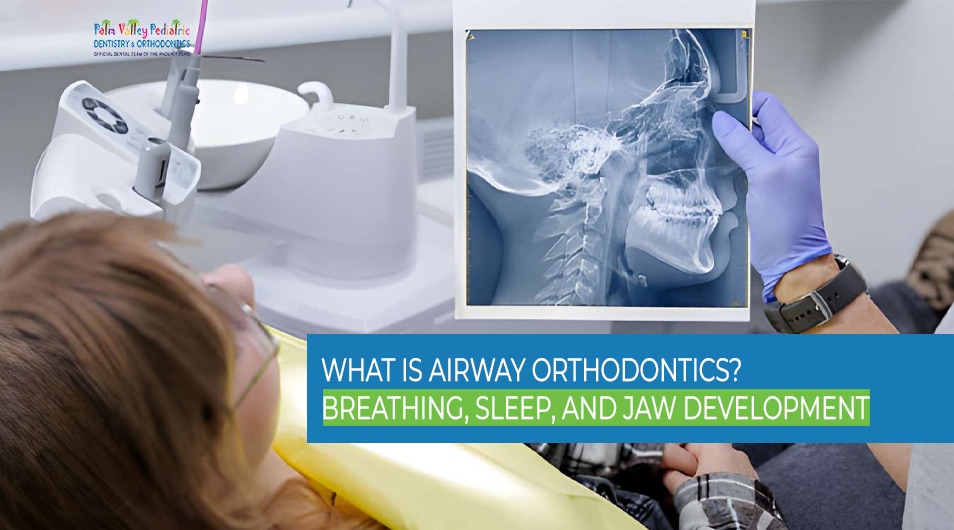
What Is Airway Orthodontics? Breathing, Sleep, and Jaw Development
The common misconception about orthodontics is that it’s all about straightening teeth. But airway orthodontics adopts a more comprehensive approach by examining how jaw growth, tooth alignment, and airway development affect breathing and sleep.
The good news is that your children can receive treatment that promotes better development and growth if breathing issues or airway constraints are detected early.

That’s why understanding airway-focused treatment can help parents support their child’s healthy growth and development from the inside out.
What Is Airway Orthodontics?
Airway orthodontics assesses the interdependence of the teeth, jaws, tongue, and airway. The goal is to guide appropriate jaw growth while identifying issues that may impact breathing, sleeping, and facial development.
Unlike traditional orthodontic treatment, which focuses on straightening teeth, airway-focused care improves a child’s oral and overall health.
How It Differs From Traditional Orthodontics
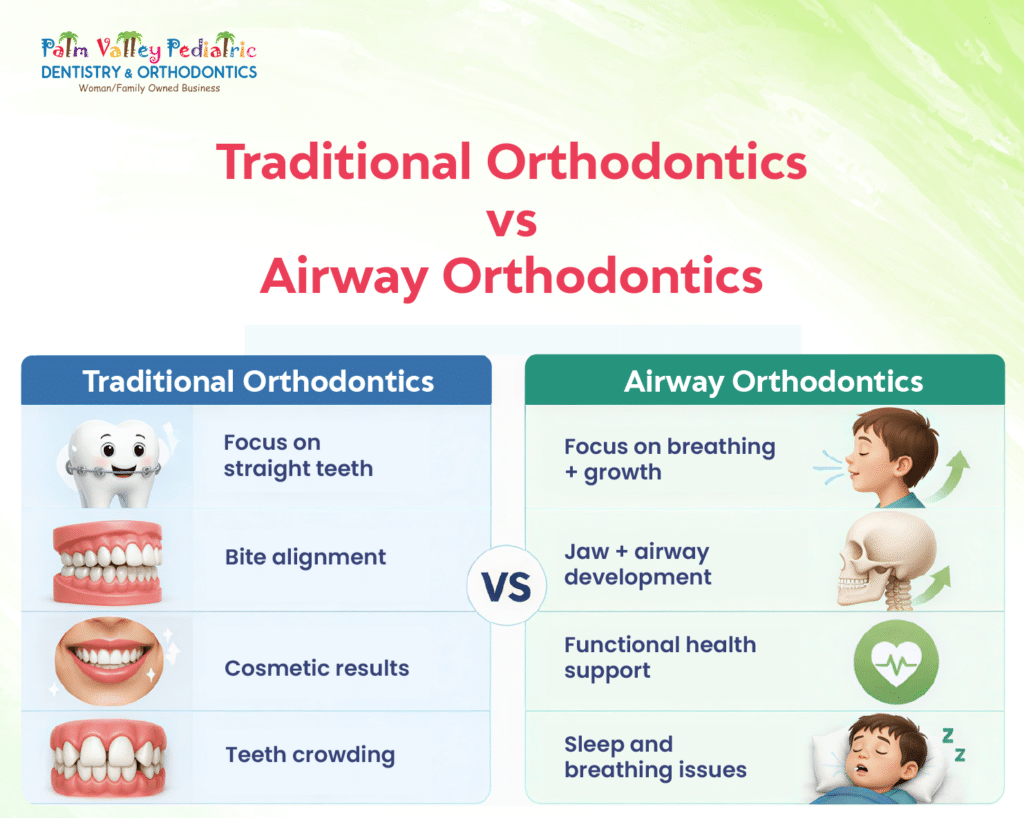
Traditional orthodontics is focused primarily on correcting the position of teeth, closing gaps, fixing crowding, and aligning the bite. But airway orthodontics looks at breathing patterns or sleep quality.
Airway orthodontics usually includes:
- Breathing patterns
- Airway space
- Jaw development
- Sleep quality
- Facial growth
Orthodontists evaluate these factors together to identify concerns that can affect a child’s jaw development problems. You can learn more about the signs that need orthodontic treatment to get a sense of when intervention may be helpful.

Is Your Child’s Smile on the Right Track?
Early dental visits aren’t just about cleaning teeth, they’re about catching problems before they become costly and painful. Our pediatric specialists create personalized care plans that grow with your child, from their very first tooth through their teen years.
Gentle, kid-friendly care in a welcoming environment.
Why the Airway Matters in Orthodontics
Airways Orthodontics helps identify jaw and breathing issues at an early stage to prevent serious dangers.
The Relationship Between Jaw Growth and Airway Health
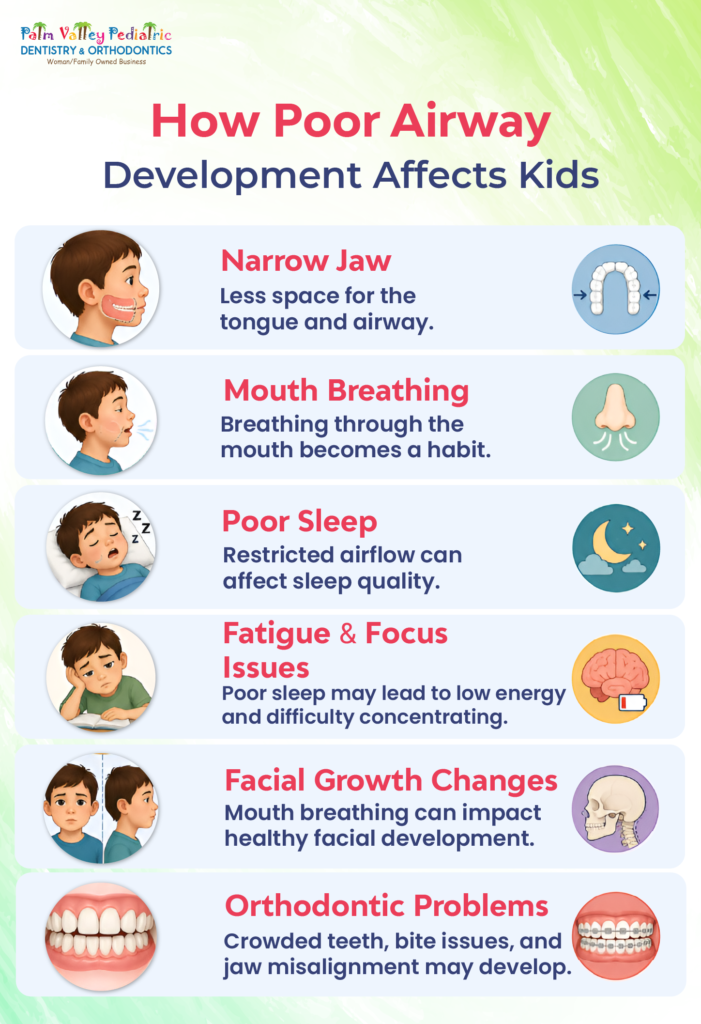
As your child grows, the development of the jaw can directly influence airway space and breathing function. The size and shape of the upper jaw directly influence the space available in the nasal cavity above it.
A narrow or underdeveloped jaw can reduce that space, making it harder to breathe through the nose.
When nasal breathing is difficult, children start breathing through their mouths instead. As growth continues, these changes can influence the way the jaw and facial structure develop over time.
As children grow, proper jaw development can help support:
- Easier breathing
- Better sleep quality
- Balanced facial growth
- Proper tongue posture
How Restricted Airways Can Affect Children
A restricted airway isn’t just about breathing. For many children, the bigger impact is on everyday quality of life, particularly sleep.
Here’s how airway restrictions can show up:
- Breathing difficulties
- Sleep disturbances
- Changes in facial growth patterns
- Orthodontic concerns, such as crowding or bite problems
Signs Your Child May Benefit From an Airway Evaluation
Not every child who snores requires airway orthodontic treatment, but certain breathing, sleep, and jaw development patterns may indicate the need for further evaluation.
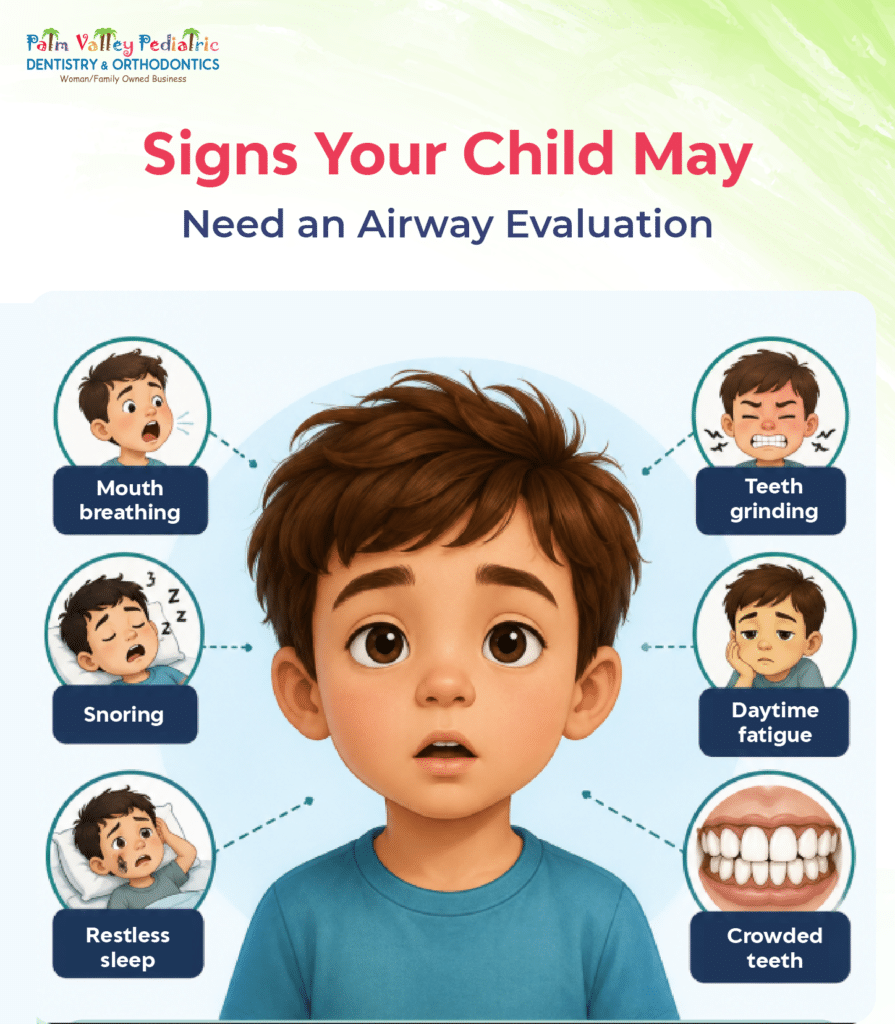
Mouth Breathing
Your children breathe through their mouths most of the time, especially during the day. Mouth breathing indicates that nasal breathing is difficult or uncomfortable. It’s the signs to get concerned about from orthodontics. Healthy breathing happens through the nose.
Snoring or Noisy Sleeping
If your child snores regularly or their breathing sounds labored during sleep, it’s worth mentioning to a dentist or orthodontist. In some cases, this can be a sign of airway narrowing while your child is sleeping.
Restless Sleep
Your children toss and turn throughout the night, wake frequently, or seem unable to find a comfortable sleeping position. It may be unconsciously repositioning themselves to breathe better. This type of disrupted sleep may leave children feeling fatigued despite getting a full night of rest.
Teeth Grinding
Teeth grinding in babies and young children is more common than many parents realize. Grinding during sleep can sometimes be the body’s response to airway obstruction, and the jaw moves to try to reopen the throat.
Chronic Fatigue
If your children are getting enough hours of sleep but still seem tired, or are not sleeping well. It can be due to Poor sleep quality caused by breathing difficulties, which can look a lot like behavioral or attention issues on the surface.
Crowded Teeth or Narrow Dental Arches
Crowded teeth and narrow dental arches can be a visible sign of an underdeveloped jaw. When there isn’t enough room for all the teeth, it often means there isn’t enough space in the airway above. These conditions are commonly connected and may influence one another over time.
How Airway Orthodontics Works
If you suspect your child may have airway-related concerns, here’s what an evaluation and treatment process looks like:
Airway Screening and Evaluation
The first step is a thorough evaluation that goes beyond checking how the teeth line up. An airway-focused assessment includes questions about sleep habits, breathing patterns, and any snoring or restlessness.
It may also include an examination of the mouth, throat, jaw structure, and facial growth patterns. Parents are asked to share observations from home. Information about your child’s sleep and breathing habits is genuinely useful.
Growth and Development Assessment
Because the goal is to guide growth rather than just move teeth, the orthodontist will assess where your child is in their developmental timeline.
When kids start losing teeth and gaining adult teeth offers important windows for intervention, and timing treatment well can make a meaningful difference in outcomes.
Digital Imaging and Diagnostic Tools
Modern orthodontic evaluation includes digital imaging to get a clearer view of jaw structure, airway space, and tooth positioning.
These diagnostic tools offer insights that go beyond what can be identified through a visual examination alone. X-rays of baby teeth and other imaging methods can help provide a more accurate assessment.
Creating a Personalized Treatment Plan
Airway orthodontics is not one-size-fits-all. Orthodontic treatment recommendations are based on the individual child’s growth stage and their overall dental development.
The treatment plan may include one appliance or multiple approaches over time.
Potential Benefits of Airway Orthodontics
| Treatment | Purpose | Benefits |
| Palatal Expansion | Widens the upper jaw and nasal airway. | Creates space for teeth and supports better nasal breathing. |
| Growth Guidance Appliances | Guides jaw growth during childhood. | Promotes healthy airway development and proper bite alignment. |
| Habit Correction Therapy | Addresses mouth breathing, poor tongue posture, and oral habits. | Supports healthy jaw growth and improved breathing patterns. |
Is Your Child’s Smile on the Right Track?
Early dental visits aren’t just about cleaning teeth, they’re about catching problems before they become costly and painful. Our pediatric specialists create personalized care plans that grow with your child, from their very first tooth through their teen years.
Gentle, kid-friendly care in a welcoming environment.
Potential Benefits of Airway Orthodontics
Improved Breathing
Widening the dental arch and guiding jaw development can open up more space in the nasal airway. It makes nasal breathing easier and more comfortable. For children who have been mouth breathing for years, this can feel like a significant change.
Better Sleep Quality
When breathing improves during sleep, sleep quality often follows. Restless children, snoring, or waking frequently may sleep more soundly, which has a ripple effect on mood, focus, and overall health.
Healthier Jaw Development
Guiding jaw growth during the right developmental window can set children up for a more harmonious facial structure. Issues like crossbite, underbite, and deep bite may be easier to address or even prevented when caught early.
Reduced Risk of Future Orthodontic Problems
Proper jaw development and airway orthodontics reduce the severity of crowding, alignment issues, and bite problems. They might otherwise require more complex treatment later.
Support for Overall Growth and Development
Sleep, breathing, and development are deeply connected. Children who sleep well and breathe freely are better positioned to grow, focus, and thrive. It plays important roles in a child’s growth, learning, and daily well-being.
Palm Valley Pediatric Dentistry & Orthodontics provides airway-focused evaluations designed to support healthy breathing, sleep, and jaw development. We take a whole-child approach because a healthy smile and healthy breathing go hand in hand.
Schedule Your Airway Evaluation today.
FAQ’s
What Is Airway Orthodontics?
Airway orthodontics is an approach that evaluates how breathing, jaw growth, airway development, and tooth alignment work together to support overall health.
Is Airway Orthodontics a Real Treatment Approach?
Yes. Orthodontists may use airway-focused evaluations to identify jaw and facial development patterns that could affect breathing and sleep.
How Does Airway Orthodontics Improve Breathing?
Treatments like palatal expansion widen the jaw and increase nasal airway space. Growth guidance appliances help direct jaw development to a more open airway.
What Symptoms May Indicate Airway Issues in Children?
Common signs include chronic mouth breathing, snoring, restless or disrupted sleep, daytime fatigue, teeth grinding, and crowded or narrow dental arches.
Can Airway Orthodontics Help With Snoring?
If snoring is related to airway restrictions or jaw development concerns, treatments that open up airway space may help reduce or resolve it.
Pediatric Dental Specialist at PVPD

Dr. Olga
Dr. Olga brings years of specialized pediatric dental expertise and a genuine passion for children’s oral health to the PVPD team. She specializes in creating anxiety-free dental experiences and early-intervention care strategies that set children up for a lifetime of healthy smiles.
Medically reviewed by Dr. Olga Dolghier, DDS, Pediatric Dentist at Palm Valley Pediatric Dentistry & Orthodontics.