
4 Lip Tie Problems That Show Up Later in Life [+ Treatments]
A restrictive upper lip tie can lead to four common problems: difficulty brushing the upper front teeth, plaque buildup or cavities near the gumline, a gap between the front teeth, and discomfort with lip movement.
Many children have a visible upper labial frenulum and never need treatment. A lip tie only becomes a concern when the tissue is tight enough to affect oral hygiene, tooth spacing, or daily comfort.
At Palm Valley Pediatric Dentistry & Orthodontics in Scottsdale, we help parents understand the difference between a harmless attachment and a lip tie that may need closer attention.
What Is a Lip Tie?
A lip tie happens when the tissue connecting the upper lip to the gum is tight enough to reduce lip movement.
This tissue is called the maxillary labial frenulum or upper labial frenulum.
Every baby has this tissue. In fact, a study of newborns found that upper lip frenula are normal and vary widely in shape and attachment point.
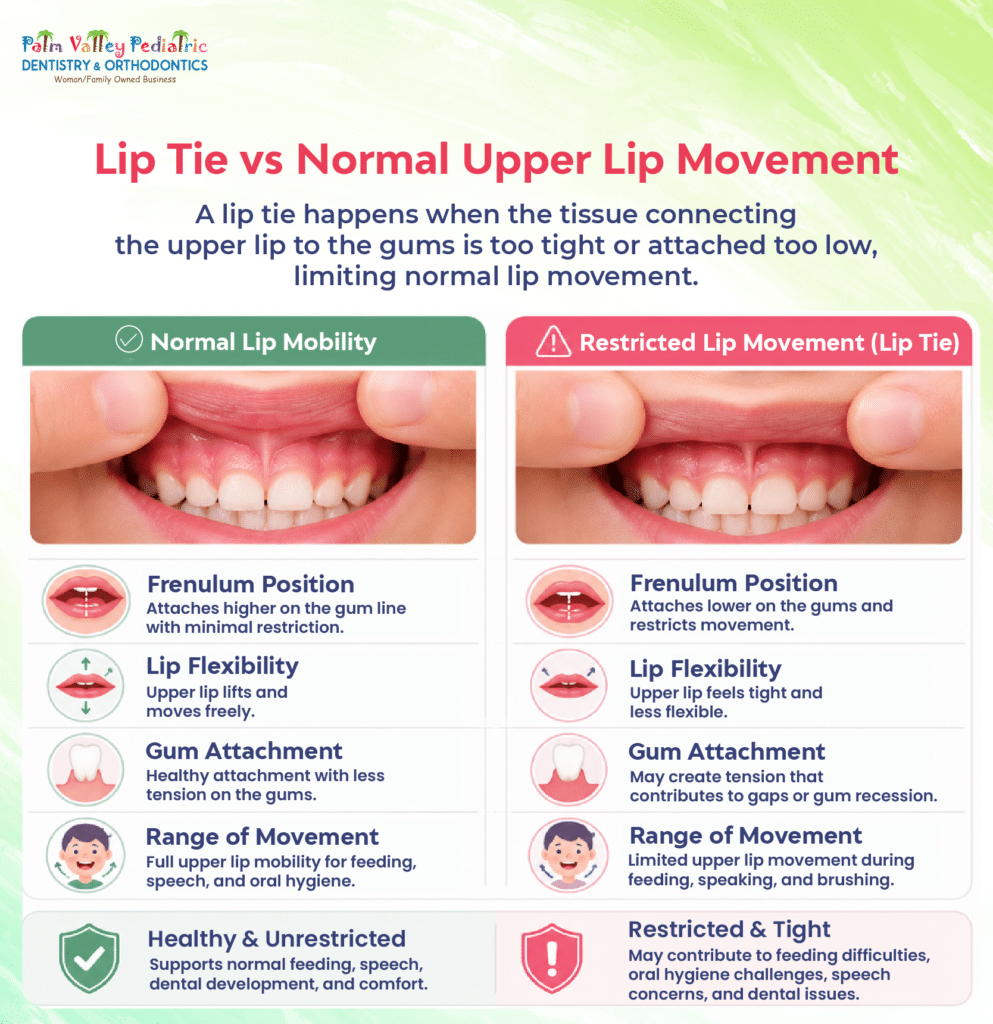
This means that appearance alone cannot confirm whether a child has a problematic lip tie.
A pediatric dentist looks at function.
Can the upper lip move comfortably?
Is brushing difficult? Is there a gap between the front teeth?
Is the child experiencing feeding concerns?
These details matter much more than a quick glance in the mirror.

Is Your Child’s Smile on the Right Track?
Early dental visits aren’t just about cleaning teeth, they’re about catching problems before they become costly and painful. Our pediatric specialists create personalized care plans that grow with your child, from their very first tooth through their teen years.
Gentle, kid-friendly care in a welcoming environment.
What Problems Can an Untreated Lip Tie Cause Later?
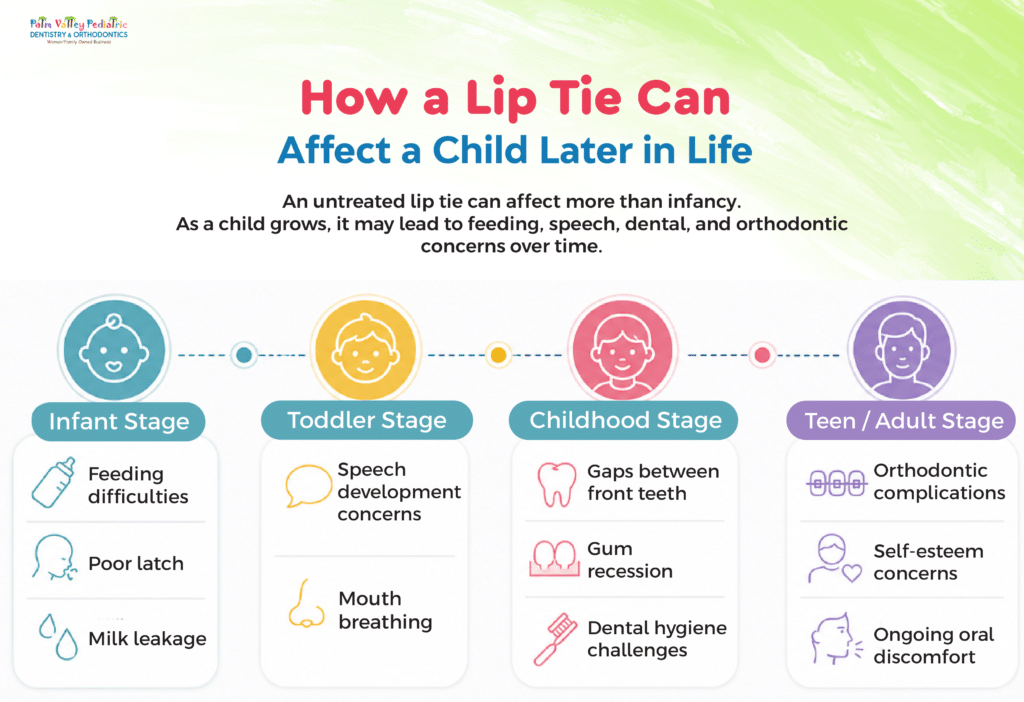
Not every untreated lip tie creates future dental issues.
However, a restrictive lip tie may contribute to certain concerns as a child grows.
1- Difficulty Brushing the Upper Front Teeth
An upper lip tie can make it hard for a child to lift the upper lip. Because of this, brushing near the gumline above the front teeth may be difficult. Young children may miss this area while brushing.
When plaque and food stay around the upper front teeth, the risk of tooth decay, cavities, and gum irritation can increase.
Parents can gently lift the child’s upper lip during brushing and check the area above the front teeth.
Make sure there is no trapped food or plaque near the gums. Follow simple dental care tips for kids to build better oral hygiene habits at home.
If cleaning this area is difficult, ask your pediatric dentist to check the upper lip frenulum during your child’s dental visit.
2- A Gap Between the Front Teeth
A thick or low upper lip frenulum may sometimes be connected to a gap between the two upper front teeth. This gap is called a maxillary midline diastema.
However, a gap between the front teeth is not always a problem. Many children have natural spaces between their teeth while their adult teeth are still growing.
In many cases, dentists wait before suggesting treatment. They first check the child’s tooth growth, gum health, and orthodontic needs.
When necessary, the dentist may also recommend baby teeth X-rays to get a look at developing teeth and hidden dental concerns.
A pediatric dentist or orthodontist can tell you whether the front teeth gap may close naturally or whether the upper lip tie is affecting the position of the teeth.
3- Feeding Challenges in Babies
Some babies with a tight upper lip tie may have trouble getting a good latch during breastfeeding or bottle-feeding. Parents may notice signs such as:
- Clicking sounds during feeding
- Milk leaking from the baby’s mouth
- Long feeding sessions
- Trouble staying latched
- Slow weight gain
However, feeding problems can happen for many reasons. Seeing a visible lip frenulum does not always mean that the baby needs a procedure.
The American Academy of Pediatric Dentistry recommends that a pediatric dentist, pediatrician, or lactation consultant assess the baby’s feeding and mouth movements before recommending treatment.
4- Speech Concerns Need a Closer Look
Parents often ask whether an untreated lip tie can cause speech problems.
A tight upper lip may affect some mouth movements, but speech problems can have many causes.
Tongue movement, hearing, mouth development, and speaking habits may also affect a child’s speech.
If your child has trouble speaking clearly, visit a pediatric dentist for an oral checkup.
The dentist may also suggest an evaluation by a speech-language pathologist.
It is important not to assume that an upper lip tie is the only reason for speech difficulty.
How Can Parents Check for Possible Lip Tie Symptoms?
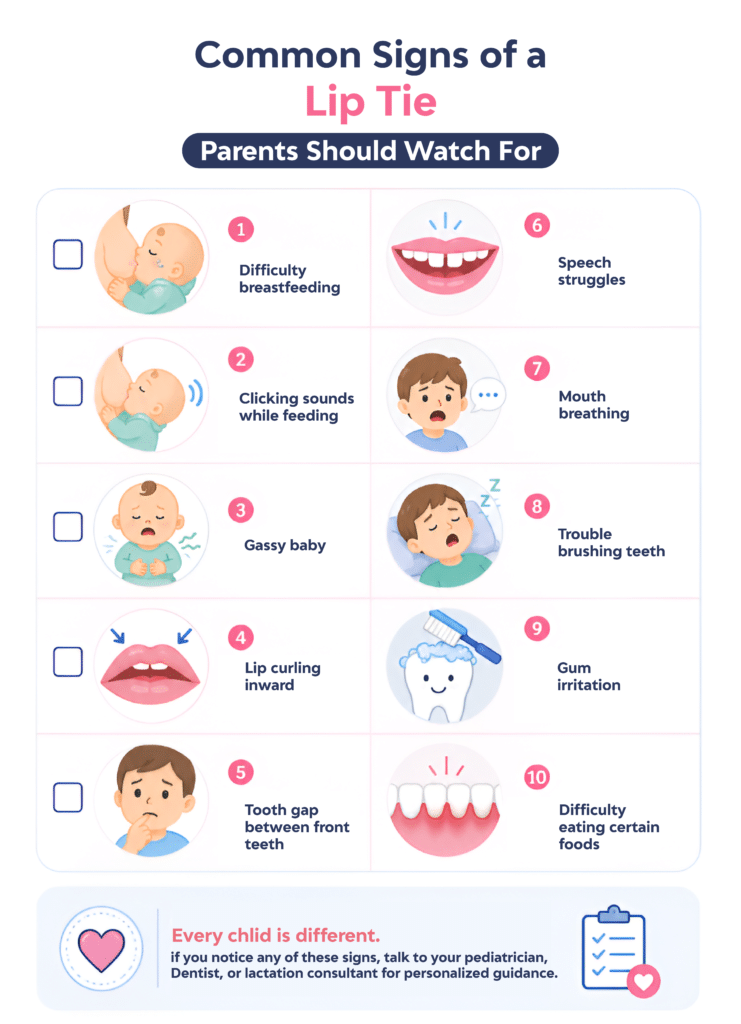
Parents do not need to perform a special test at home.
Instead, pay attention to small signs during brushing, eating, and your child’s daily routine.
Check the Upper Front Teeth During Brushing
Gently lift your child’s upper lip while brushing the front teeth.
Look at the area near the gumline. Is it easy to clean, or does the lip feel tight and difficult to lift?
Watch for plaque buildup, trapped food, red gums, discomfort, or cavities near the upper front teeth.
Younger children may avoid brushing this area because it feels uncomfortable or is difficult to reach.
Look at the Space Between the Front Teeth
A gap between baby teeth is often normal and may help make room for adult teeth.
However, a large gap between the two upper front teeth should be checked during a dental visit if it remains after the adult teeth begin to come in.
A pediatric dentist or orthodontist can tell whether the gap is part of normal tooth development or whether the upper lip frenulum may be affecting the position of the teeth.
Ask Whether the Upper Lip Feels Tight
Older children may be able to explain how they feel.
Ask whether lifting the upper lip, smiling, brushing, or eating certain foods causes discomfort.
With younger children, look for simple signs. They may pull away during brushing, avoid cleaning the upper front teeth, or become upset when the lip is lifted.
Pay Attention to Feeding Signs in Babies
For babies, watch for feeding problems such as difficulty staying latched, clicking sounds, milk leaking from the mouth, long feeding sessions, or slow weight gain.
These signs can have many causes, so they do not always mean that a baby has a lip tie.
A professional tongue- and lip-tie evaluation can help pinpoint the real reason.
Schedule a Pediatric Dental Evaluation
A pediatric dentist can check your child’s upper lip movement, gum health, tooth spacing, brushing habits, and overall oral development.
A lip tie should not be judged by appearance alone.
Treatment is considered only when the upper lip frenulum is causing a clear problem with brushing, feeding, comfort, or tooth development.
Is Your Child’s Smile on the Right Track?
Early dental visits aren’t just about cleaning teeth, they’re about catching problems before they become costly and painful. Our pediatric specialists create personalized care plans that grow with your child, from their very first tooth through their teen years.
Gentle, kid-friendly care in a welcoming environment.
Does Every Child With a Lip Tie Need Treatment?
No. Many children with an upper lip tie do not need treatment.
A lip tie is not always a problem. Some children have a visible or tight upper lip frenulum but do not have pain, feeding problems, tooth decay, or trouble brushing their teeth.
The American Academy of Pediatric Dentistry explains that a tight oral frenulum may affect a child’s oral health in some cases.
However, every child is different.
A pediatric dentist should carefully check the child’s symptoms before recommending any treatment.
The right plan depends on your child’s age and needs. Your dentist may suggest:
- Watching the lip tie over time
- Helping your child brush the upper front teeth properly
- Checking for plaque buildup or gum irritation
- Getting an orthodontic evaluation for a gap between the front teeth
- Considering a lip tie release procedure when it is truly needed
A pediatric dentist will explain the available options and help you choose the best step for your child.
Book Your Child’s Dental Appointment!
Our Scottsdale pediatric dental team can review your child’s upper lip frenulum and explain whether it is affecting oral hygiene, feeding, comfort, or tooth development.
Not every child with a lip tie needs treatment.
A careful dental checkup helps you understand what is happening and whether your child simply needs monitoring, better brushing support, an orthodontic review, or further care.
Schedule your child’s lip tie evaluation today to find out whether the upper lip frenulum is affecting brushing, feeding, comfort, or tooth development.
People Also Ask
What happens if a lip tie is not treated?
Many children with an upper lip tie never develop problems and do not need treatment. However, a tight upper lip frenulum can sometimes make brushing difficult, trap plaque near the gumline, or affect the space between the upper front teeth. A pediatric dentist can check whether the lip tie is causing a real issue or simply needs monitoring.
How can I tell if my child has a serious lip tie?
The appearance of the frenulum does not tell the full story. A lip tie becomes more concerning when it affects daily activities such as brushing, feeding, smiling, or eating. Your pediatric dentist can check upper lip movement, gum health, plaque buildup, tooth spacing, and your child’s comfort before discussing any next steps.
Why does my child have a gap between the front teeth?
A gap between the front teeth is common in young children while baby teeth are falling out and adult teeth are coming in. In some cases, a thick or low upper labial frenulum may play a role. A pediatric dentist or orthodontist can examine the area and tell you whether the gap may close naturally or needs closer attention.
How does a dentist evaluate a lip tie?
The dentist gently lifts the upper lip and checks how easily it moves. They also look at the gums, front teeth, tooth spacing, plaque buildup, and any signs of discomfort. For babies, the dentist may also ask about feeding concerns. The exam is quick, gentle, and focused on how the lip tie affects your child’s daily comfort and oral health.
What should parents do first if they suspect a lip tie?
Schedule a pediatric dental visit. Avoid diagnosing the condition at home based solely on how the frenulum looks. At Palm Valley Pediatric Dentistry & Orthodontics, our Scottsdale team can examine your child’s upper lip frenulum, explain whether it is causing a problem, and recommend the right next step based on your child’s needs.
Pediatric Dental Specialist at PVPD

Dr. Olga
Dr. Olga brings years of specialized pediatric dental expertise and a genuine passion for children’s oral health to the PVPD team. She specializes in creating anxiety-free dental experiences and early-intervention care strategies that set children up for a lifetime of healthy smiles.
Medically reviewed by Dr. Olga Dolghier, DDS, Pediatric Dentist at Palm Valley Pediatric Dentistry & Orthodontics.