
Dental Emergencies in Children: Parents Should Know
Dental emergencies can happen at any time. A fall, sports injury, toothache, or broken tooth can scare your child.
Knowing what to do can help you stay calm. It can also protect your child’s teeth and prevent further problems.
At Palm Valley Pediatric Dentistry & Orthodontics, our Pediatric Dentists provide emergency dental care for children and we offer same-day emergency appointments for kids.
If your child has severe tooth pain, swelling, bleeding, or a damaged tooth, book an appointment with our pediatric dental team. We will check your child’s mouth, find the problem, and recommend the right care.
What Is a Dental Emergency?
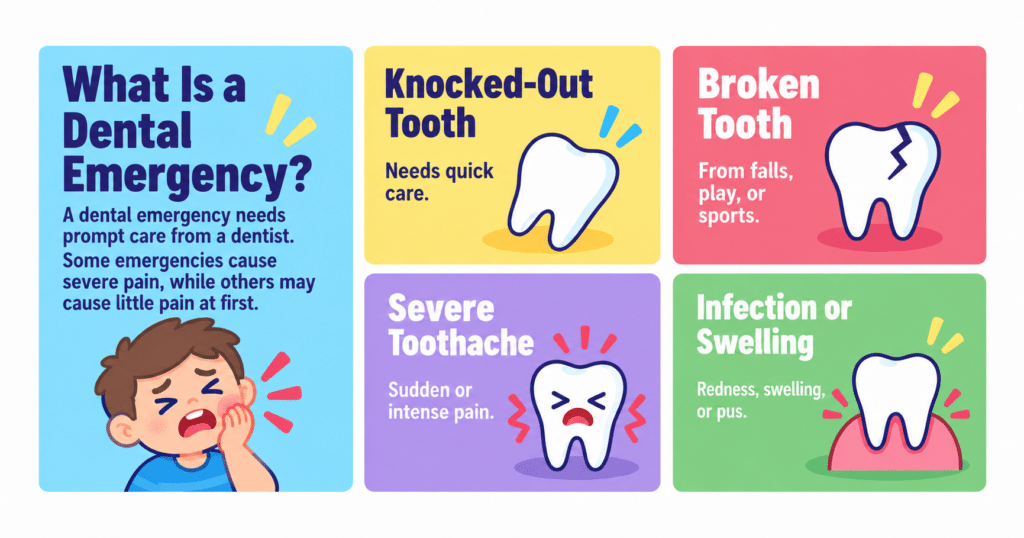
A dental emergency needs prompt care from a dentist. Some emergencies cause severe pain, while others may cause little pain at first.
Children can face dental emergencies during sports, play, bike rides, or everyday activities. Tooth decay can also cause sudden pain or infection.
Common dental emergencies include knocked-out teeth, broken teeth, severe toothaches, and dental infections. Gum injuries and damaged dental work can also need quick care.
If you notice sudden pain, swelling, bleeding, or tooth damage, contact your child’s dentist. Quick care can help protect your child’s smile.

Is Your Child’s Smile on the Right Track?
Early dental visits aren’t just about cleaning teeth, they’re about catching problems before they become costly and painful. Our pediatric specialists create personalized care plans that grow with your child, from their very first tooth through their teen years.
Gentle, kid-friendly care in a welcoming environment.
7 Common Dental Emergencies in Children
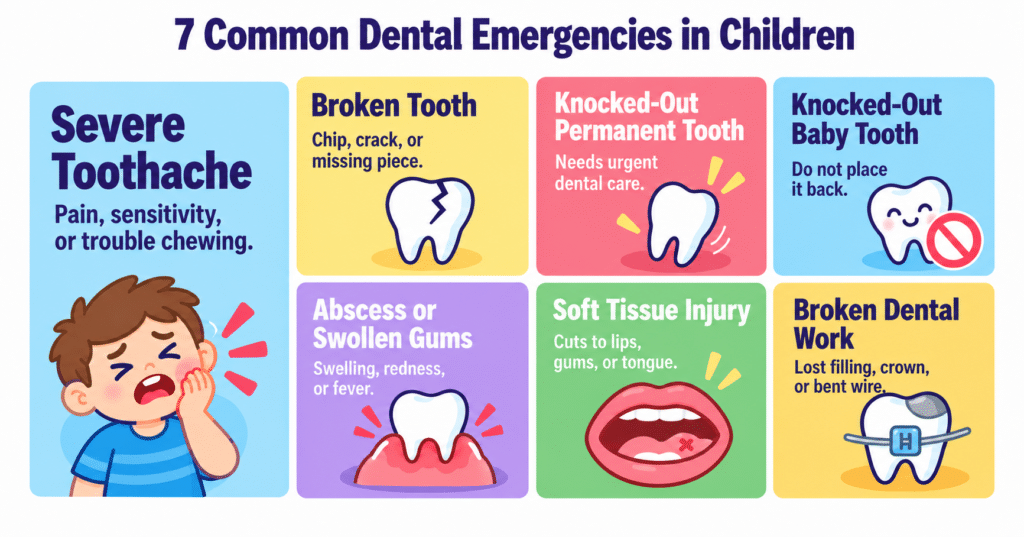
Children can experience many types of dental emergencies. Some happen after an accident, while others start with tooth decay or infection.
These are some common dental emergencies every parent should know.
1. Severe Toothache
A throbbing toothache can come from tooth decay, infection, or an injury. Your child may feel sharp, dull, or throbbing pain.
They may also avoid certain foods or chew only on one side. Some children may wake up at night because of tooth pain.
Start by having your child rinse their mouth with warm water. Check the area for food stuck between the teeth.
Do not place aspirin directly on your child’s gums. Aspirin can irritate and damage the soft tissue.
If the pain continues, contact your pediatric dentist as soon as possible. Your dentist can find the cause and recommend the right treatment.
2. Chipped or Broken Tooth
Children can chip or break teeth after falls, sports injuries, or accidents. A tooth can also break when your child bites something hard.
First, help your child rinse their mouth with water. Look for any broken pieces of the tooth.
Save the pieces if you find them. Then place a cold compress on the outside of your child’s mouth.
A small chip may seem harmless, but it still needs a dental check. A larger break can expose the inner part of the tooth.
Contact your child’s dentist and explain what happened. The dentist can check the chipped tooth and recommend the right treatment.
3. Knocked-Out Permanent Tooth
A knocked-out permanent tooth needs quick dental care. Fast action can give the tooth a better chance of staying healthy.
First, find the tooth if you can. Hold the tooth by the crown, not the root.
If possible, gently place the tooth back into its socket. Do not force it into place.
If you cannot put it back, keep it in milk or tooth preservation solution. Then seek emergency dental care right away.
Do not scrub the root or remove any attached tissue. Avoid letting the tooth dry out.
Call your child’s dentist while you prepare to leave. Your dentist can guide you through the next steps.
4. Knocked-Out Baby Tooth
A knocked-out baby tooth needs different care. You should not try to put a baby tooth back into the socket.
Putting it back can harm the developing permanent tooth. Instead, contact your child’s pediatric dentist for guidance.
Your dentist can examine the area and check nearby teeth. The dentist can also look for damage that you may not notice at home.
5. Dental Abscess or Swollen Gums
A dental abscess can cause pain, swelling, and infection. You may notice a small bump near your child’s tooth.
The gums may also look red or swollen. Your child may have bad breath, tooth sensitivity, or trouble chewing.
Some children develop fever or swelling around the face. These signs can mean the infection has become more serious.
Contact your child’s dentist if you notice these symptoms. Do not wait for the swelling or pain to disappear.
A dentist can find the cause and recommend treatment. Treatment may include pulp therapy, root canal treatment, or tooth extraction.
The right treatment depends on the child’s tooth and the infection. Early care can help prevent the infection from spreading.
6. Cuts and Other Soft Tissue Injuries
Children can injure their lips, cheeks, tongue, or gums during a fall. These injuries can cause a lot of bleeding.
Start by helping your child stay calm. Then use clean gauze or a clean cloth to apply gentle pressure.
Keep the pressure on the area for several minutes. A cold compress can also help reduce swelling.
Contact your child’s dentist if the injury affects the teeth or gums. Seek emergency medical care if heavy bleeding does not stop.
You should also seek medical care if the injury looks severe.
7. Broken Fillings, Crowns, or Dental Work
Children can sometimes lose or damage a filling or crown. Braces can also cause problems when a bracket breaks or a wire bends.
A broken wire may rub against your child’s cheek or tongue. Dental wax can help cover a sharp wire until your dentist checks it.
Do not pull or cut a wire unless your dentist tells you to. Call your child’s dental office and explain the problem.
Your dentist can tell you what to do until your child receives care.
What Should Parents Do During a Dental Emergency?
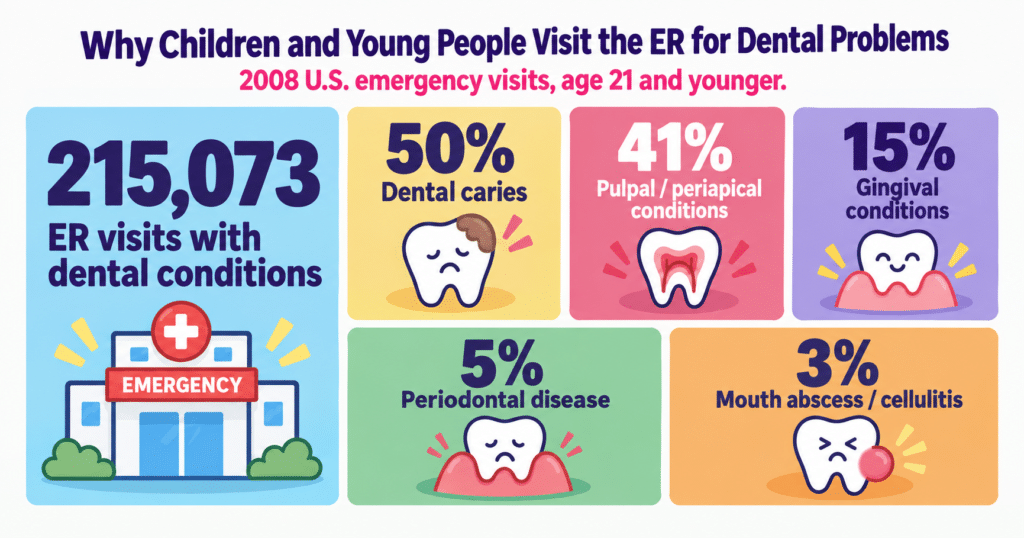
Dental emergencies can affect children of all ages. One national study found more than 215,000 dental-related emergency visits among children in one year.
A dental emergency can feel stressful for both parents and children. Your child may feel scared, upset, or confused.
Start by keeping your child calm. Then check the mouth and look for the source of the problem.
If you see bleeding, use clean gauze or a clean cloth. If you see swelling, place a cold compress outside the mouth.
Save broken tooth pieces if you find them. Keep a knocked-out permanent tooth moist until your child sees a dentist.
Then contact your pediatric dentist and explain what happened. Tell the dentist when the injury happened and what symptoms your child has.
Your dentist can then guide you on the next step.
When Should You Go to the Emergency Room?
Some dental problems need care from a medical team. You should not wait for a dental appointment in these situations.
Go to the nearest emergency room if your child has trouble breathing or swallowing. You should also seek urgent medical care for fast-growing facial swelling.
Heavy bleeding also needs immediate medical attention. A serious head injury may need emergency care as well.
A pediatric dentist can treat many dental emergencies. However, some injuries need medical care first.
When you feel unsure, choose safety and seek urgent medical help.
What Should You Avoid During a Dental Emergency?
Parents often try home remedies when their child has tooth pain or a dental injury. Some remedies can make the problem worse or delay proper treatment.
1- Aspirin and Your Child’s Gums
Do not place aspirin directly on your child’s gums. Aspirin can irritate the soft tissue and cause painful burns. Instead, contact your child’s dentist for advice about managing the pain.
2- Removing Objects from Between Teeth
Food can sometimes get stuck between your child’s teeth. Do not use sharp objects to remove it. Sharp tools can cut the gums or damage the teeth. Ask your dentist for a safe way to remove anything that remains stuck.
3- A Knocked-Out Baby Tooth
Do not put a knocked-out baby tooth back into the socket. Replacing it can damage the permanent tooth developing underneath.
4- Caring for a Knocked-Out Permanent Tooth
A knocked-out permanent tooth needs quick attention. Do not scrub the root or remove any tissue attached to it. Handle the tooth by the crown and keep it moist while you contact your child’s dentist.
5- Treating a Dental Abscess at Home
A dental abscess usually needs professional dental care. Do not pop or squeeze the abscess at home. This can cause more pain and may spread the infection.
6- Ignoring Severe Dental Symptoms
Some dental problems can become worse without treatment. Do not ignore severe pain, swelling, bleeding, or signs of infection.
Contact your child’s dentist as soon as possible. Quick care can help protect your child’s teeth and overall oral health.
How Can You Prevent Dental Emergencies?
You cannot prevent every dental emergency. However, simple habits can lower your child’s risk.
Encourage your child to wear a mouthguard during contact sports. A properly fitted mouthguard can help protect the teeth during sports.
Teach your child not to chew ice or very hard objects. These habits can damage teeth and dental work.
Regular dental visits can also help catch problems early. Your dentist can find cavities and other concerns before they cause sudden pain. NIDCR reports that about 52% of children ages 6 to 8 had dental caries in their baby teeth. About 17% had untreated decay.
Good brushing and flossing also protect your child’s teeth. Help younger children brush properly until they can manage the routine alone.
Why Choose a Pediatric Dentist for Dental Emergencies?
Children need more than quick treatment during a dental emergency. They also need a team that understands how children feel.
A pediatric dentist knows how to make dental care easier for young patients. A calm and friendly approach can help your child feel safer during treatment.
PVPD provides pediatric emergency dental care for children. The team treats problems such as tooth injuries, severe tooth pain, and dental infections.
PVPD also provides treatments for damaged and infected teeth. These treatments include pulp therapy, fillings, crowns, and extractions when needed.
The goal is simple. Your child should receive the right care while feeling comfortable and supported.
What Happens During a Pediatric Dental Emergency Visit?
Your child’s visit will depend on the type of emergency. First, the dentist will examine your child’s teeth, gums, and mouth.
The dentist may take digital X-rays if needed. These images can help the dentist find damage that does not show during a regular exam.
Next, the dentist will explain the problem and treatment options. The team will also answer your questions before treatment begins.
Some children may need simple care and follow-up visits. Other children may need treatment to repair or remove a damaged tooth.
PVPD offers several treatments for children with damaged or infected teeth. The right option depends on your child’s age, tooth, and dental needs.
How Can Parents Help After a Dental Emergency?
Your child may need extra care after emergency treatment. Follow all instructions from your child’s dentist.
Your child may need soft foods for a short time. The dentist may also recommend changes to brushing or eating.
Watch for new swelling, bleeding, fever, or worsening pain. Contact your dentist if your child’s symptoms become worse.
Keep all follow-up appointments as well. These visits help your dentist check healing and protect your child’s oral health.
Your support can also help your child feel less afraid after an emergency. Stay positive and remind your child that dental care helps protect their smile.
Dental Emergencies Can Feel Scary, But You Are Not Alone!
Dental emergencies can happen at home, school, or during play. A quick and calm response can make a stressful moment easier.
Start by checking your child and keeping them calm. Then contact your pediatric dentist for guidance.
Do not ignore severe pain, swelling, bleeding, or damaged teeth. Quick dental care can protect your child’s smile and prevent more serious problems.
At Palm Valley Pediatric Dentistry & Orthodontics, we provide emergency dental care for children. Our team offers same-day emergency appointments and child-focused care. We have offices in Scottsdale, Buckeye, Surprise, Goodyear, Chandler, and East Mesa.
Get Help for Your Child’s Dental Emergency!
A dental emergency can feel frightening when it happens to your child. You do not have to handle it alone.
If your child has severe tooth pain, swelling, or a dental injury, contact PVPD. Our pediatric dental team can examine your child and recommend the right care.
You can book an online appointment or call (623) 535-7873.
We are here to help your child feel comfortable and protect their healthy smile.
Give Your Child the Gift of a Healthy Smile
PVPD doesn’t just treat teeth; we build lasting relationships with families. More confident kids. More comfortable appointments. More reasons to smile. Our patients leave happier and healthier, visit after visit.
Serving families across Scottsdale, because every child deserves a great smile.
People Also Ask
How quickly should I get help for a dental emergency?
Contact your child’s dentist as soon as possible after a dental emergency. Quick care can reduce pain and help prevent further damage.
Can a dental emergency happen without pain?
Yes, some dental injuries may not cause pain right away. Your child should still see a dentist after a serious mouth injury.
What should I bring to my child’s emergency dental visit?
Bring any broken tooth pieces or dental items related to the injury. Tell the dentist when the injury happened and what symptoms your child noticed.
Can a dentist save a damaged tooth?
A dentist may save a damaged tooth with the right treatment. The treatment will depend on the type and amount of damage.
How can I keep my child calm during a dental emergency?
Stay calm and speak to your child in a gentle voice. Explain that the dentist will check the problem and help them feel better.
Does my child need emergency care for a loose tooth?
A loose baby tooth may not need emergency care when it naturally falls out. A loose permanent tooth after an injury needs a dental check.
Can tooth decay cause a dental emergency?
Yes, untreated tooth decay can cause severe pain or infection. Regular dental visits can help find decay before it becomes an emergency.
What should I do if my child’s dental emergency happens after hours?
Call your child’s dental office and follow their emergency instructions. Seek urgent medical care for severe swelling, heavy bleeding, or breathing problems.
Pediatric Dental Specialist at PVPD

Dr. Olga
Dr. Olga brings years of specialized pediatric dental expertise and a genuine passion for children’s oral health to the PVPD team. She specializes in creating anxiety-free dental experiences and early-intervention care strategies that set children up for a lifetime of healthy smiles.
Medically reviewed by Dr. Olga Dolghier, DDS, Pediatric Dentist at Palm Valley Pediatric Dentistry & Orthodontics.