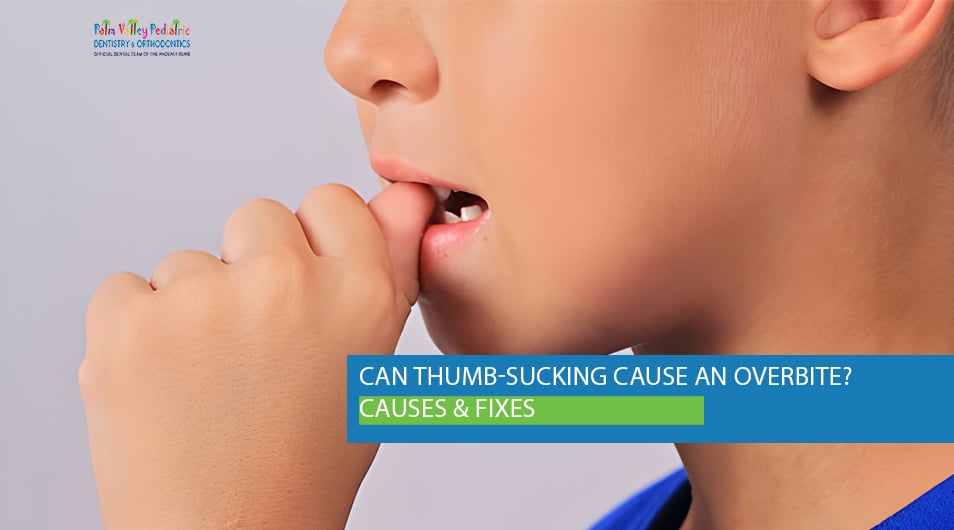
Can Thumb-sucking Cause an Overbite? 5 Helpful Tips to Fix!
Thumb-sucking is normal for babies and young children. Sucking can help babies feel calm and comfortable when they are tired or upset.
For most children, the habit fades as they grow. However, long-term thumb-sucking can affect the way the teeth and jaws develop. Prolonged thumb or finger sucking can be due to bite problems such as an open bite, increased overjet, and posterior crossbite.
Parents can help children stop the habit before it causes bigger dental problems.
At Palm Valley Pediatric Dentistry & Orthodontics, our Pediatric Dentists provide gentle, age-appropriate care to support your child’s teeth, bite, and overall oral health.
If you are concerned about thumb-sucking or your child’s developing bite, book an appointment with our pediatric dental team.
3 The good news? You can stop damage to teeth from thumbsucking by helping your kid to stop this habit at an early age. So, Let’s learn how to fix an overbite from thumbsucking so you can preserve your kid’s beautiful smile for a lifetime!
Read: How To Break Lip-Sucking Habits In Kids?
Why Do Babies Suck Their Thumbs?
Babies have a natural sucking reflex. Thumb-sucking can help them feel safe, calm, and comfortable.
Many babies suck their thumbs when they feel tired, hungry, bored, or upset. Some children also use thumb-sucking to help themselves fall asleep.
Thumb-sucking is usually not a concern during infancy. The concern grows when the habit continues for a long time or happens often as the child’s teeth and jaws develop.

Is Your Child’s Smile on the Right Track?
Early dental visits aren’t just about cleaning teeth, they’re about catching problems before they become costly and painful. Our pediatric specialists create personalized care plans that grow with your child, from their very first tooth through their teen years.
Gentle, kid-friendly care in a welcoming environment.
When Does Thumb-Sucking Become a Problem?
There is no need to panic if your baby sucks their thumb. Most young children naturally stop the habit as they grow.
Parents should help children stop nonnutritive sucking habits by around 36 months, or 3 years of age, because prolonged habits can affect the developing teeth and jaws.
The risk also depends on how often, how strongly, and how long your child sucks their thumb.
A child who sucks their thumb frequently and strongly may have a greater chance of developing changes in their bite.
Can Thumbsucking Cause an Overbite?
Yes, long-term thumb-sucking can lead to changes in a child’s bite.
When a child repeatedly sucks their thumb, the thumb puts pressure on the developing teeth and mouth.
Over time, this pressure can push the upper front teeth forward and change the way the upper and lower teeth meet.
Thumb-sucking can also be linked to increased overjet, open bite, and posterior crossbite. The exact effect varies from child to child.
Give Your Child the Gift of a Healthy Smile
PVPD doesn’t just treat teeth; we build lasting relationships with families. More confident kids. More comfortable appointments. More reasons to smile. Our patients leave happier and healthier, visit after visit.
Serving families across Scottsdale, because every child deserves a great smile.
How Does Thumb-Sucking Affect the Teeth?
Long-term thumb-sucking can affect more than just the front teeth. It can also change the way the upper and lower jaws fit together.
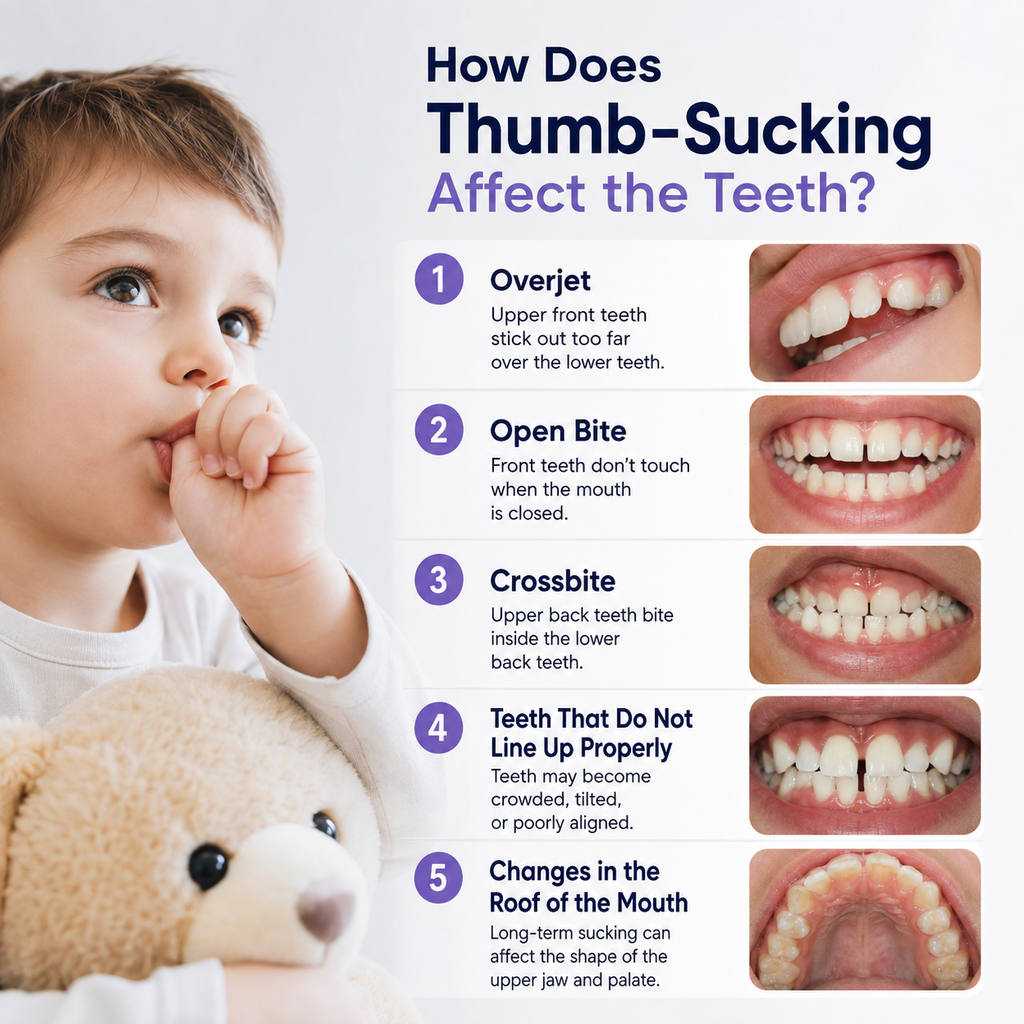
1. Overjet
Overjet means the upper front teeth sit farther forward than the lower front teeth.
Long-term finger or thumb-sucking can push the upper front teeth forward. This can make the teeth look more prominent.
This can also affect how your child bites and closes their mouth.
2. Open Bite
An open bite happens when some upper and lower teeth do not touch when your child closes their mouth.
Long-term sucking habits can affect how the front teeth grow and may contribute to an anterior open bite.
You may notice a space between the front teeth even when your child closes their mouth.
3. Crossbite
A posterior crossbite happens when some upper back teeth bite inside the lower back teeth.
Prolonged sucking habits can affect the width and shape of the upper jaw and are associated with posterior crossbite.
This can make your child’s bite uneven and may affect how the teeth come together.
4. Teeth That Do Not Line Up Properly
Thumb-sucking can affect how the teeth come in. Your child’s teeth may become crowded, tilted, or poorly aligned.
When the teeth do not line up correctly, your child may have a harder time biting or chewing comfortably.
A pediatric dentist can watch your child’s tooth development and check whether the habit is affecting their bite.
5. Changes in the Roof of the Mouth
Long-term sucking can affect the developing shape of the upper jaw and palate.
The effect depends on your child’s age, how often they suck their thumb, and how much pressure they use.
Changes in the palate can also affect how the upper and lower teeth fit together as your child grows.
Does Thumb-Sucking Cause Speech Problems?
Thumb-sucking does not automatically cause speech problems. However, changes in the position of the front teeth and the way the mouth develops can sometimes affect speech.
Children with an open bite or other dental changes may have difficulty making certain sounds.
If you notice a speech concern, talk with your child’s pediatric dentist or speech professional.
How Can You Help Your Child Stop Thumbsucking?
Stopping a habit can take time. Try to make the process calm and positive instead of making your child feel ashamed.
1. Find the Trigger
Notice when your child sucks their thumb most often. They may do it when they feel tired, worried, bored, or ready for sleep.
Once you know the trigger, offer another way to help your child feel calm.
2. Give Gentle Reminders
Avoid yelling or punishing your child for sucking their thumb. A gentle reminder can work better.
You can say, “Let’s take your thumb out and give your hands something else to do.”
3. Offer Comfort in Other Ways
If your child sucks their thumb when they feel upset, offer a hug, a favorite toy, a blanket, or another calming activity.
This helps your child learn a new way to feel safe and relaxed.
4. Use Positive Rewards
Praise your child when they go without thumb-sucking.
You can use a simple calendar and let your child add a sticker for each successful day. Small rewards and encouragement can make the process feel positive.
5. Talk to Your Pediatric Dentist
If your child continues thumb-sucking after age 3 or you notice changes in their teeth, talk with a pediatric dentist.
Your dentist can check the developing teeth and bite and help you decide whether your child needs extra support to stop the habit.
Early dental visits are important so parents can receive guidance about nonnutritive sucking habits.
Can You Fix an Overbite Caused by Thumb-Sucking?
Stopping thumb-sucking can help prevent the problem from getting worse, especially while the teeth and jaws are still developing.
However, you should not try to move your child’s teeth at home. If your child already has an overbite, open bite, or another bite problem, a pediatric dentist or orthodontist should examine it.
Some bite changes may improve after the habit stops, while others may need orthodontic treatment. The treatment depends on your child’s age, tooth development, and the type and severity of the bite problem.
When Should Your Child See a Dentist?
Consider a dental visit if you notice:
- Thumb-sucking continues after age 3
- Upper front teeth start to move forward
- An open bite develops
- The upper and lower teeth do not meet properly
- Biting or chewing becomes difficult
- The shape of the upper jaw seems to change
- Concerns about tooth or jaw development arise
Early dental visits allow a pediatric dentist to monitor your child’s teeth and jaw growth and address any concerns before they become more serious.
How Do Dentists Treat Thumb-Sucking Problems?
The first step is usually to understand the habit and check how it affects your child’s teeth and bite.
If the habit continues, your pediatric dentist may recommend behavior-based strategies to help your child stop. In some cases, a dental appliance may help discourage thumb-sucking.
A mouth appliance can help children who continue sucking their thumbs past age 3.
Thumb-Sucking and Your Child’s Growing Smile at PVPD!
Our pediatric dentists help parents understand how oral habits can affect their child’s developing teeth and bite.
We can check your child’s teeth, jaw growth, and bite and give you simple advice for stopping thumb-sucking when needed. If your child needs further care, our team can also help you understand the next steps.
If your child is having trouble stopping or you notice changes in their teeth, schedule a visit with PVPD’s pediatric dentists.
People Also Ask
Does thumb-sucking affect baby teeth?
Yes. Long-term thumb-sucking can change the position of baby teeth and affect how the teeth come together. A pediatric dentist can monitor these changes as your child grows.
Can thumb-sucking change the shape of the jaw?
Long-term sucking habits can affect the growth and shape of the developing upper jaw. The effect can vary based on how often and how strongly a child sucks their thumb.
Is it better to use a pacifier instead of thumb-sucking?
Both habits can affect developing teeth when they continue for too long. A pacifier can be easier to take away than a thumb, but parents should still follow age-appropriate guidance about stopping the habit.
What should I do if my child sucks their thumb while sleeping?
Start by noticing when and why the habit happens. Gentle reminders and other calming routines, such as a bedtime story or comfort item, may help your child gradually stop.
Can thumb-sucking cause crooked teeth?
Long-term thumb-sucking can affect the position of developing teeth. This may cause some teeth to move or grow out of their normal position.
Does every child who sucks their thumb develop dental problems?
No. Dental changes do not happen in every child who sucks their thumb. The risk depends on factors such as the child’s age, how often they suck, how long the habit continues, and how strongly they suck.
Related Post:
Choosing the Right Pediatric Dentist in Scottsdale for Your Child’s Oral Health
Understanding Pulp Treatment: What are a Pulpotomy and a Pulpectomy?
Caring for Your Child’s Teeth: A Guide to Pediatric Dentistry in Scottsdale
Pediatric Dental Specialist at PVPD

Dr. Olga
Dr. Olga brings years of specialized pediatric dental expertise and a genuine passion for children’s oral health to the PVPD team. She specializes in creating anxiety-free dental experiences and early-intervention care strategies that set children up for a lifetime of healthy smiles.
Medically reviewed by Dr. Olga Dolghier, DDS, Pediatric Dentist at Palm Valley Pediatric Dentistry & Orthodontics.