How to Reduce Gap Between Teeth Naturally at Home [4 Ways]
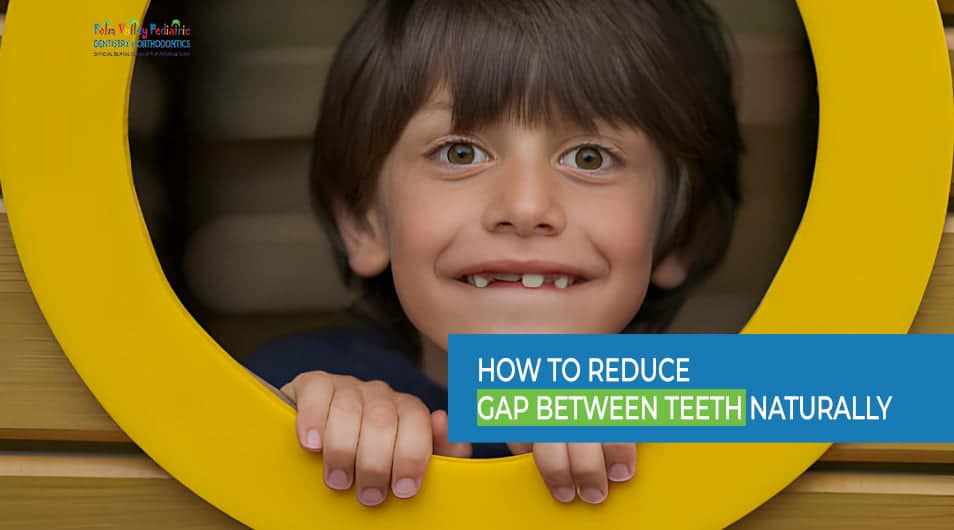
A gap between the front teeth is called a midline diastema. Most young kids have one, and it often shrinks on its own as adult teeth come in. Safe habits like good tongue posture and gentle oral care may help a little.
But forcing teeth together at home with rubber bands is not safe. It can hurt your gums and teeth. A dentist can close the gap safely with bonding, veneers, or clear aligners.
Dr. Olga leads care at Palm Valley Pediatric Dentistry & Orthodontics, where she treats kids and teens with gentle care. She’s seen every kind of tooth gap, from small childhood spacing to gaps that need real treatment.
Our team walks every family through their options clearly, so no one feels rushed or confused.
If your child has a gap that worries you, PVPD is a good place to start your child’s dental treatment.

Is Your Child’s Smile on the Right Track?
Early dental visits aren’t just about cleaning teeth, they’re about catching problems before they become costly and painful. Our pediatric specialists create personalized care plans that grow with your child, from their very first tooth through their teen years.
Gentle, kid-friendly care in a welcoming environment.
What Causes a Gap Between Teeth?
Dentists call a gap between the two front teeth “midline diastema.”
Over 98% of 6-year-olds have some form of midline diastema. Sometimes only one gap shows up. Other times, small gaps sit between several teeth. Dentists call this second pattern “generalized spacing.”
Many things can cause a gap.
1- Small or Oddly Shaped Teeth
Teeth that don’t fill up enough space leave room for gaps.
For example, a child with unusually narrow front teeth, sometimes called “peg-shaped” teeth, has visible space on either side, even when every other tooth lines up normally.
2- A Jaw That Doesn’t Quite Match Tooth Size
When teeth are smaller than the jaw, extra space appears between them.
Think of a jaw built for a full set of average-size teeth, but the teeth themselves come in slightly smaller.
That size mismatch leaves gaps scattered across the smile, not just between the front two teeth.
3- Family Genes
Gaps often run in families, just like tooth color or shape.
A parent or grandparent with a noticeable gap between their front teeth often passes that same trait down, even if no other dental issues run in the family.
4- A Thick Tissue Between the Front Teeth
This tissue, called the labial frenulum, can push the front teeth apart if it’s larger than normal. In some children, this tissue runs so low that it reaches between the two front teeth, creating a wide, stubborn gap that doesn’t close much on its own, even as adult teeth erupt.
5- A Missing or Small Tooth Next Door
This leaves extra space where a full-size tooth would normally sit.
A child missing a lateral incisor, the tooth right next to the front tooth, ends up with a gap nearby, since nothing fills that space as the smile develops.
6- Childhood Habits Like Thumb-Sucking
Sucking a thumb for years can push the front teeth forward and apart.
A child who sucks their thumb well past age four often develops a gap and a slight forward tilt in the front teeth.
Knowing the cause helps you and your dentist pick the right fix.
What are the Possible Causes of Gap in Teeth?
Midline diastema is a condition in which gaps are commonly found between the upper two front teeth. The gaps can be restricted to one or two gap teeth, called localized spacing, or between the teeth, which is called generalized spacing.
Before moving forward to the solution of gaps between teeth, one must know how to fix teeth gaps.
There can be several reasons for spacing or gaps between teeth, such as irregular alignment, crowding, or missing teeth.
In addition, some other potential for the teeth gap may occur:
4 Safe Habits That May Help a Small Gap
A few gentle habits may help a small gap look less noticeable over time. None of these work fast, and none replace a dentist’s advice for a gap that bothers you.
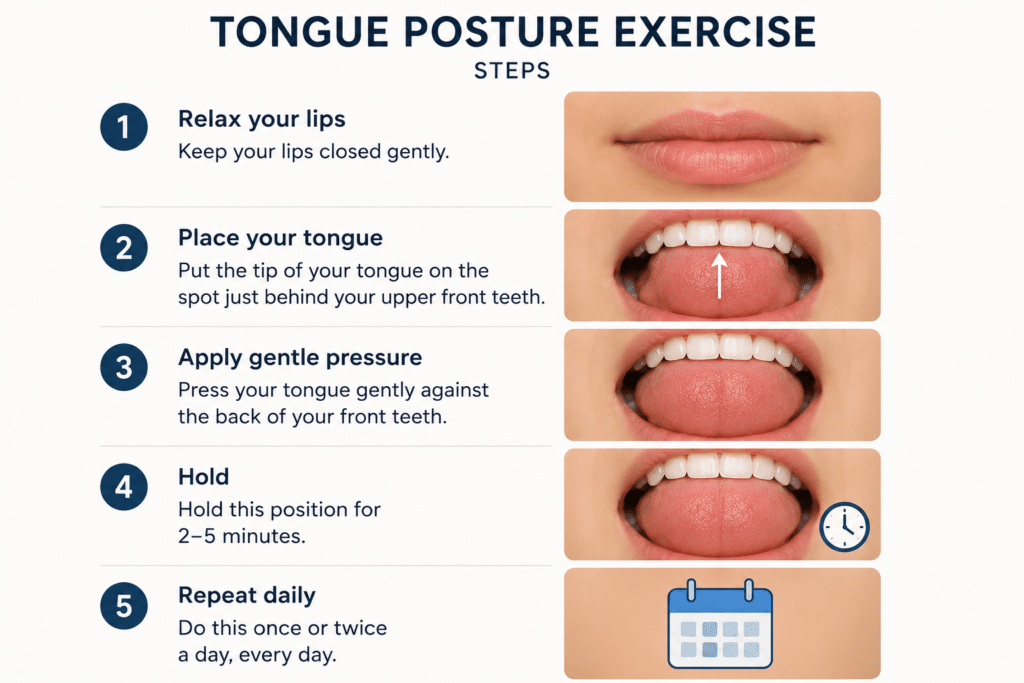
1-Tongue Posture Exercises
Some people try gently pressing the tongue against the back of the front teeth for a few minutes a day.
The idea is that steady, light pressure may nudge teeth slightly closer together over months.
It is low-risk, though, since it uses only gentle pressure and no tools.
2- A Tooth-Friendly Diet
What your child eats affects more than cavities.
Foods rich in calcium, like dairy, leafy greens, and almonds, support strong teeth and gums.
A steady diet full of fruits and vegetables also helps overall oral health, which supports whatever treatment path you choose later.
3- Good Oral Hygiene
Brushing twice a day and flossing regularly keep the gums around the gap healthy.
Basically, you need to put your child on a proper baby dental care regimen.
Healthy gums matter even more when a gap is present, since food and plaque can build up more easily in that open space.
4- Breaking Habits Like Thumb-Sucking
If thumb-sucking caused the gap, stopping the habit early can prevent it from getting worse.
Talk to your pediatric dentist about gentle ways to help your child stop, especially before age 4 or 5.
Why Should You Avoid DIY Gap Bands?
You may have seen videos online showing people wrapping rubber bands or hair ties around their front teeth to “pull” a gap closed.
Please don’t try this at home.
Let us tell you why it is risky.
A rubber band placed around a tooth can slip down toward the gum, sometimes without anyone noticing. Once it moves below the gumline, it can cut off blood flow to the tissue around the tooth.
This can lead to gum damage, infection, and in serious cases, tooth loss.
Dentists have documented cases where a simple rubber band caused permanent damage that no dentist could fully reverse.
Orthodontic elastics used in professional treatment work very differently. A dentist places them with the right amount of force, checks on them regularly, and removes them at the right time.
A rubber band from a drawer at home has none of those safeguards.
If you want a gap closed with gentle, controlled pressure, ask your dentist about clear aligners such as Invisalign Express or retainers with built-in springs.
These tools apply safe, measured force under professional supervision, something no home rubber band can match.
6 Real Treatments Dentists Use for a Tooth Gap
When a gap bothers you, or your child, a dentist has several safe, proven options. Each one fits a different type of gap and budget.
| Treatment | Best For | How It Works |
| Dental bonding | Small to medium gaps, chipped teeth | A dentist shapes tooth-colored resin onto the teeth to fill the space. |
| Veneers | Gaps plus a desire to reshape teeth | Thin shells cover the front of the teeth, closing gaps and evening out shape. |
| Dental crowns | Gaps next to a damaged tooth | A crown rebuilds the tooth’s shape and closes the space at the same time. |
| Clear aligners | Wider gaps, multiple teeth | Custom trays slowly move teeth into place over several months. |
| Braces | Complex spacing, bite issues | Brackets and wires shift multiple teeth over time, closing gaps as part of a full realignment. |
| Frenectomy | Gaps caused by a large labial frenulum | A quick procedure trims the tissue causing the gap, often paired with another treatment above. |
A dentist examines your teeth, gums, and bite before recommending one of these. Cost and treatment time vary, so ask for a full breakdown before deciding.
When a “Quick Fix” Went Wrong!
A teenage patient came to PVPD after wearing a small rubber band around her front teeth for about two weeks, based on a video she’d seen online.
She noticed mild gum swelling and assumed it would pass on its own.
By the time she came in, the band had slipped slightly below the gumline.
Our dentist removed it right away and treated the irritated gum tissue.
Thankfully, she caught the problem early enough to avoid lasting damage, and the gum healed within two weeks.
Once healed, she chose clear aligners instead.
Six months later, her gap had closed evenly, with no damage to her gums or teeth.
Her case shows exactly why professional tools, not home remedies, are the safer path to closing a gap.
Bottom Line!
A gap between the front teeth is common, and it often shrinks on its own as a child grows. Still, a gap that lingers can lead to food buildup and gum issues if left alone for years.
Gentle habits like good tongue posture, a healthy diet, and solid brushing routines support your smile either way. Skip DIY rubber bands, though. They carry a real risk of gum and tooth damage.
If a gap bothers you or your child, a dentist can close it safely with bonding, veneers, aligners, or braces, depending on your needs.
Don’t wait until a small gap becomes a bigger problem. Book a pediatric consultation, and let a professional map out the safest path forward.
Give Your Child the Gift of a Healthy Smile
PVPD doesn’t just treat teeth; we build lasting relationships with families. More confident kids. More comfortable appointments. More reasons to smile. Our patients leave happier and healthier, visit after visit.
Serving families across Scottsdale, because every child deserves a great smile.
People Also Ask
Can a gap between teeth close on its own?
Yes, this happens a lot in young kids. As adult teeth grow in, many gaps get smaller or close completely. Gaps that stay open past the early teen years are less likely to close on their own.
Are rubber bands safe for closing a tooth gap at home?
No. A rubber band placed at home can slip under the gum. This can cut off blood flow and cause infection or even tooth loss. Only a dentist should place a band or elastic near your teeth.
What’s the safest low-cost way to help a small gap?
Brush well and eat calcium-rich foods. This keeps your teeth and gums healthy while you wait to see if the gap closes on its own. If you want a real fix, dental bonding is usually the cheapest option a dentist can offer.
Can adults close a tooth gap without braces?
Yes. A dentist can use bonding, veneers, crowns, or clear aligners to close a gap. You don’t need traditional braces for most cases.
When should I take my child to the dentist about a tooth gap?
Take them in if the gap keeps growing, or if you notice any bite problems. Even if nothing seems wrong, an early checkup helps catch small issues before they become bigger ones.
Pediatric Dental Specialist at PVPD

Dr. Olga
Dr. Olga brings years of specialized pediatric dental expertise and a genuine passion for children’s oral health to the PVPD team. She specializes in creating anxiety-free dental experiences and early-intervention care strategies that set children up for a lifetime of healthy smiles.
Medically reviewed by Dr. Olga Dolghier, DDS, Pediatric Dentist at Palm Valley Pediatric Dentistry & Orthodontics.