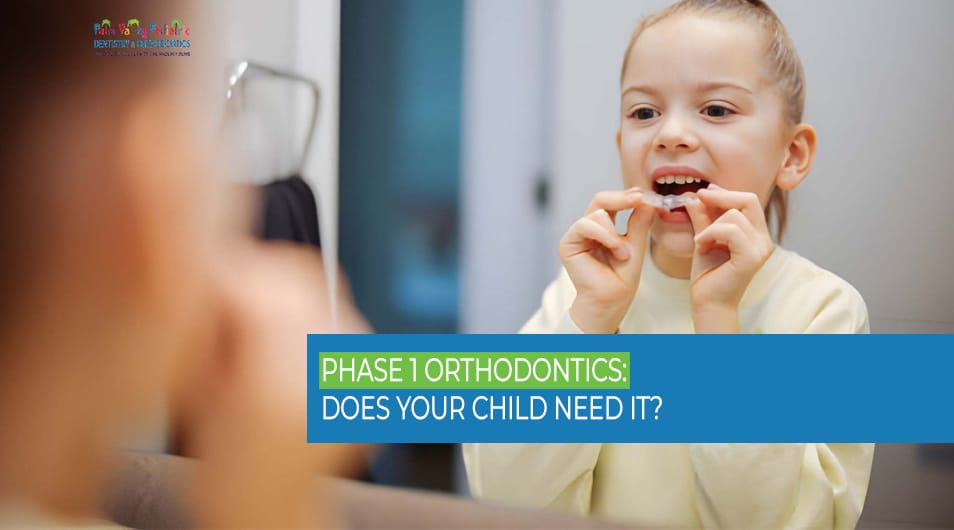
Phase 1 Orthodontics: Does Your Child Need It?
Many orthodontic problems are easier to treat when your child’s jaws are still growing.
Phase 1 orthodontics, also called early interceptive orthodontic treatment, helps guide jaw development, create space for permanent teeth, and correct bite problems before they become complex.
At Palm Valley Pediatric Dentistry & Orthodontics, we provide comprehensive Orthodontic Care for Children across Arizona.
Our team carefully evaluates your child’s smile, bite, and jaw growth. We determine whether early treatment can improve oral health and lower the need for extensive orthodontic treatment later.
What Is Phase 1 Orthodontics?
Phase 1 orthodontics is an early orthodontic treatment that helps fix certain bite and jaw problems while a child’s mouth is still growing. It usually starts between ages 7 and 10, when children have both baby and permanent teeth.
Unlike full braces that straighten all the teeth, Phase 1 treatment focuses on correcting specific problems early.
It may help guide jaw growth, create enough space for permanent teeth, improve the way the upper and lower teeth fit together, and fix bite issues before they become more serious.
The main goal is to support healthy growth, not to create a perfect smile right away.
After Phase 1 treatment, your orthodontist will continue to monitor your child’s teeth as they develop.
If needed, your child may have Phase 2 orthodontic treatment, such as braces or clear aligners, after most of the permanent teeth have come in.
Children have their first orthodontic checkup by age 7.
At this age, orthodontists can spot developing problems early and decide whether treatment is needed or if your child simply needs regular monitoring.
Why Does Early Orthodontic Treatment Matter?
Children’s teeth and jaws are still growing during the early school years.
This gives orthodontists a chance to guide that growth and fix certain problems before they become harder to treat.
If some bite or jaw issues are left untreated, they may become more serious as your child grows.
Starting treatment early can improve how the teeth and jaws develop, which may make future orthodontic care easier.
Phase 1 orthodontics may help:
- Guide healthy jaw growth
- Fix bite problems early
- Make space for permanent teeth
- Reduce severe crowding
- Help permanent teeth come in properly
- Improve the way the upper and lower teeth fit together
- Protect teeth from uneven wear
- Lower the chance of needing tooth extractions later
- Make future braces treatment simpler
Not every child needs Phase 1 orthodontics.
Some children only need regular checkups until they are older, while others benefit from early treatment.
An orthodontic evaluation helps determine the best time to begin care based on your child’s individual needs.

Is Your Child’s Smile on the Right Track?
Early dental visits aren’t just about cleaning teeth, they’re about catching problems before they become costly and painful. Our pediatric specialists create personalized care plans that grow with your child, from their very first tooth through their teen years.
Gentle, kid-friendly care in a welcoming environment.
Which Orthodontic Problems Can Phase 1 Treatment Correct?
Early orthodontic treatment addresses problems that involve both tooth alignment and jaw development.
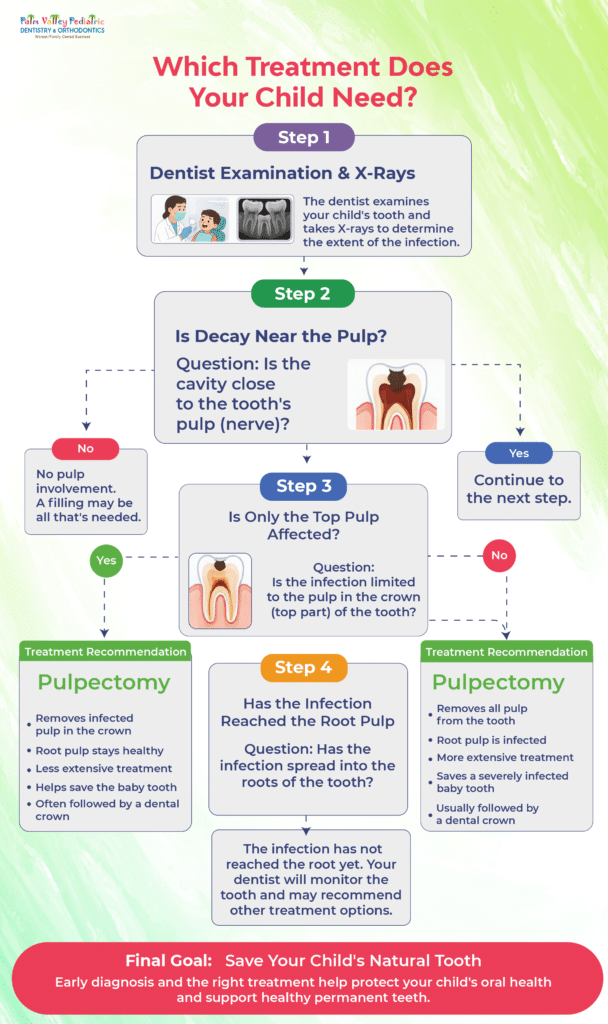
Some of the most common conditions include:
1- Crossbite
A crossbite happens when one or more upper teeth sit behind the lower teeth instead of in front of them when your child bites down. This can affect one tooth or several teeth.
For example, your child may chew more on one side of the mouth because the bite feels uneven. Over time, this uneven pressure can affect jaw growth and wear down certain teeth faster than others.
2- Severe Crowding
Severe crowding means there is not enough room in the mouth for all the permanent teeth to come in properly. As a result, teeth may overlap, twist, or erupt in the wrong position.
For example, a permanent tooth may grow behind the baby teeth because there isn’t enough space in the dental arch.
Early orthodontic treatment can help create room before the crowding becomes more severe.
3- Underbite
An underbite occurs when the lower teeth sit in front of the upper teeth after the mouth closes. This often happens because the lower jaw grows farther forward than the upper jaw.
For example, a child with an underbite may find it harder to bite into foods like sandwiches or apples.
Treating the problem while the jaw is still growing can improve how the upper and lower jaws fit together.
Overbite
An overbite means the upper front teeth cover too much of the lower front teeth when the mouth is closed. While a small overbite is normal, a deep overbite can cause problems.
The lower front teeth may press into the roof of the mouth, or the front teeth may wear down faster over time. Early treatment can help improve the bite and reduce extra pressure on the teeth.
4- Open Bite
An open bite happens when the front upper and lower teeth do not touch, even when the back teeth are together.
This often develops from long-term thumb sucking, prolonged pacifier use, or tongue thrusting.
Your child may struggle to bite into foods like pizza or carrots because the front teeth cannot grip the food properly. Early treatment can help correct the bite and support healthy jaw development.
5- Narrow Upper Jaw
A narrow upper jaw means the upper jaw is smaller than it should be. This can leave less room for permanent teeth and may cause bite problems, such as a crossbite.
Parents may notice that their child’s upper teeth appear much narrower than the lower teeth when the child smiles.
In many cases, an orthodontist can gently widen the upper jaw while it is still growing, creating more space for permanent teeth and improving the bite.
Signs Your Child May Benefit from Phase 1 Orthodontics
Parents often notice changes before they realize orthodontic treatment may help.
You may want to schedule an orthodontic evaluation if your child:
- Has crowded or overlapping teeth
- Loses baby teeth earlier or later than expected
- Has difficulty biting or chewing
- Bites the roof of the mouth
- Has jaws that appear uneven
- Breathes through the mouth most of the time
- Continues thumb sucking beyond early childhood
- Has speech concerns related to bite alignment
- Has permanent teeth erupting in unusual positions
Even if none of these signs are obvious, an orthodontic evaluation around age 7 helps identify developing concerns before they become more difficult to correct.
What Appliances Are Used During Phase 1 Orthodontics?
Every child receives a customized treatment plan based on their specific orthodontic needs. Depending on the diagnosis, treatment may involve one or more appliances.
Palatal Expanders
Palatal expanders gradually widen the upper jaw to create more room for permanent teeth and correct certain crossbites.
For example, if your child’s upper jaw is too narrow and the upper teeth bite inside the lower teeth, an expander can help widen the jaw as it grows.
Partial Braces
Some children only need braces on a limited number of teeth to guide alignment during early development.
For example, if your child’s front teeth are coming in crooked or there isn’t enough room for a permanent tooth, partial braces can help improve their alignment before all the permanent teeth erupt.
Space Maintainers
If a baby tooth falls out too early, a space maintainer helps preserve room for the permanent tooth.
For example, if your child loses a baby molar due to decay or injury, a space maintainer can prevent nearby teeth from shifting into the space left by the lost tooth.
Habit Appliances
Certain appliances help children stop habits such as thumb sucking or tongue thrusting that affect jaw development.
If your child continues sucking their thumb or pushes their tongue against their front teeth when swallowing, a habit appliance can help break the habit and support healthy jaw growth.
What Happens After Phase 1 Treatment?
Phase 1 orthodontics is only the beginning of your child’s orthodontic journey.
After treatment, your child enters an observation period. During this time, the remaining permanent teeth continue to erupt naturally, while the orthodontist monitors growth and development.
Some children need no additional treatment.
Others benefit from Phase 2 orthodontics, which typically involves full braces or clear aligners after most permanent teeth have erupted.
Because early treatment corrected major developmental problems, Phase 2 treatment often becomes simpler and more predictable.
Does Every Child Need Two Phases of Orthodontic Treatment?
No.
Many children achieve excellent results with one phase of orthodontic treatment during adolescence.
Two-phase treatment only benefits children whose jaw growth or bite problems require early intervention. The decision depends on your child’s individual growth pattern rather than age alone.
Your pediatric orthodontist evaluates:
- Jaw development
- Tooth eruption
- Bite alignment
- Available space
- Overall oral health
This evaluation helps determine whether monitoring or immediate treatment offers the greatest long-term benefit.
What Happens During Your Child’s Orthodontic Evaluation?
A comprehensive orthodontic evaluation looks beyond crooked teeth.
At Palm Valley Pediatric Dentistry & Orthodontics, we examine how your child’s teeth, jaws, and bite work together to create a healthy smile.
Your appointment may include:
- Reviewing your child’s dental and medical history
- Examining tooth alignment
- Evaluating jaw growth
- Assessing bite function
- Taking digital images when needed
- Discussing treatment recommendations
If early orthodontic treatment is appropriate, we explain every step of the process so you understand what to expect before treatment begins.
Give Your Child a Healthy Start with Early Orthodontic Care!
The best time to identify orthodontic concerns is often before they become obvious. An early evaluation allows your child’s orthodontist to monitor growth, identify developing problems, and recommend treatment only when it offers meaningful benefits.
If your child is around age 7 or you have concerns about their bite, crowded teeth, or jaw development, schedule your kid’s orthodontic evaluation.
Our experienced team will determine whether Phase 1 orthodontics is right for your child and create a treatment plan that supports a healthy, confident smile for years to come.
Give Your Child the Gift of a Healthy Smile
PVPD doesn’t just treat teeth; we build lasting relationships with families. More confident kids. More comfortable appointments. More reasons to smile. Our patients leave happier and healthier, visit after visit.
Serving families across Scottsdale, because every child deserves a great smile.
People Also Ask
What age should a child start Phase 1 orthodontics?
Most children who need Phase 1 orthodontics begin treatment between ages 7 and 10, although every child develops differently. An orthodontic evaluation by age 7 helps identify problems early.
How long does Phase 1 orthodontic treatment take?
Treatment usually lasts 6 to 18 months, depending on your child’s specific orthodontic needs and the type of appliance used.
Will my child still need braces after Phase 1 orthodontics?
Some children will need Phase 2 orthodontic treatment once all their permanent teeth have erupted. Others may not require additional treatment. Your orthodontist will monitor your child’s growth before making that recommendation.
Is Phase 1 orthodontics necessary for every child?
No. Many children only need one phase of orthodontic treatment during adolescence. Early treatment is recommended only when it can correct developing jaw or bite problems before they become more complex.
Pediatric Dental Specialist at PVPD
Dr. Olga
Dr. Olga brings years of specialized pediatric dental expertise and a genuine passion for children’s oral health to the PVPD team. She specializes in creating anxiety-free dental experiences and early-intervention care strategies that set children up for a lifetime of healthy smiles.
Medically reviewed by Dr. Olga Dolghier, DDS, Pediatric Dentist at Palm Valley Pediatric Dentistry & Orthodontics.