Orthodontics for Kids and Teens: When Should You Start?
Your child should see an orthodontist by age 7, even if every baby tooth still sits in place. This applies to orthodontics for children, kids, and teens alike, since each stage builds on the one before it.
Most parents in Scottsdale notice a warning sign first: crowded teeth, an uneven bite, or a jaw that clicks. Without an evaluation, you can’t tell if that sign needs treatment or nothing at all.
An Orthodontic Checkup gives you a real answer. Your child either needs treatment now, needs it later, or doesn’t need it at all.
Palm Valley Pediatric Dentistry & Orthodontics provides orthodontic care in Scottsdale, guiding kids and teens through every stage of treatment.
The Reason Dentists Keep Saying “Age 7”
At age 7, your child’s mouth holds a mix of baby teeth and permanent teeth.
An orthodontist reads it to predict how the jaw will grow, months or even years before problems actually show up.
A crossbite, a crowded jaw, or a tooth growing in sideways all leave clues at this age, long before they turn into something you can spot just by looking at your child’s smile.
Catch these clues early, and the fix usually stays simple.
Miss them, and your child’s growing jaw locks the problem into place.
The American Association of Orthodontists sets age 7 as the checkpoint for exactly this reason. Permanent molars have usually come in by then, and front teeth have started shifting into their final positions, giving orthodontists enough evidence to make a real call.
Skipping this checkup doesn’t guarantee disaster. Plenty of kids get evaluated at 7 and need nothing at all.
But skipping it removes your only shot at the easy fix.
Wait until age 12 or 13, and an expander that would have taken six months at age 7 might turn into two years of full braces instead.

Is Your Child’s Smile on the Right Track?
Early dental visits aren’t just about cleaning teeth, they’re about catching problems before they become costly and painful. Our pediatric specialists create personalized care plans that grow with your child, from their very first tooth through their teen years.
Gentle, kid-friendly care in a welcoming environment.
Orthodontics for Children and Kids
Kids don’t need perfect teeth. They need a jaw that’s growing the right way.
That’s the whole idea behind orthodontics at this age, and it changes how treatment looks compared to what most parents picture when they hear the word “orthodontist.”
Guiding Growth Instead of Fixing a Finished Smile
Your child’s jaw isn’t done growing at age 6, 7, or 8.
That’s actually good news.
It means an orthodontist can guide the jaw into a better shape while it’s still forming, instead of waiting until it’s set and then forcing teeth to move through a smaller space.
This approach uses tools that work with your child’s natural growth, not against it:
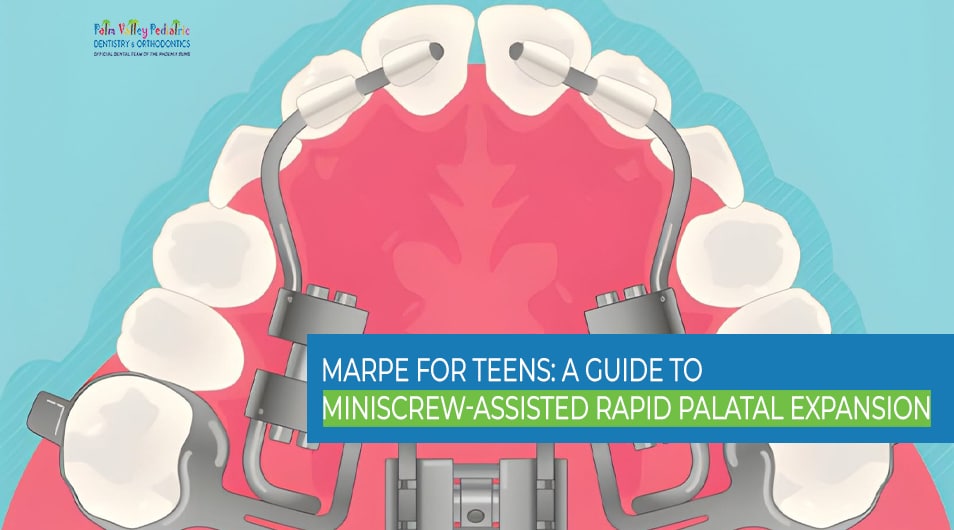
- Palate expanders widen a narrow upper jaw slowly over months, creating room for permanent teeth to come in straight instead of crowded
- Space maintainers hold a gap open after a baby tooth falls out too soon, so neighboring teeth don’t drift into the space meant for an adult tooth.
- Partial braces shift a few specific teeth into position early, often clearing the way for the rest of the adult teeth to erupt correctly on their own
Dentists call this interceptive treatment, and the name fits. You are intercepting a problem before it fully forms.
This early step often means your child avoids tooth removal or jaw surgery down the road.
Warning Signs Parents Actually Notice at Home
You don’t need a dental degree to catch red flags.
Most parents notice something feels off long before they know what it means. Here’s what to watch for between regular checkups:
- Permanent teeth coming in visibly crowded or crooked
- Your child breathing through their mouth constantly instead of their nose
- Baby teeth falling out much earlier or later than you’d expect, especially compared to siblings
- A jaw that clicks, shifts, or looks uneven when your child bites down
- Thumb sucking that continues past age 5
Spotting one of these doesn’t mean your child needs treatment tomorrow. It means it’s worth mentioning at their next dental visit, so a professional can decide if it’s nothing or something worth watching closely.
Orthodontics for Teens: When Alignment Becomes the Focus
Teen treatment looks nothing like childhood treatment, and that surprises a lot of parents who assume braces are braces no matter the age.
By the teen years, the goal shifts entirely from guiding growth to correcting what’s already there.
Why Does Teen Treatment Take a Different Approach
Most permanent teeth have fully erupted by the early teen years, and the jaw itself has grown much closer to its adult size.
That changes the entire strategy. Instead of steering growth, treatment now focuses on moving existing teeth into their correct final positions and fixing bite issues like overbites, underbites, or gaps.
Full braces and clear aligners both handle this job well, and the choice usually depends on your teen’s specific case and personal preference.
Treatment typically runs 12 to 24 months, longer than most childhood treatments, simply because there’s more correction happening at once.
Even teens who had early treatment as kids often still need this second phase.
Childhood treatment manages growth. Teen treatment finishes the job with precise alignment.
Living With Braces or Aligners Day to Day
Parents and teens both want the real picture, not the brochure version. Here’s what daily life actually looks like once treatment begins:
- Brushing takes a bit longer, working around brackets and wires
- Sticky candy, hard pretzels, and similarly tough foods need to wait until treatment wraps up
- Checkups happen every 4 to 8 weeks, where the orthodontist adjusts wires or hands over new aligner trays
- Mild soreness shows up for a day or two right after each adjustment, then fades on its own
Most teens fully adjust within the first two weeks.
After that, braces stop being something they think about at lunch or during conversations with friends. It just becomes part of daily life, the way glasses or a retainer would.
What Actually Happens During Your Child’s First Visit?
Walking into an orthodontist’s office for the first time can feel like a mystery, both for your child and for you.
This is exactly what to expect during your Child’s First Dental Appointment, so nothing catches you off guard.
Step 1: A Full Exam
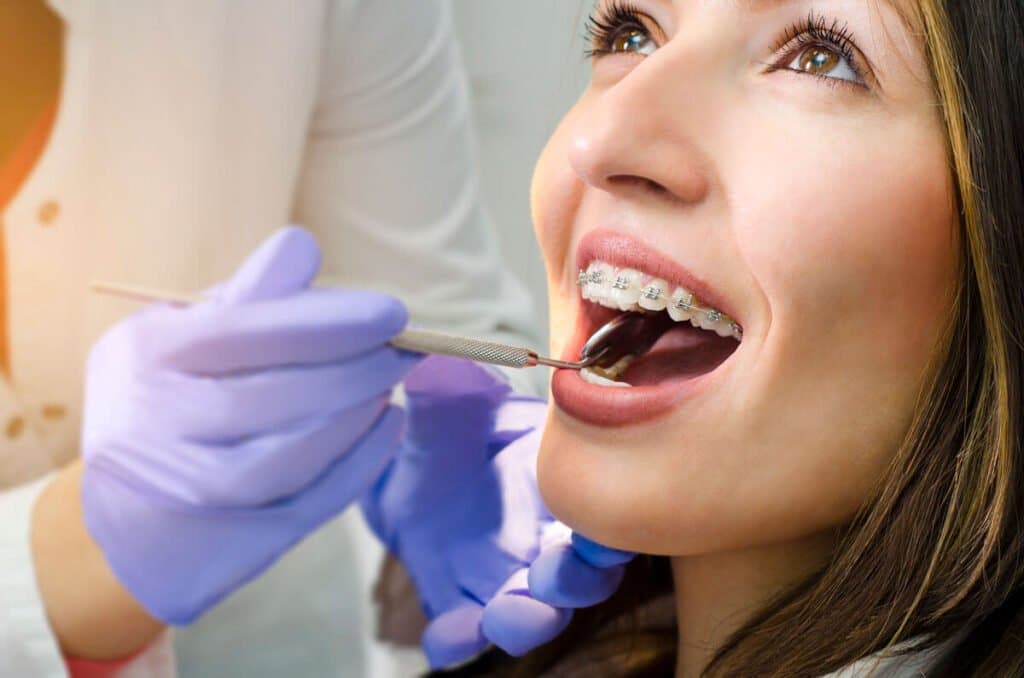
The orthodontist checks bite alignment, jaw growth, and tooth spacing.
This part usually takes just a few minutes and doesn’t involve any tools that feel uncomfortable for your child.
Step 2: X-Rays if Needed
Some visits call for X-rays, which show teeth that haven’t come in yet, along with the structure of the jawbone underneath.
If your child needs any sedation or anesthesia during this or any later step, Palm Valley Pediatric Dentistry & Orthodontics follows strict, monitored safety protocols. Hence, your child stays comfortable and completely safe throughout.
Step 3: A Growth Conversation
You will hear a clear answer about where your child stands. Sometimes that means treatment starts now.
Sometimes it means waiting a year or two and simply monitoring growth. And sometimes it means no treatment at all is needed right now.
Step 4: A Simple Plan
If treatment makes sense, you will walk away with a real timeline and a clear picture of which tools fit your child’s specific case, whether that’s an expander, partial braces, or just a follow-up visit down the road.
Dr. Olga walks parents through every step without rushing or overwhelming them with jargon.
Kids leave feeling like they understand their own mouths a little better, which makes future visits easier too.
3 Myths That Waste Parents’ Time and Worry
A lot of the stress parents feel about orthodontics comes from myths, not facts.
Clearing these up saves you unnecessary worry and helps you make decisions based on what’s actually true for your child.
1- Braces Only Matter for Looks
This one costs kids more than parents realize.
Misaligned teeth make brushing and flossing genuinely harder, since crowded or crooked spots trap food and plaque that a toothbrush can’t reach easily.
That raises cavity risk in ways straight teeth simply don’t face.
According to the CDC, children lose more than 34 million school hours each year due to unplanned or emergency dental care in the US.
2- Early Checkups Mean Early Braces
Not even close to true.
Plenty of 7-year-olds walk into their first orthodontic evaluation and walk out with nothing more than a “come back in a year” note.
No expander, no braces, no treatment at all.
The checkup exists to monitor growth, not to guarantee treatment.
3- Every Kid Needs Two Phases of Treatment
Some kids do need both an early phase and a teen phase.
Many don’t need either, or only need one.
It comes down entirely to how your child’s jaw grows and how their teeth position themselves over time, not some fixed rule that applies to every child the same way.
Ready to Get Your Child or Teen Checked?
Wondering if your child actually needs braces, an expander, or nothing at all right now? That’s exactly what we are here for.
Dr. Olga and the team at Palm Valley Pediatric Dentistry & Orthodontics offer gentle, kid-friendly orthodontic care right here in Scottsdale, for every age from first checkup to final retainer.
You will walk out with a clear, honest answer about your child’s dental needs.
Book your child’s orthodontic session and see exactly what Palm Valley Pediatric Dentistry & Orthodontics can do for your family.
Give Your Child the Gift of a Healthy Smile
PVPD doesn’t just treat teeth; we build lasting relationships with families. More confident kids. More comfortable appointments. More reasons to smile. Our patients leave happier and healthier, visit after visit.
Serving families across Scottsdale, because every child deserves a great smile.
People Also Ask
What age should my child first see an orthodontist?
The PVPD team recommends age 7 for the first orthodontic check. At this age, permanent and baby teeth mix, giving orthodontists a clear picture of how your child’s bite and jaw are developing.
How long does orthodontic treatment take for teens?
Most teens wear braces or aligners for 12 to 24 months, depending on how much correction their teeth and bite need. Your orthodontist gives you a personalized timeline after your first exam.
Why do some kids need two phases of orthodontic treatment?
Some children have jaw growth issues that need early guidance, followed by a second phase once all permanent teeth arrive. This two-step approach can prevent more invasive treatment later, like tooth extraction or jaw surgery.
What happens if I skip my child’s orthodontic evaluation?
Skipping the evaluation means you might miss early signs of crowding, crossbites, or breathing issues tied to jaw growth. Catching these early usually means simpler, shorter treatment than waiting until problems fully develop.
Pediatric Dental Specialist at PVPD

Dr. Olga
Dr. Olga brings years of specialized pediatric dental expertise and a genuine passion for children’s oral health to the PVPD team. She specializes in creating anxiety-free dental experiences and early-intervention care strategies that set children up for a lifetime of healthy smiles.
Medically reviewed by Dr. Olga Dolghier, DDS, Pediatric Dentist at Palm Valley Pediatric Dentistry & Orthodontics.