

How to Clean Your Child’s Toothbrush: A Simple Guide for Parents

Medically reviewed by Dr. Olga Dolghier, board-certified pediatric dentist and founder of Palm Valley Pediatric Dentistry & Orthodontics.
Your child uses their toothbrush twice a day. The rest of the time, it sits in a warm, damp bathroom. Germs like to grow on wet bristles.
The good news is that keeping it clean is easy. After your child brushes, hold the toothbrush under running water. Wash away the toothpaste and any bits of food. Tap it on the sink to shake off extra water. Then stand it up in an open holder so it can dry. Get a new toothbrush every three to four months, or sooner if the bristles look worn.
You don’t need special tools or strong cleaners. This guide also covers extra cleaning, care after illness, and brushes for babies, toddlers, and kids with braces.
Is Your Child’s Toothbrush Full of Germs?
Every toothbrush picks up germs, both from your child’s mouth and from the bathroom around it. That sounds scary, but the American Dental Association (ADA) says no research has shown that these germs actually make people sick.
So you don’t need a germ-free brush. You need one that gets washed well, dries fast, and stays away from other germs.
The biggest thing to watch is water. Germs, mold, and yeast grow on bristles that stay wet. That’s why most good toothbrush habits come down to one simple rule: let it dry.
From Our Office | Dr. Olga Dolghier

Is Your Child’s Smile on the Right Track?
Early dental visits aren’t just about cleaning teeth, they’re about catching problems before they become costly and painful. Our pediatric specialists create personalized care plans that grow with your child, from their very first tooth through their teen years.
Gentle, kid-friendly care in a welcoming environment.
How to Clean Your Child’s Toothbrush in 4 Easy Steps
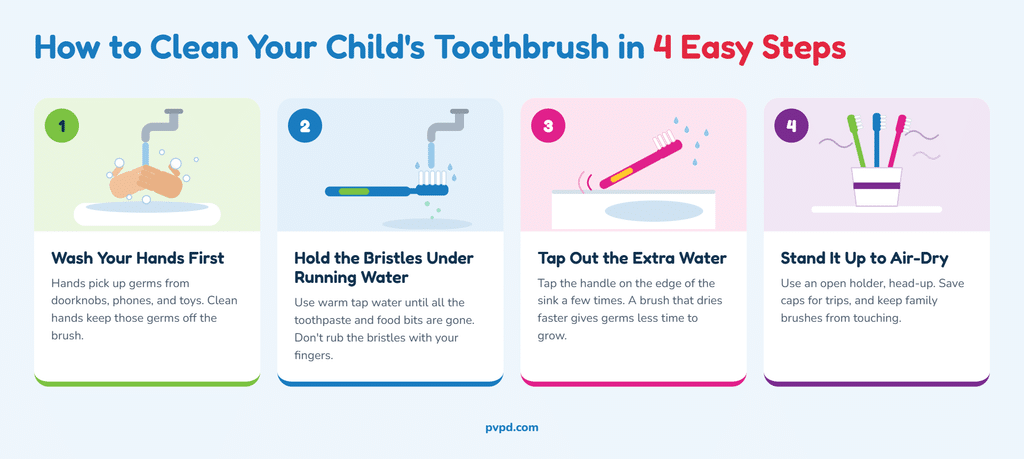
Step 1: Wash Your Hands First
Your hands pick up germs all day from doorknobs, phones, and toys. Wash them with soap and water before you touch your child’s toothbrush. This keeps those germs off the bristles your child puts in their mouth.
Step 2: Hold It Under Running Water
Hold the bristles under warm tap water until all the toothpaste and food bits are gone. Leftover food gives germs something to feed on, so take a few extra seconds to make sure the brush looks clean. Don’t rub the bristles with your fingers, because that just moves germs from your hands to the brush.
Step 3: Tap Out the Extra Water
Tap the handle on the edge of the sink a few times to shake out the water. A brush that dries faster gives germs less time to grow.
Step 4: Let It Air-Dry, Standing Up
Put the brush head-up in an open holder so air can reach the bristles. Closed caps and travel cases trap moisture, so only use them for trips. If your family’s brushes share a cup, keep the heads from touching so germs don’t pass from one brush to another.
These four steps are all most families need each day. Once your child is old enough, let them wash and tap their brush on their own. It becomes part of their routine and takes one small job off your list.
Pro Tip from Our Dentist:
Skip boiling, microwaving, or the dishwasher. Heat damages the bristles, so the brush won’t clean as well. Tap water and air-drying are all a healthy child’s toothbrush needs.
What Should You Use to Clean a Toothbrush?
For everyday care, plain tap water is all you need. There isn’t much research on cleaning toothbrushes, but some data shows that hydrogen peroxide and UV light can cut down on germs.
If you want to do a little more, like during cold and flu season, here are the most common choices.
1. Using Mouthwash for a Deeper Toothbrush Clean
Add antibacterial mouthwash to a clean cup until the toothbrush head is fully covered. Keep the toothbrush head in the mouthwash for half an hour. That’s the same soak time our office suggests for cleaning mouthguards. Then hold the brush under running water and stand it up to air-dry.
Use fresh mouthwash each time, and give each person their own cup so germs don’t spread from one brush to another. Many mouthwashes have alcohol in them, so an adult should do this step and put the bottle away where kids can’t reach it.
2. Hydrogen Peroxide Soak
You can buy 3% hydrogen peroxide at most drugstores, and it helps kill germs on a toothbrush. For a deep clean, pour some into a small cup and soak the brush head for about 30 minutes. Then hold the brush under running water until all the peroxide is washed away.
You don’t need to soak your child’s toothbrush as part of their daily cleaning routine. Soaking the brush too often can wear down the bristles faster. Keep the bottle somewhere your child can’t reach it, and pour out the used peroxide when you’re done.
3. Vinegar and Baking Soda
Most families already have vinegar and baking soda at home, so they’re easy to try. But they haven’t been tested as much as mouthwash or hydrogen peroxide, so we don’t know for sure how well they work.
If you use them, pick just one. Mixing them makes both stop working. You can soak the bristles in white vinegar for a few minutes. Or you can stir a teaspoon of baking soda into a cup of warm water and swish the brush around in it. When you’re done, hold the brush under running water. This washes away the sour or salty taste, so your child won’t mind brushing.
What to Avoid When Cleaning a Toothbrush
- Heat. The microwave, dishwasher, and boiling water can warp the bristles and soften the plastic, leaving a brush that cleans teeth poorly. The ADA advises against these methods.
- Bleach and household cleaners. They aren’t safe for anything that goes in your child’s mouth.
- Expensive sanitizers. UV toothbrush sanitizers won’t hurt, but they aren’t necessary. Washing the toothbrush with water and letting it air-dry is usually enough for daily care.
Cleaning Your Child’s Toothbrush After an Illness
Colds, flu, strep throat, and stomach bugs leave many parents wondering whether the toothbrush could make their child sick again.
According to experts cited by ADA News, using the same brush after an illness doesn’t usually cause reinfection, because the antibodies your child’s body made while sick help protect them.
Sometimes, replacing your child’s toothbrush is the better choice, especially if it has been stored in a shared holder where brush heads touch.
While your child is unwell, keep their brush in its own spot away from siblings’ brushes, and wash the holder once they’ve recovered. If none of the situations above apply and the brush is fairly new, a mouthwash or hydrogen peroxide soak is enough.
Toothbrush Care for Babies and Toddlers
The ADA advises that caregivers start brushing as soon as the first teeth appear, and keep helping or supervising until the child can spit out the extra toothpaste. That means the brush is in your hands for the first few years, so its care is too.
- Silicone finger brushes and infant toothbrushes: Wash thoroughly with water after each use and allow them to air-dry before storing.
- Check the silicone regularly for tears or bite marks, because damaged spots trap germs, and replace the brush as soon as you see any.
- Toddlers who chew: Chewing flattens bristles much faster than brushing does. Check your toddler’s brush every couple of weeks and replace it once the bristles start to splay, even if it’s only a month old.
- Daycare and preschool: Label the brush clearly and use a vented case so it can dry and doesn’t end up mixed with other children’s brushes.
Toothbrush Care for Kids with Braces
Got a kid with new braces? Then you already know brushing isn’t as quick as it used to be. Food loves to hide around brackets and wires, and all that scrubbing wears out bristles fast. So your child’s toothbrush needs a little extra love too. Don’t worry, it’s easier than it sounds.
1. Wash the Brush a Little Longer
After your child brushes, take a peek at the bristles. You’ll probably spot bits of food stuck in there. Just hold the brush under running water for a few extra seconds until it looks clean. That way, it’s ready to do a good job next time.
2. Check the Bristles Every Few Weeks
Braces are tough on toothbrushes. Every few weeks, give the brush a quick look. Are the bristles bent, flat, or sticking out to the sides? Get a new toothbrush if the bristles are worn out, even if you’ve used it for less than three months. A worn-out brush can’t clean around braces very well, and food left behind can lead to white spots or cavities.
3. Don’t Forget the Little Brushes
Does your child use those tiny brushes that fit between the wires and teeth? They’re called interdental or proxy brushes, and they wear out quickly. Wash them after each use, let them dry, and keep a few spares around the house so there’s always a good one ready.
4. Ask Us at Your Next Visit
Not sure if your child’s brush is still doing its job? Bring it along to their next orthodontic visit. We’ll take a look and show your child some easy tricks for brushing around their braces.
How to Clean an Electric Toothbrush
To keep an electric toothbrush clean, give it a little extra attention, because gunk builds up where the head meets the handle.
How to Store Your Child’s Toothbrush
Where the brush sits between uses is just as important as the cleaning itself.
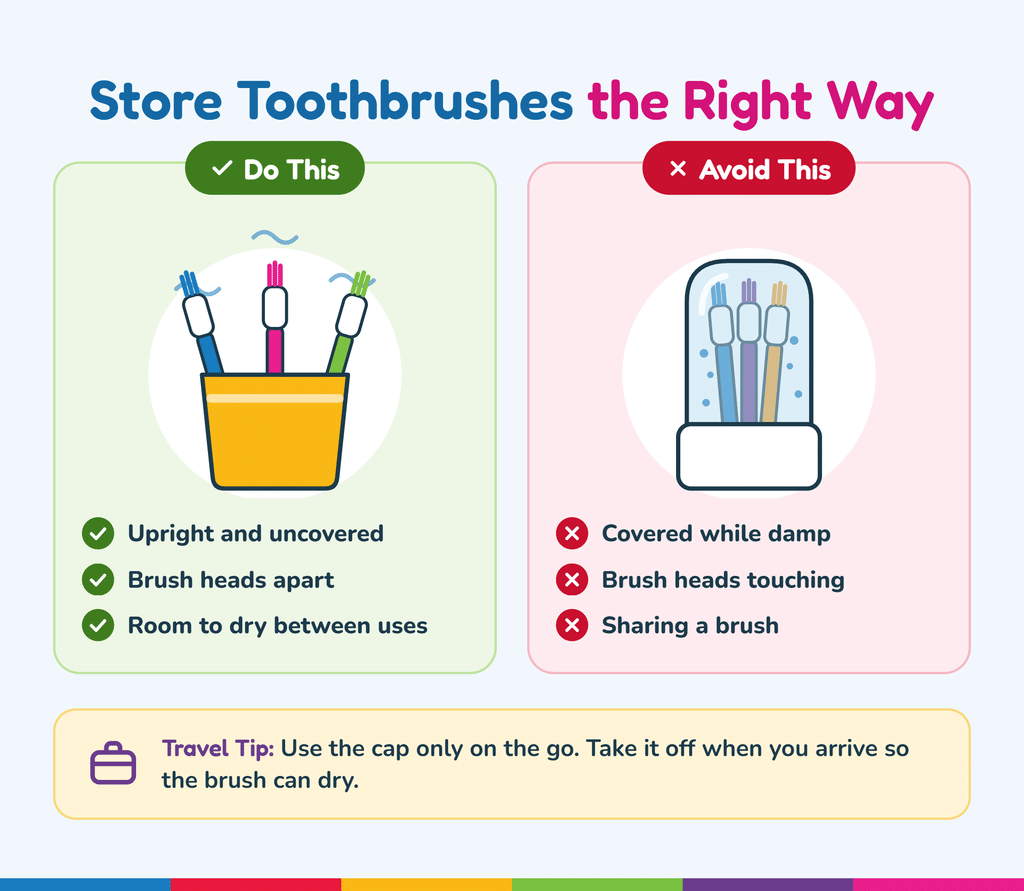
A few storage habits help:
- Keep it head-up in an uncovered holder so air can reach the bristles.
- Give it its own spot, not touching anyone else’s brush.
- Skip closed caps and containers at home. They trap moisture, which is exactly what germs need.
- Use a vented travel cap only on the go, and take it off as soon as you arrive so the brush can dry.
If you can, store brushes outside the bathroom altogether. In one study reported by ADA News, brushes kept in bathrooms with a toilet carried more bacteria than brushes kept elsewhere.
If the bathroom is the only option, keep the holder as far from the toilet as possible and put the lid down before you flush.
Once a week, give the holder a scrub in hot, soapy water. Wait until it’s completely dry before the brushes go back in.
How Often Does Your Child Need a New Toothbrush?
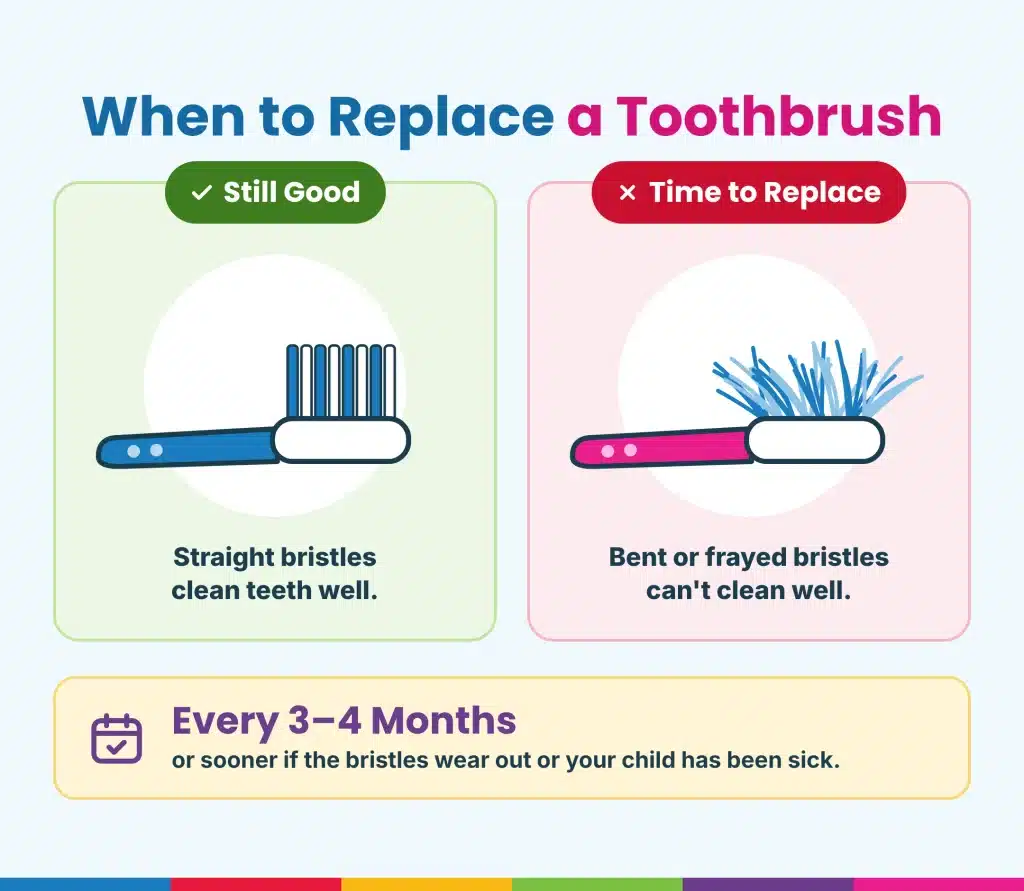
The American Dental Association (ADA) recommends getting a new toothbrush every three to four months to help keep your teeth clean. If the bristles start to fray, bend, or lose their shape, replace the brush sooner. Children’s brushes often need replacing sooner than adults’ brushes.
It’s time for a new brush when:
- The bristles are splayed, flattened, or discolored
- Your child has had a cold sore, or an illness while sharing a holder
- The brush has fallen on the floor or into the toilet
- You can’t remember when you last replaced it
Another easy reminder: choose a brush with indicator bristles that lose their color as they wear out. You can also link replacements to something you already track, like the start of each season or school term.
Which Toothbrush Is Best for My Child?
Look for extra-soft bristles and a head small enough to reach your child’s back molars. A few other things make a difference:
Quick Checklist for a Clean Toothbrush
Give Your Child the Gift of a Healthy Smile
PVPD doesn’t just treat teeth; we build lasting relationships with families. More confident kids. More comfortable appointments. More reasons to smile. Our patients leave happier and healthier, visit after visit.
Serving families across Scottsdale, because every child deserves a great smile.
Frequently Asked Questions
Can I clean my child’s toothbrush in the dishwasher?
It’s best not to. The high heat can damage the bristles and handle, and a damaged brush won’t clean your child’s teeth properly.
Do I need to replace everyone’s toothbrush after a stomach bug?
Only if the brushes shared a holder with the sick child’s brush. In that case, replacing all of them is the safest choice. Otherwise, the sick child can usually keep using their own brush once they’ve recovered.
Is it okay for siblings to share a toothbrush?
No. Sharing passes bacteria and viruses directly from one child to another. Every family member should have their own brush, and ideally their own color so it’s easy to tell them apart.
Are toothbrush covers a good idea?
Only for travel. At home, a cover keeps the bristles damp, which encourages germs to grow. An open holder is the better option.
Questions About Your Child’s Toothbrush?
Dr. Olga Dolghier, a board-certified pediatric dentist, and the team at Palm Valley Pediatric Dentistry & Orthodontics care for children and teens across Scottsdale, Buckeye, Surprise, Goodyear, Chandler, and East Mesa. Whether your child is brushing their first teeth, learning to brush on their own, or brushing around braces, we’re happy to help. Bring your toothbrush questions to your child’s next checkup, or schedule a visit with your nearest office.
Pediatric Dental Specialist at PVPD
Dr. Olga
Dr. Olga brings years of specialized pediatric dental expertise and a genuine passion for children’s oral health to the PVPD team. She specializes in creating anxiety-free dental experiences and early-intervention care strategies that set children up for a lifetime of healthy smiles.
Medically reviewed by Dr. Olga Dolghier, DDS, Pediatric Dentist at Palm Valley Pediatric Dentistry & Orthodontics.
