
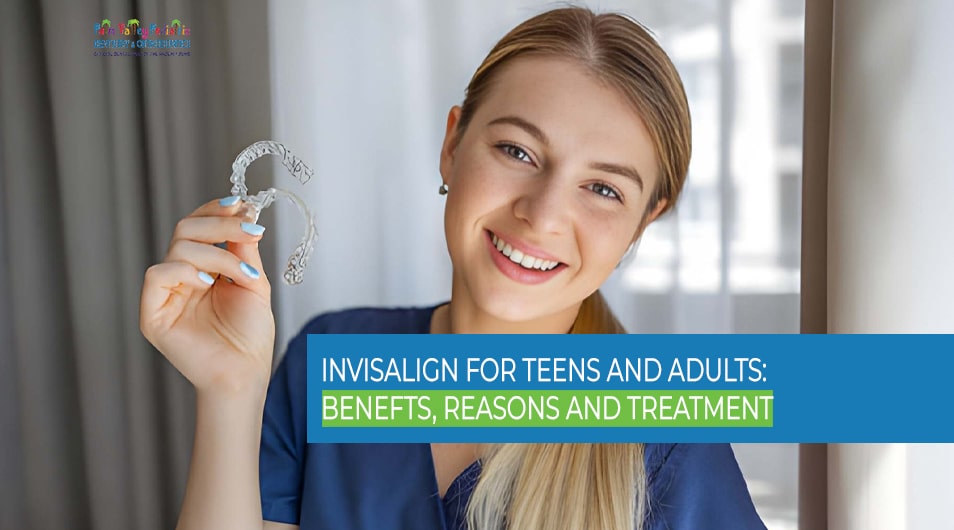
Invisalign for Teens and Adults: How Does It Work?
Invisalign straightens teeth using a series of clear, removable aligners that shift teeth into place a little at a time. It works for both teens and adults with mild to moderate misalignment, crowding, gaps, or bite issues.
Most people picture smooth, invisible trays and nothing else. Then they hear about attachments, IPR, and retainers, and the questions start piling up.
Invisalign for teens and Invisalign for adults use the same trays, but each group worries about different things once treatment begins.
Teens deal with wear-time habits. Adults deal with coffee stains, dental history, and keeping results after the last tray.
Palm Valley Pediatric Dentistry & Orthodontics provides Invisalign treatment in Scottsdale for teens and adults at every stage.
What Actually Sits on Your Teeth During Invisalign?
Plain trays alone can’t move every tooth. Two extra tools handle the movements the trays can’t do on their own.
Why Does Invisalign Use Attachments?
Attachments are small tooth-colored bumps bonded directly to certain teeth.
The tray grips these bumps to get leverage, and that grip lets it rotate or lift a tooth the smooth plastic could never move by itself.
They stay on for the whole treatment, and most people stop noticing them within a few days.
They match your tooth color, so they rarely show in normal conversation or photos.
The orthodontist places them only where a specific tooth needs extra force, which is why no two attachment maps look the same.
Why Do Some Cases Need IPR?
According to Cleveland Clinic, IPR stands for interproximal reduction, and it means filing a hair-thin amount of enamel between crowded teeth.
This creates room, so teeth slide into line instead of staying jammed against each other.
The amount removed is smaller than the thickness of a fingernail, and enamel doesn’t grow back, but the reduction sits well within safe limits.
IPR matters because crowding often has nowhere to go without it, and the alternative in tight cases is pulling a tooth entirely. A little filing usually beats an extraction.
Invisalign for Teens
Teen treatment carries one risk adults rarely face: forgetting to wear the trays.
Why Do Teens Get a Different Version of Invisalign?
Trays only move teeth while they sit in the mouth. A teen who leaves them in a lunch bag all day stalls their own treatment, and nobody notices until the next checkup.
Invisalign Teen fixes this with compliance indicators, blue dots on each tray that fade with wear.
The dots fade after roughly 20 to 22 hours of daily use, so a parent checks the color instead of trusting a teenager’s memory.
This exists because self-reported wear time is unreliable, and the fading dots turn a guess into proof. Invisalign is also a faster option than braces.
Why Does the Plan Include Extra Trays?
Invisalign Teen ships with replacement trays built into the cost. Teens lose trays at school and in bathrooms far more than adults do.
The spares exist so one lost tray doesn’t pause the whole treatment while a new one gets made.
What Makes a Teen a Strong Candidate?
An orthodontist checks three things before recommending Invisalign for a teen, and each one has a reason:
- Most permanent teeth have erupted, because trays need a nearly complete adult set to track and move correctly
- Crowding or spacing stays in the mild to moderate range, since severe cases move too far for trays alone
- The teen follows daily routines reliably, because wear time decides the result more than the technology does
Invisalign for Adults
Adult treatment works around everything that happened to the teeth after growth stopped, and daily habits become the biggest hurdle.
Why Does Coffee and Staining Worry Adults Most?
Adults drink coffee, tea, red wine, and soda through the workday, and clear trays make staining a real concern.
The trays sit tight against the teeth, so any dark liquid gets trapped against the enamel instead of getting washed away by saliva.
Two rules solve this.
- Take the trays out before drinking anything but water, because sipping coffee through them stains both the trays and the teeth underneath.
- Then brush before putting them back in, because trapping sugar or coffee residue under the tray for hours speeds up decay and yellowing.
Adults who follow these two habits keep their trays clear and their teeth white throughout treatment.
Why Do Adult Cases Need More Planning Upfront?
An adult jaw stopped growing years ago, so there’s no natural growth to help move teeth. The orthodontist plans every movement through tray sequencing instead.
Adults also arrive with crowns, bridges, or gum recession, and each one changes how far a tooth can safely move, which is why the planning takes longer than a straightforward teen case.
Adult orthodontic treatment has grown steadily over two decades, with clear aligners driving most of that growth.
What Does Daily Life Look Like for Working Adults?
Adults pick Invisalign because it fits a work schedule without drawing attention, and the routine is simple:
- Trays come out for eating, so no food gets restricted
- New trays swap in every one to two weeks
- Checkups happen every six to eight weeks, half as often as braces need
Most adult cases finish in 12 to 18 months, though relapse and bite correction take longer.
What Happens After Your Last Tray of Invisalign?
Finishing the last tray isn’t the finish line. This is the part people skip, and skipping it undoes the whole treatment.
Your Teeth Try to Move Back
Teeth have a memory of sorts.
The fibers and bone around each tooth spent years holding it in its old crooked spot, and right after treatment those tissues still pull toward the original position.
This backward drift is called orthodontic relapse, and it starts within days if nothing holds the teeth in place.
Retainers Are Non-Negotiable
A retainer holds the teeth in their new position while the surrounding bone hardens around them.
Most patients need retainers long-term, often nightly for years, because relapse stays a risk well after the teeth look straight.
Skip the retainer, and the teeth slide back, which is exactly why so many adults need Invisalign a second time after braces they had as teens.
Wearing the retainer protects the money and months you already spent.
3 Myths That Cost People Time and Money
Most hesitation around Invisalign comes from outdated beliefs. Clearing them up helps you decide on facts, not fear.
1- IPR Damages Your Teeth
The enamel removed during IPR is thinner than a fingernail, and it stays well within safe limits.
It matters because the alternative for crowded cases is often pulling a whole tooth, which removes far more than a light polish between teeth.
Our team only recommends IPR when crowding leaves no other clean option, and we measure every reduction carefully so your enamel stays healthy.
2- Attachments Are Obvious to Everyone
Attachments match your tooth color and sit flat against the surface.
Most people around you never notice them, and the leverage they provide is the reason Invisalign now handles cases that once needed braces.
Our team maps attachments only where a specific tooth needs extra force, so you get the movement you need without a mouthful of visible bumps.
3- You re Done Once the Trays Come Off
Treatment isn’t finished when the trays stop.
Teeth drift back without a retainer, so the retainer phase protects the result you paid for over the previous year.
We send every patient home with a clear retainer plan and walk you through exactly how often to wear it, so your straight smile stays straight.
Ready to See If Invisalign Fits Your Case?
Invisalign fits most teens and adults with mild to moderate crowding, gaps, or bite issues. A single consultation confirms whether it fits yours.
Dr. Olga and the team at Palm Valley Pediatric Dentistry & Orthodontics scan your teeth in 3D, then map every attachment and IPR point to your exact case.
You see your projected results before treatment starts, so you know what to expect at each stage.
Book your Invisalign appointment and get a treatment plan built around your case.
People Also Ask
What are Invisalign attachments and do I need them?
Attachments are small tooth-colored bumps bonded to certain teeth so the tray can grip and move them precisely. Not every case needs them, and your orthodontist decides based on which teeth require extra force during treatment.
How does IPR work with Invisalign?
IPR removes a hair-thin amount of enamel between crowded teeth to create space for them to straighten. The amount is smaller than a fingernail’s thickness and stays within safe limits, which often avoids the need to pull a tooth.
Why do I have to wear a retainer after Invisalign?
Teeth naturally drift back toward their old position right after treatment, a process called orthodontic relapse. A retainer holds them in place while the surrounding bone hardens, which protects the results long-term.
Can I drink coffee with Invisalign trays in?
Take the trays out before drinking coffee, since the liquid can get trapped against your teeth and stain both the trays and the enamel. Rinse or brush before putting the trays back in to prevent yellowing and decay.