
Tooth Extraction Recovery: Tips for a Smooth Healing Process
Tooth extraction recovery takes 1 to 2 weeks, and most people heal without complications when they follow their dentist’s aftercare instructions.
Although having a tooth removed may sound scary, healing is easier than people expect.
Healing begins immediately after the tooth is removed. During the first 24 hours, your body forms a protective blood clot in the empty socket.
This clot covers the exposed bone and nerve endings, protects the area from irritation, and provides a base for healthy gum tissue to develop.
At Palm Valley Pediatric Dentistry & Orthodontics, we help children and families recover comfortably after tooth extractions by providing gentle care, clear aftercare instructions, and ongoing support.
Whether your child had a baby tooth removed or you had a damaged or wisdom tooth taken out, understanding the healing process can make recovery easier and help prevent complications such as dry socket or infection.
What Happens After a Tooth Extraction?
Your mouth begins healing the moment your dentist removes the tooth.
The first step is the formation of a blood clot inside the socket. This clot protects the area while your gums begin repairing themselves. As the days pass, fresh tissue gradually fills the space, and the jawbone underneath slowly replaces the missing bone over the following weeks and months.
Recovery is not exactly the same for everyone. Some people feel much better within a few days, while others need extra time. Several things can affect how quickly you heal, including:
- Your age
- Your general health
- Whether the extraction was simple or surgical
- If the tooth was trapped beneath the gums
- How closely you follow your aftercare instructions
Children often recover more quickly because their bodies naturally repair tissue at a faster rate than adults.

Is Your Child’s Smile on the Right Track?
Early dental visits aren’t just about cleaning teeth, they’re about catching problems before they become costly and painful. Our pediatric specialists create personalized care plans that grow with your child, from their very first tooth through their teen years.
Gentle, kid-friendly care in a welcoming environment.
Tooth Extraction Recovery Timeline
Healing happens little by little. Knowing what to expect during each stage can help you feel more prepared.
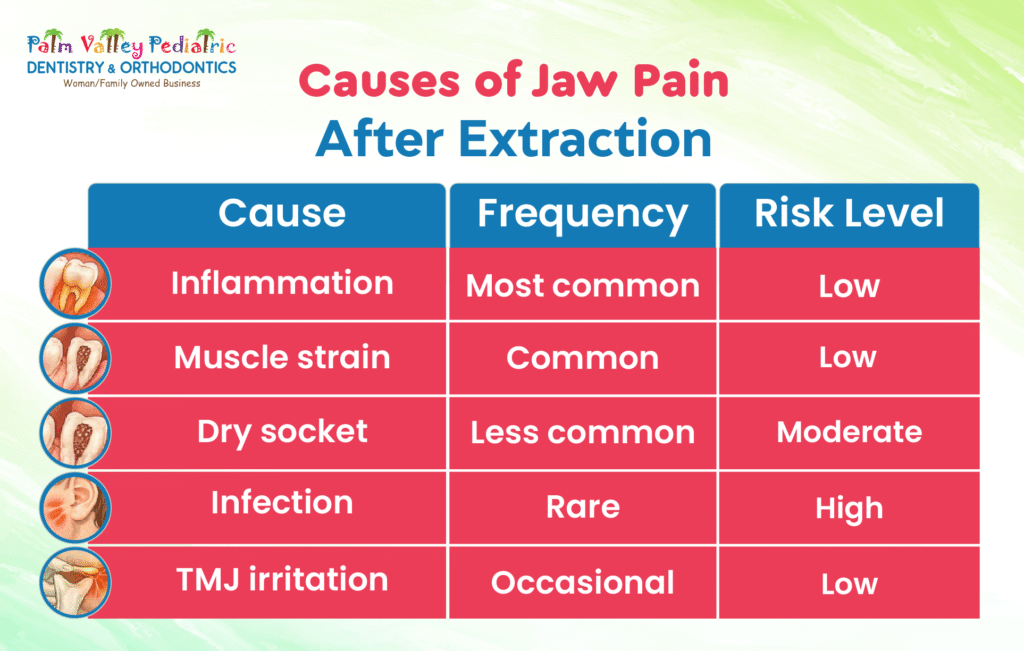
First 24 Hours
The first day is one of the most important parts of recovery.
During this time, a blood clot develops inside the empty socket. You may notice light bleeding, mild swelling, and tenderness around the area.
If local anesthesia was used, your lips, tongue, or cheek may remain numb for several hours.
Take it easy, keep the gauze in place as instructed, and avoid anything that could disturb the blood clot.
Days 2 to 3
Swelling is most noticeable on the second or third day, then slowly begins to decrease.
Discomfort should gradually improve if you take your medications as directed and apply cold packs to the outside of your face.
Continue eating foods that require very little chewing and drink plenty of water. Avoid smoking, using straws, or eating crunchy foods because they can interfere with healing.
Days 4 to 7
By the middle of the first week, your gums continue closing over the extraction site.
Most people notice less pain each day and begin returning to work, school, or other normal activities as long as they feel comfortable.
Even if you feel much better, continue following your dentist’s instructions until the area has healed properly.
After One to Two Weeks
For many people, most of the soreness has disappeared by the end of the second week.
If stitches that do not dissolve on their own were placed, your dentist may remove them during a follow-up appointment.
Although the gums usually heal within a couple of weeks, the bone underneath continues rebuilding for several months.
Best Tips for Faster Tooth Extraction Recovery
Simple aftercare habits can make a noticeable difference in how comfortably and quickly your mouth heals.
1- Keep the Blood Clot Safe
The blood clot protects the extraction site while your mouth repairs itself.
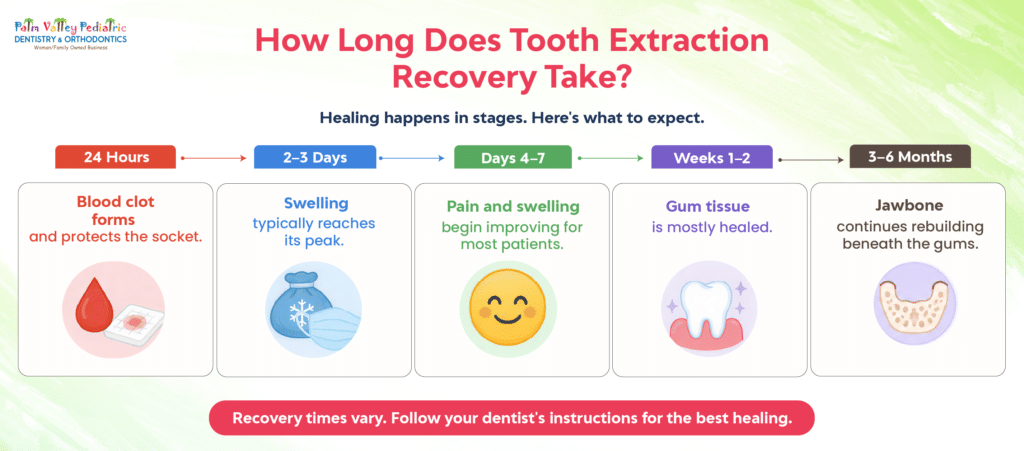
If the clot becomes dislodged too soon, the bone and nerves underneath can become exposed. This may lead to a painful condition called dry socket.
For the first day, avoid touching the area with your tongue or fingers. Do not spit forcefully or rinse your mouth. Avoid drinking through a straw, as the suction can dislodge the clot.
2- Reduce Swelling with Cold Therapy
Swelling after a tooth extraction is expected, especially during the first couple of days.
Placing a cold pack against your cheek can help reduce inflammation and relieve discomfort. Wrap the ice pack in a thin towel before using it. Hold it against your face for about 15 to 20 minutes, then remove it for the same amount of time before reapplying.
If jaw stiffness develops after the first day, your dentist may recommend switching to warm compresses.
3- Choose Foods That Are Gentle on Your Mouth
Eating the right foods supports healing while protecting the extraction site.
Good options include yogurt, applesauce, mashed potatoes, oatmeal, scrambled eggs, cottage cheese, soft pasta, bananas, and soups that have cooled enough to avoid irritating the area.
As the soreness improves, you can slowly begin adding firmer foods back into your meals. Try to chew on the opposite side of your mouth until your dentist tells you it is safe to return to normal eating.
4- Stay Hydrated Throughout the Day
Your body needs enough fluids to repair itself after any dental procedure.
Staying hydrated helps support the healing process, keeps your mouth from becoming too dry, and allows your body to function normally while it recovers.
Choose plain water throughout the day whenever possible.
For the first few days, avoid alcoholic drinks, fizzy beverages, and anything you have to sip through a straw. If drinking feels uncomfortable, take small sips every few minutes instead of trying to drink a large amount at once.
5- Keep Your Mouth Clean
A clean mouth helps reduce the chance of bacteria causing an infection.
You can usually brush your teeth the day after the extraction, but be careful around the healing area. Avoid letting the toothbrush rub directly against the socket until your dentist says it is safe.
After the first 24 hours, gently rinse with warm salt water after meals and before bed. Instead of swishing vigorously, move the liquid around your mouth slowly and let it fall out naturally.
Keeping up with your normal oral hygiene routine, while being gentle around the extraction site, supports healthy healing.
6- Give Your Body Time to Recover & Rest
Rest is one of the simplest ways to help your body heal.
Plan to take it easy on the day of your procedure. When lying down, keep your head raised with an extra pillow, as this may help reduce swelling and limit bleeding.
Skip activities that require heavy lifting or intense physical effort for at least two days. Too much activity too soon can increase blood flow to the area and interrupt the healing process.
Tooth Extraction Recovery Tips for Children
Children usually heal quickly, but they still need extra care during recovery.
1- Offer Soft Foods They Already Enjoy
Most children eat better when they feel comfortable with familiar foods.
Choose foods like mashed potatoes, yogurt, applesauce, macaroni and cheese, bananas, scrambled eggs, or smoothies served with a spoon.
Avoid crunchy snacks until the extraction site heals.
2- Keep Little Fingers Away
Children often become curious about the empty space.
Explain that touching the area can slow healing. A simple reminder works much better than repeated warnings.
Keeping their hands clean also lowers the chance of introducing bacteria into the healing socket.
3- Encourage Quiet Activities
Running, jumping, and rough play may restart bleeding.
Instead, encourage quiet activities like reading books, coloring, puzzles, watching movies, or playing board games on the first day.
Most children return to their normal routine very quickly.
4- Watch for Unusual Symptoms
A little swelling and soreness are normal.
However, call your pediatric dentist if your child develops a fever, has heavy bleeding that will not stop, experiences severe pain after several days, or has swelling that continues getting worse.
Early treatment often prevents bigger problems.
Tooth Extraction Recovery Tips for Adults
Adults may need a little more time to recover after wisdom tooth removal.
1- Stay Away from Smoking and Vaping
Smoking and vaping can interfere with healing in more than one way.
The chemicals reduce healthy blood flow, while the suction created during inhaling may pull the protective blood clot from the socket. This increases the chance of developing dry socket.
Waiting until your dentist says it is safe to smoke again gives your mouth a much better opportunity to heal properly.
2- Use Medications Exactly as Directed
Pain relief medications work best when taken according to your dentist’s instructions.
If antibiotics are prescribed, complete the full course even if your mouth feels better before the medication is finished. Stopping early may allow bacteria to remain.
Never use leftover antibiotics from another illness or dental procedure.
3- Manage Health Conditions
Certain health conditions can slow the healing process.
If you have diabetes or another condition that affects recovery, follow your doctor’s treatment plan carefully while your mouth heals.
Always tell your dentist about your medical history and any medications you take before having a tooth removed.
Call Your Dentist! Care Makes Recovery Easier!
Some soreness, swelling, and mild bleeding are normal after a tooth extraction. You should contact your dentist as soon as possible if you experience:
- Bleeding that continues despite following aftercare instructions
- Pain that becomes stronger instead of improving
- A fever
- Swelling that keeps getting worse after several days
- Drainage or pus around the extraction site
- Difficulty swallowing or breathing
- A persistent unpleasant taste or odor coming from the area
If your child needs a tooth extraction or has questions during recovery, Palm Valley Pediatric Dentistry & Orthodontics provides gentle tooth extractions, clear aftercare instructions, and compassionate care to help every child heal comfortably.
Contact us today to schedule an appointment.
Pediatric Dental Specialist at PVPD

Dr. Olga
Dr. Olga brings years of specialized pediatric dental expertise and a genuine passion for children’s oral health to the PVPD team. She specializes in creating anxiety-free dental experiences and early-intervention care strategies that set children up for a lifetime of healthy smiles.
Medically reviewed by Dr. Olga Dolghier, DDS, Pediatric Dentist at Palm Valley Pediatric Dentistry & Orthodontics.