

What Are Braces? Types, Benefits, and Care Tips
Braces help straighten teeth, fix bite problems, and improve oral health. They move teeth into the right position over time and help children and teens get healthy, confident smiles.
Many parents do not know when their child may need orthodontic treatment. Sometimes they wait too long, and small dental problems turn into bigger ones.
Crooked teeth, crowded teeth, gaps, overbites, underbites, and other bite problems can make it hard for children to eat, speak, and properly clean their teeth. These issues can also affect dental health and lead to tooth decay or gum problems.

Is Your Child’s Smile on the Right Track?
Early dental visits aren’t just about cleaning teeth, they’re about catching problems before they become costly and painful. Our pediatric specialists create personalized care plans that grow with your child, from their very first tooth through their teen years.
Gentle, kid-friendly care in a welcoming environment.
At Palm Valley Pediatric Dentistry & Orthodontics, we care for children’s smiles with pediatric dentistry and orthodontic services.
We offer braces, Invisalign, early orthodontic treatment, bite correction, and complete dental care to help kids keep strong teeth and healthy smiles as they grow.
How Do Braces Work?
Braces straighten teeth by applying gentle, steady pressure over time. This pressure slowly moves the teeth into better positions and helps create a healthier bite.
Each tooth connects to the jawbone with soft tissues called ligaments. These ligaments help hold the teeth in place.
When braces apply pressure, the bone around the teeth starts to change. The bone on one side breaks down, while new bone builds up on the other side.
This natural process allows the teeth to move safely and stay strong.
Orthodontists adjust braces during treatment to keep the teeth moving in the right direction. These small changes help fix crowded teeth, gaps, overbites, underbites, and other bite problems.
Braces usually have three main parts:
Brackets
Brackets are small pieces that attach to the front or back of the teeth. They hold the archwire and help guide each tooth into place.
Archwires
Archwires connect all the brackets and create the pressure that moves the teeth. The orthodontist adjusts the wire during checkups to continue straightening the teeth.
Bands or Elastic Ties
Bands and elastic ties hold the wire in place and help fix bite alignment. In some cases, rubber bands also help move the upper and lower teeth into the correct position for better oral health.
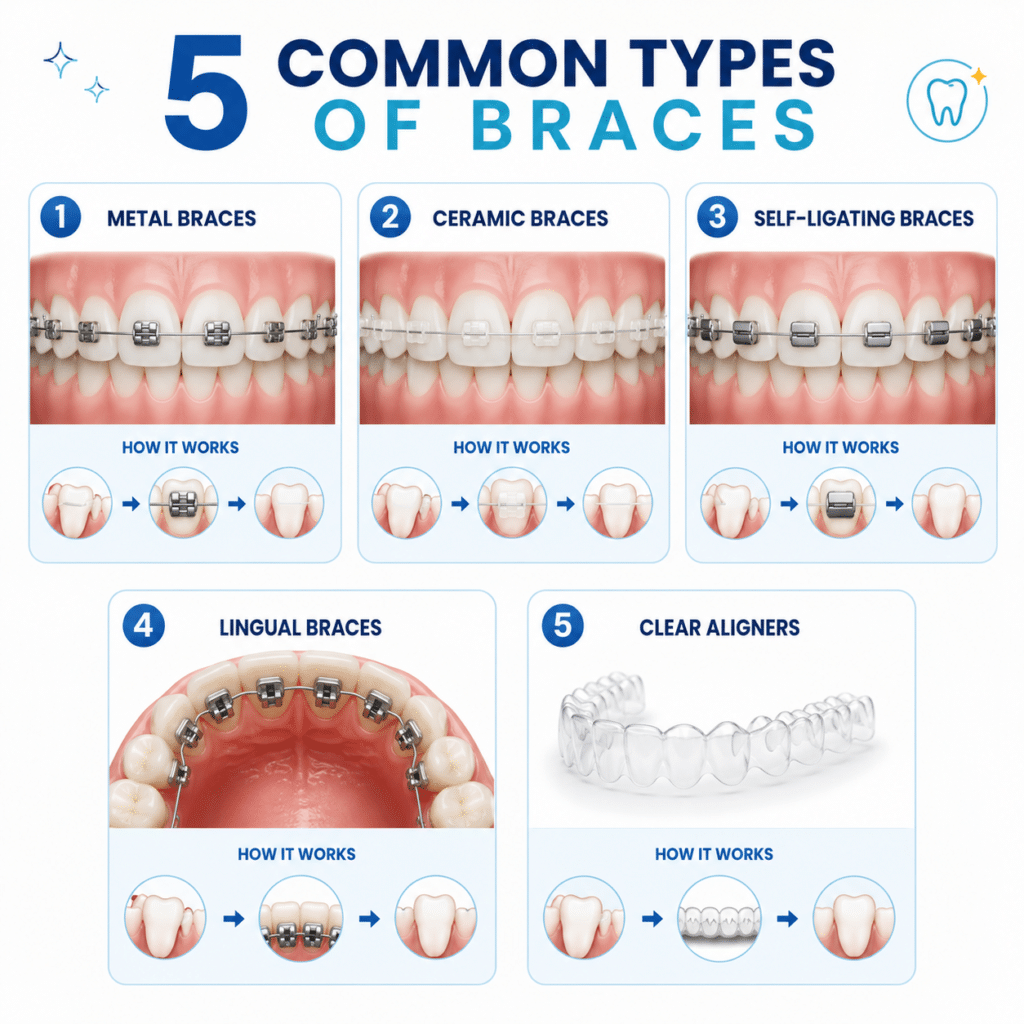
5 Common Types of Braces
There are different kinds of braces. Each one has its own benefits depending on your child’s needs and lifestyle.
When Should a Child See an Orthodontist?
The American Association of Orthodontists recommends that children have their first orthodontic check by age 7. This does not always mean they need braces right away.
It simply helps spot problems early, like jaw growth issues, crowding, or bite problems. Early orthodontic treatment can sometimes make future treatment easier and shorter.
How Long Do Braces Take?
Most children wear braces for 12 to 24 months, but some may need them for a shorter or longer time depending on their teeth and bite.
Treatment time usually depends on:
- The dental problem: Mild spacing issues often take less time than severe crowding or bite problems.
- Age: Younger teeth often move faster because the jaw is still growing.
- Patient care: Following instructions, wearing rubber bands, and keeping appointments can help speed up treatment.
- Type of orthodontic treatment: Braces, clear aligners like Invisalign, and self-ligating braces may work at different speeds.
Your orthodontist will create a treatment plan based on your child’s smile, oral health, and orthodontic needs.
Do Braces Hurt?
Braces usually do not hurt when they are placed. But it is normal to feel soreness for a few days after getting braces or after adjustments.
This happens because the teeth are starting to move. The discomfort is usually mild and temporary. You can help your child feel better by:
- Eating soft foods
- Using orthodontic wax
- Rinsing with warm salt water
- Taking over-the-counter pain medicine if needed
The Mayo Clinic notes that mild soreness from dental treatments is common and usually improves quickly.
How Should You Care for Braces?
Good dental care plays an important role during orthodontic treatment.
Braces can trap food and plaque around brackets and wires, which can increase the risk of cavities, tooth decay, bad breath, and gum disease.
Daily care helps keep teeth clean and protects your child’s oral health during treatment.
1- Brush After Every Meal
Brush carefully after eating to remove food and plaque from around the brackets and wires. Use a soft toothbrush and fluoride toothpaste to clean all tooth surfaces. Good brushing helps prevent stains, cavities, and plaque buildup.
2- Floss Every Day
Flossing removes food and plaque from between the teeth where a toothbrush cannot reach.
Braces can make flossing harder, but orthodontic flossers or threaders can make it easier. Daily flossing keeps gums healthy and lowers the risk of gum disease.
3- Avoid Hard and Sticky Foods
Hard and sticky foods can damage braces by breaking brackets or bending wires. Avoid foods like gum, caramel, popcorn, ice, and hard candy. Soft foods are safer and help protect the braces during treatment.
4- Rinse Your Mouth After Eating
Rinsing with water after meals helps wash away food particles and lowers acid buildup in the mouth.
This simple step supports better oral hygiene, especially when brushing right away is not possible.
5- Keep Regular Dental Visits
Regular dental cleanings and orthodontic checkups help keep treatment on track.
Your dentist and orthodontist can check your child’s teeth, gums, and braces to make sure everything stays healthy and works properly.
Strong oral hygiene keeps braces working well and helps build a healthy smile.
Give Your Child the Gift of a Healthy Smile
PVPD doesn’t just treat teeth; we build lasting relationships with families. More confident kids. More comfortable appointments. More reasons to smile. Our patients leave happier and healthier, visit after visit.
Serving families across Scottsdale, because every child deserves a great smile.
Final Note!
Braces do more than straighten teeth. They help fix bite problems, improve teeth alignment, support better oral health, and make brushing and flossing easier.
Early orthodontic treatment can also help guide jaw growth and prevent bigger dental problems later.
If you think your child may need braces or bite correction, booking an orthodontic consultation can help you understand the next best step.
Early care can make treatment easier and help protect your child’s smile for the future.
Pediatric Dental Specialist at PVPD

Dr. Olga
Dr. Olga brings years of specialized pediatric dental expertise and a genuine passion for children’s oral health to the PVPD team. She specializes in creating anxiety-free dental experiences and early-intervention care strategies that set children up for a lifetime of healthy smiles.
Medically reviewed by Dr. Olga Dolghier, DDS, Pediatric Dentist at Palm Valley Pediatric Dentistry & Orthodontics.


