When to Stop Using Gauze After Tooth Extraction?
Bleeding after wisdom tooth extraction is normal during the first few hours of recovery. However, many patients become concerned when the gauze continues soaking with blood or when they are unsure how long they should keep changing it.
After the tooth extraction, using the wire gauze is quite common. It is used to slow bleeding after oral surgery. Proper gauze use helps shield the extraction site while promoting stable blood clot formation, an important part of the healing process that also reduces the risk of dry socket.
At Palm Valley Pediatric Dentistry & Orthodontics, we help patients recover safely after wisdom tooth removal with clear aftercare guidance. This guide covers when to stop using gauze and the signs of normal healing.
How to Use Gauze After Tooth Extraction?
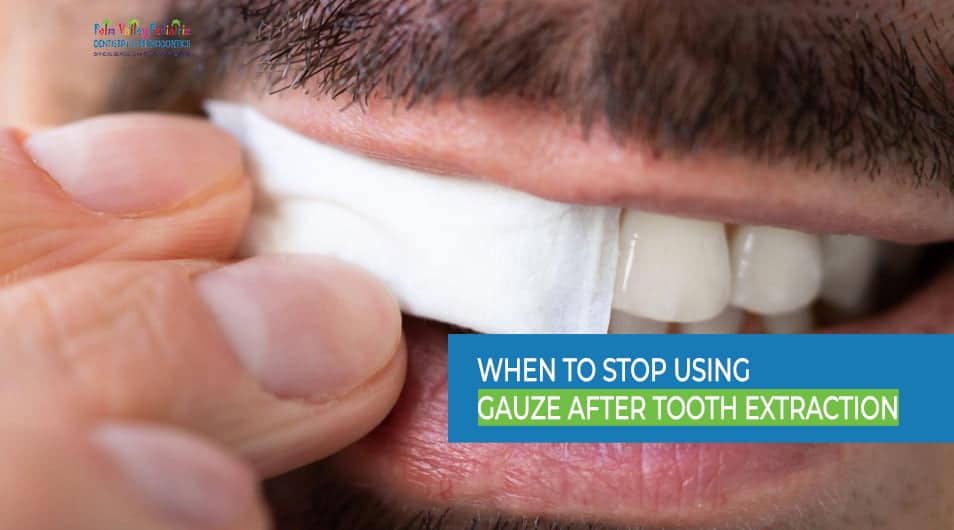
Following a tooth extraction, dentists typically place gauze over the extraction site to reduce bleeding and protect it during the initial healing stage. Biting down gently on the gauze creates pressure, which helps the body form a protective blood clot and supports proper healing.
Leave the Initial Gauze Pad Undisturbed
Keep the first gauze pad in position for about 30 to 45 minutes following the tooth extraction to help the area clot properly. During this time, avoid talking, chewing, spitting, or repeatedly checking the area, as this can disturb the clot and restart bleeding.
Replacing Blood-Soaked Gauze
Once the gauze becomes saturated with blood, switch it out for a fresh piece. Fold the clean gauze, position it directly over the extraction area, and apply steady pressure by biting down gently for an additional 30 to 45 minutes.
You should only change the gauze when necessary. Frequent removal or replacement can interfere with clot formation and delay healing.
How Long Should You Use Gauze?
Most patients only need gauze for the first few hours after a wisdom tooth extraction. Light bleeding or slightly pink-tinted saliva is common during the early stages of healing.
In many cases, bleeding slows down enough within 3 to 4 hours, and the gauze is no longer needed. Once a stable clot has formed and active bleeding has stopped, remove the gauze and allow the area to heal naturally.
Important Tip
Do not keep gauze in your mouth for no reason after the bleeding has stopped. Leaving it in too long may irritate the extraction site or accidentally disturb the blood clot.

Is Your Child’s Smile on the Right Track?
Early dental visits aren’t just about cleaning teeth, they’re about catching problems before they become costly and painful. Our pediatric specialists create personalized care plans that grow with your child, from their very first tooth through their teen years.
Gentle, kid-friendly care in a welcoming environment.
When to Stop Using Gauze After a Tooth Extraction?
In most cases, bleeding slows within 2 to 4 hours as a blood clot forms over the extraction site.
Monitor Bleeding After the First 30 to 45 Minutes
After the procedure, keep steady pressure on the gauze by biting down gently for 30 to 45 minutes. This helps slow the bleeding and encourages the formation of a stable blood clot at the extraction site.
Once you remove the gauze, check the area carefully. If the bleeding has mostly stopped and you only notice light pink saliva, you usually no longer need gauze.
Continue Using Gauze if Bleeding Persists
If you still notice active, bright red bleeding or the gauze becomes soaked with blood, replace it with a clean piece. Keep light, steady pressure on the area and replace the gauze every 30 to 45 minutes whenever it becomes saturated.
Avoid changing the gauze too often, as repeated removal may disturb the clot and prolong bleeding.
Mild Oozing Is Normal
Small amounts of blood mixed with saliva during the first 24 hours are completely normal after a wisdom tooth extraction. Light pink saliva does not usually mean you need more gauze.
Once active bleeding has stopped and a stable clot has formed, remove the gauze and allow the area to heal naturally.
After Care Tips About the Gauze Pad
A gauze pad is a sensitive post-extraction tool that can help form a blood clot. Here are some things you must do to prevent any discomfort.
1: Eating:
Try not to chew on the side of the extraction area during the first few hours after surgery. After the bleeding has slowed, choose soft foods such as yogurt, mashed potatoes, smoothies, or soup to help protect the blood clot and support proper healing.
Eating puts pressure on the gums, which can easily dislodge or damage blood clots.
If you are considering eating with gauze in your mouth after extraction, do not. Primarily, dentists recommend not to eat after an extraction.
So, you must avoid eating after extraction to prevent dislodgement from pressure.
2: Spitting
Now, you might be thinking, when can I spit after a tooth extraction?
Do not spit forcefully during the first 24 hours after the extraction, as the pressure inside the mouth can disturb the blood clot and increase the risk of developing a dry socket.
You should dribble out of your mouth if you need to spit at any cost.
3: Rinsing
Post-extraction aftercare must be taken very seriously as the extraction site becomes sensitive. So, one must be very careful while rinsing the mouth after extraction.
Most dentists recommend you refrain from rinsing your mouth entirely for 24 hours.
The solid reason is that vigorous rising can dislodge the blood clot. For rinsing, use saltwater on the first night after tooth extraction.
4: Medication
If you experience any discomfort after extraction or when using the gauze in your mouth, consult your dentist. Before surgery, you may take medication if your dentist approves; otherwise, take painkillers after surgery.
5: Swelling
Some swelling is normal after a wisdom tooth extraction and is often most noticeable during the first 48 hours, then slowly subsides.
Applying a cold compress for 10 to 15 minutes at a time during the first day can help reduce inflammation and discomfort.
If you also feel swelling at the extraction site after tooth extraction, apply a cold compress to the area for 10 minutes. Keep placing the cold compress on and off until it goes away.
Give Your Child the Gift of a Healthy Smile
PVPD doesn’t just treat teeth; we build lasting relationships with families. More confident kids. More comfortable appointments. More reasons to smile. Our patients leave happier and healthier, visit after visit.
Serving families across Scottsdale, because every child deserves a great smile.
Final Verdict:
Tooth extraction can be scary for individuals going to the dentist for the first time. So, using the gauze pad to stop the blood is a good choice.
Using gauze correctly after a wisdom tooth extraction helps protect the developing blood clot and promotes proper healing of the surgical site.
In most cases, gauze is no longer needed once the bleeding decreases to light spotting, which typically happens within a few hours after the procedure.
If you continue experiencing heavy bleeding or notice worsening symptoms during recovery, reach out to your dentist as soon as possible for professional guidance.
Follow your dentist’s instructions to manage bleeding from the tooth extraction with gauze.
Frequently Asked Questions
How long should gauze stay in place after a tooth extraction?
You can wear gauze after tooth extraction until the bleeding stops. Remember to replace it after 30-45 minutes.
Is it safe to sleep with gauze in your mouth after wisdom tooth removal?
No. Dentists generally recommend removing gauze before sleeping to avoid choking hazards and unnecessary irritation. If heavy bleeding continues for several hours, contact your dentist for guidance.
What happens if you run out of gauze after a tooth extraction?
If you run out of gauze pads, you can use a tea bag to soak up the blood from the extraction site.
Pediatric Dental Specialist at PVPD

Dr. Olga
Dr. Olga brings years of specialized pediatric dental expertise and a genuine passion for children’s oral health to the PVPD team. She specializes in creating anxiety-free dental experiences and early-intervention care strategies that set children up for a lifetime of healthy smiles.
Medically reviewed by Dr. Olga Dolghier, DDS, Pediatric Dentist at Palm Valley Pediatric Dentistry & Orthodontics.