Silver Teeth for Kids: Cost, Safety, Lifespan, and When a Child Needs a Crown
Silver teeth for kids are stainless steel caps placed over a damaged baby tooth to protect it and help it work normally. They are used when a tooth has a big cavity, is broken, or is too weak for a regular filling. These caps cover the entire tooth, strengthen it, and help it stay in place until the adult tooth is ready to come in. They are safe, long-lasting, and commonly used to protect children’s teeth.
These crowns cover the entire tooth, strengthen it, and help it continue working until the adult tooth is ready to come in.

Parents often seek dental care when their child experiences ongoing tooth pain, visible damage, or recurring cavities. If too much of the tooth structure is lost, a filling may fail during normal chewing, making a crown the more reliable long-term solution.
At Palm Valley Pediatric Dentistry & Orthodontics in Scottsdale, we provide gentle care for children, using trusted treatments such as stainless steel crowns to protect teeth and support healthy development.
What Are Silver Teeth for Kids?
Silver teeth for children are durable stainless steel crowns designed to cover and protect damaged baby teeth. Dentists use them to fully cover a damaged baby tooth so it can stay strong and work normally again.
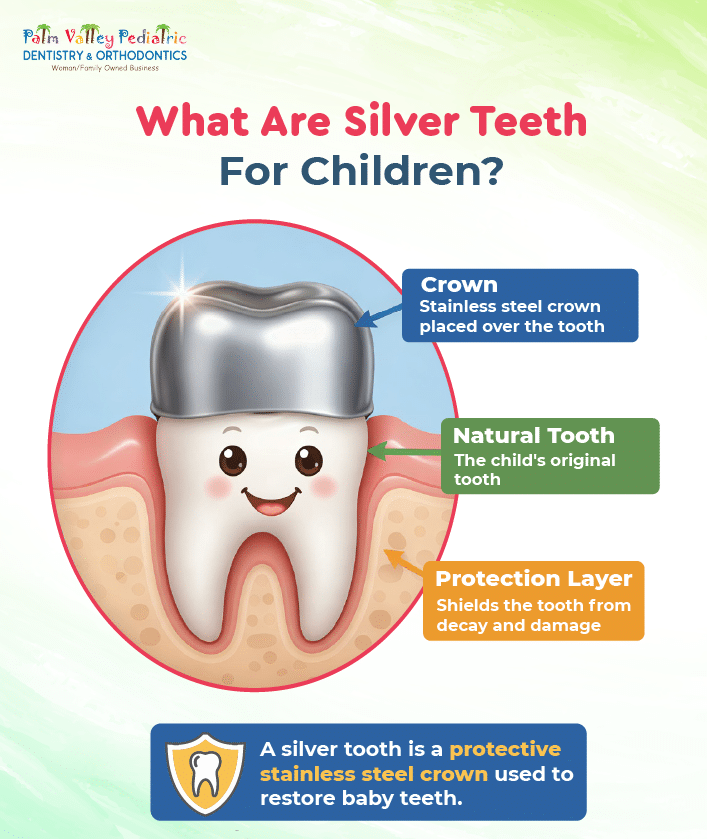
These crowns protect the tooth from further tooth decay, breakage, and infection.
They are a common treatment in pediatric dentistry because baby teeth are smaller and can get damaged quickly.
Rather than removing the tooth, a crown can preserve it and support your child’s overall oral health.
These crowns are not permanent solutions. Silver crowns typically remain in place for several years until the baby tooth naturally loosens and is replaced by the permanent tooth.
In most situations, they function well for several years without needing any replacement.

Is Your Child’s Smile on the Right Track?
Early dental visits aren’t just about cleaning teeth, they’re about catching problems before they become costly and painful. Our pediatric specialists create personalized care plans that grow with your child, from their very first tooth through their teen years.
Gentle, kid-friendly care in a welcoming environment.
How Silver Teeth Help Protect Baby Teeth
Baby teeth play a key role in a child’s growth and dental health. They allow children to chew comfortably, speak clearly, and maintain good oral health as they develop.
These teeth are not just temporary placeholders. Proper function supports normal jaw development and helps build clear speech patterns. Adequate spacing is also maintained, giving permanent teeth the room they need to come in straight and in the correct position.
A weakened or injured baby tooth is more likely to break or develop an infection.
A stainless steel crown reinforces the weakened tooth and helps stabilize normal chewing.
This protection helps prevent bacteria from reaching the tooth and reduces the risk of discomfort or infection. This helps the tooth remain in place until it falls out at the right time.
A clinical study found that stainless steel crowns have a very high success rate of about 96–97% in children. In many cases, the crown remains attached until the baby tooth loosens and comes out naturally. Out of 100 silver teeth placed, about 96-97 work perfectly over time.
Even more interesting, the study compared silver crowns with more “cosmetic” tooth-colored crowns and found that both worked well. Stainless steel crowns were just as strong and more reliable for long-term use in back teeth.
Benefits of Silver Teeth
Cavities in baby teeth may form because of eating habits, brushing routines, or the natural condition of the tooth enamel. When decay is too extensive for a standard filling, dentists may recommend a silver filling. The purpose of this treatment is to protect the tooth so it can keep doing its job until it naturally comes out.
1. Reliable and Durable Protection
Silver fillings fully cover the entire tooth, making them stronger than standard fillings for large cavities. This full coverage protects the tooth from cracking, breaking, or developing new decay, especially in children who chew hard foods.
Because stainless steel crowns are made to withstand chewing and daily wear, they provide reliable protection for the rest of the baby tooth’s life.
2. Helps Prevent Infection
A stainless steel crown seals the tooth after treatment, reducing the risk of bacteria entering weak areas of the tooth. This protection lowers the risk of infection, swelling, and future dental emergencies.
3. Supports Normal Chewing and Tooth Stability
Damage to a baby tooth can make chewing uncomfortable and affect eating habits. Restoring strength and stability allows the tooth to function normally during meals and daily activities.
4. Reduces Repeat Treatments and Emergency Visits
Long-lasting protection helps prevent fillings from breaking or falling out. Fewer failures mean fewer return visits and a lower risk of unexpected dental emergencies.
5. Cost-Effective Long-Term Treatment
Silver teeth are often more affordable than repeated fillings or urgent dental care. Because they are durable and long-lasting, they help families manage dental costs while providing dependable protection.
Possible Drawbacks of Silver Teeth
Although they have some drawbacks, silver crowns are still considered one of the most dependable options for restoring badly damaged baby teeth. Dentists often recommend them because they provide strong, long-lasting protection when a tooth is too weak for a filling.
1. Appearance (Aesthetic Concerns)
Silver teeth do not match the natural color of surrounding teeth, which can make them more noticeable, especially on front teeth. For this reason, dentists often recommend tooth-colored crowns for visible areas when appearance is an important concern for families.
2. Limited Use for Front Teeth
Silver teeth are most commonly used on back teeth because those teeth handle the strongest chewing forces. While they can be placed on front teeth when needed, dentists may recommend tooth-colored crowns when visibility and appearance are priorities.
3. Common Safety Questions About Materials
Some parents have concerns about the safety of dental materials. Stainless steel crowns used for children do not contain mercury and are widely considered safe by pediatric dental professionals.
These crowns have been used for decades to restore baby teeth, support normal chewing, and protect teeth from further damage, with a long record of safe and effective use.
Are Silver Teeth Permanent or Temporary?
Silver teeth are not permanent. They are only for baby teeth.
When a baby tooth becomes loose and ready to fall out, the crown naturally comes out with it. This process is a routine stage in a child’s oral development.
In most cases, the crown remains in place for several years. The duration of the crown depends mainly on the child’s age and the tooth’s location in the mouth.
Give Your Child the Gift of a Healthy Smile
PVPD doesn’t just treat teeth; we build lasting relationships with families. More confident kids. More comfortable appointments. More reasons to smile. Our patients leave happier and healthier, visit after visit.
Serving families across Scottsdale, because every child deserves a great smile.
Why Children Need Silver Teeth and Warning Signs to Watch For
Children may need silver teeth when a baby tooth is badly damaged by deep decay, injury, or infection. A stainless steel crown shields the tooth and helps hold it in position until the adult tooth is ready to erupt.
Retaining baby teeth helps children chew comfortably, speak clearly, and maintain correct spacing for permanent teeth.
Certain warning signs suggest the tooth may not be strong enough to support a regular filling. In these cases, a crown provides stronger, long-term protection. The following signs may suggest that your child could benefit from a silver filling.
1. Ongoing Tooth Pain or Sensitivity
Ongoing discomfort or sensitivity to hot, cold, or sugary foods can signal that decay has progressed into the inner parts of the tooth.
If a significant amount of the tooth is damaged, a filling may not be strong enough, and a crown is usually advised for better protection.
2. Visible Cavities or Tooth Damage
Large cavities, visible holes, dark spots, or deep cracks can weaken the tooth structure.
When too much tooth surface is lost, a filling may break or fall out, making a stainless steel crown the more reliable treatment.
3. Trouble While Eating or Chewing
If your child avoids chewing on one side of the mouth or complains of pain while biting, the tooth may be weak or sensitive to pressure.
This often happens when decay has reduced the tooth’s strength, making full coverage with a crown necessary.
4. Swollen or Red Gums Around a Tooth
Inflammation, soreness, or redness around a tooth can indicate severe decay or a possible infection.
After treating the infection, a crown may be placed to protect the remaining tooth and reduce the risk of further damage.
5. Broken, Weak, or Failing Teeth
If a tooth fractures easily or a filling keeps failing, the remaining structure may be too weak to hold another restoration. By covering the full tooth, a stainless steel crown helps keep a damaged baby tooth safe and stable.
Alternatives to Silver Teeth for Baby Teeth
Silver teeth are a reliable treatment for severely damaged baby teeth. The best option can vary based on the extent of the cavity, the strength of the tooth, its location, and the patient’s preference for appearance.
White Crowns (Tooth-Colored Crowns)
White crowns are designed to match the natural color of your child’s teeth, making them a preferred option for front teeth or other visible areas. They provide full coverage similar to stainless steel crowns while improving appearance.
These crowns typically cost more than silver crowns and may be slightly less durable, but they are often recommended when appearance is important and the tooth still needs full protection.
Dental Fillings
Dentists typically use fillings when the cavity is limited and there is still sufficient healthy tooth structure. They repair the damaged area without covering the entire tooth.
However, fillings may wear down or fail if the tooth is weak or the cavity is large. In those situations, a stainless steel crown usually provides stronger and longer-lasting protection.
Tooth Extraction
If repair is not possible, removing the baby tooth may be the most suitable solution. Dentists usually suggest removing the tooth when there is serious infection, widespread decay, or major structural damage.
Following extraction, a space maintainer may be used to keep surrounding teeth in position and guide proper alignment of the permanent tooth.
Filling or Crown: Choosing the Right Treatment
Pediatric dentists choose treatment based on the condition of the tooth and the extent of damage. They assess how much healthy tooth structure remains, how deep the cavity extends, and whether the tooth can handle normal chewing forces.
When a significant portion of the tooth is weakened or missing, a crown is often recommended because it provides stronger and more reliable support than a filling.
Dentists also consider the tooth’s location in the mouth. Back teeth, especially molars, handle greater chewing pressure and may require more durable protection.
A child’s age and cavity history are also important factors. Children who develop cavities frequently or who have received pulp therapy often need additional reinforcement to keep the tooth stable.
In these situations, a stainless steel crown offers full coverage and dependable long-term protection compared to a standard filling.
| Factor | Filling | Stainless Steel Crown |
| Amount of Tooth Damage | Used for small to moderate cavities | Used when a large portion of the tooth is damaged or weakened |
| Strength and Durability | Restores part of the tooth | Covers and protects the entire tooth |
| Protection Level | Provides basic repair | Provides full coverage and stronger protection |
| Use After Pulp Therapy | Usually not recommended | Commonly recommended for added protection |
| Longevity | May need replacement if damage spreads | Designed to last until the baby tooth falls out naturally |
| Best For | Minor decay with strong remaining tooth structure | Extensive decay, fractures, or weakened teeth |
| Chewing Support | Suitable for lighter chewing pressure | Better for molars that handle heavy chewing |
What Happens During Silver Tooth Treatment?
Silver tooth treatment for children is a simple procedure that dentists usually complete in a single visit.
The dentist begins by evaluating the tooth and may use X-rays to determine the extent of the decay.
After that, the dentist takes out the decayed or damaged part of the tooth to prevent further problems. After cleaning, the tooth is adjusted so the crown can be placed correctly.
The dentist then places a stainless steel crown over the tooth and adjusts it to ensure the bite feels comfortable and natural.
Once placed, the crown supports daily biting and chewing while reducing the risk of future complications.
How Long Does a Dental Visit for a Crown Take?
The time needed for the appointment can vary depending on the condition of the tooth and the treatment involved. In most simple cases, treating a single tooth takes around 30 to 60 minutes.
If multiple teeth need attention, or if sedation is involved to help the child stay comfortable, the visit can take longer than usual.
Once the procedure finishes, most children can return to their normal activities the same day.
Recovery is generally smooth and quick. A mild feeling of soreness or sensitivity may appear after the numbness fades, but it typically settles within a day without any special care.
Your child can start eating normally soon after the treatment, although soft foods may feel more comfortable at first. The mouth quickly adjusts to the new crown.
How Long Do Silver Teeth Last?
Silver crowns on children’s teeth stay in place for about three to ten years. The duration varies for each child.
How long they last mainly depends on two factors: the child’s age and the tooth’s position in the mouth.
When a crown is fitted on a tooth in a young child, it remains useful longer, since that tooth has more years before it naturally falls out.
On the other hand, if the tooth is already close to its natural shedding stage, the child may need a crown for a shorter duration.
Daily brushing, proper oral hygiene habits, and routine dental checkups help the crown remain stable and function well for as long as possible.
Silver crowns usually do not need replacement. However, a dentist may check or fix them if they become loose or worn.
Cost of Silver Teeth in Scottsdale!
The price of a silver crown depends on the tooth’s condition and the type of treatment required. In Scottsdale, most silver teeth cost between $300 to $800 per tooth. This makes them a cost-effective option because they are durable and often last until the baby tooth falls out naturally.
If more dental work is needed, the final cost may be higher. For example, pulp therapy may add around $150 to $400. Sedation dentistry can add about $100 to $500, depending on the method used.
Does Insurance Cover Silver Teeth?
Many dental insurance plans in Arizona cover silver crowns for kids because they are medically necessary rather than cosmetic.
Insurance may cover around 50% to 80% of the cost, depending on the plan, deductible, and yearly limits. Most dental offices check insurance in advance and provide a clear cost estimate so parents know what to expect.
How to Care for a Child’s Silver Tooth?
Taking care of a silver tooth is simple and similar to normal oral care for kids.
Book Silver Teeth Treatment for Kids in Scottsdale
If your child has tooth pain, a large cavity, or a weak tooth, early treatment can prevent more serious problems later. Addressing dental issues promptly helps protect your child’s comfort and long-term oral health.
At Palm Valley Pediatric Dentistry & Orthodontics in Scottsdale, we provide gentle, stress-free care designed specifically for children. Our team uses safe, proven treatments such as stainless steel crowns to protect teeth, relieve discomfort, and prevent future dental complications.
Plan a dental visit now to protect your child’s smile and avoid more serious problems in the future. Early care also supports healthy eating, clear speech, and confident smiles.
People Also Ask!
Is it painful to remove a silver tooth?
The process is generally comfortable because the dentist numbs the area with local anesthesia before removing the crown or tooth. Most children experience only slight soreness after the appointment
Discomfort usually fades within a few days as the gums recover.
Can silver teeth hurt?
Silver crowns typically do not cause pain by themselves. Discomfort may occur if there is infection, decay under the crown, gum irritation, or pressure from nearby teeth.
Reach out to your dentist if discomfort, swelling, or sensitivity persists for several days or worsens.
Are silver teeth more expensive?
Silver teeth are usually less expensive than most tooth-colored crowns. They are often viewed as a practical option because they last a long time and rarely require additional repairs or replacement.
Can kids eat normally with silver teeth?
Yes, most children can return to their regular diet after the numbness from the procedure fades. Children usually go back to their normal diet later the same day or the day after treatment.
Dentists often advise avoiding hard or sticky foods for the first couple of days to help protect the new crown.
Final Words
When a child’s tooth is badly damaged, the goal is to protect it and keep it functioning until the permanent tooth is ready to erupt. Silver teeth provide dependable protection by stopping further damage, reducing discomfort, and supporting normal chewing, speech, and proper tooth spacing.
Although silver teeth may be more noticeable than tooth-colored options, they are strong, safe, and widely used in pediatric dentistry. Since these crowns do not contain mercury, they are considered safe and reliable. Taking action when your child first shows signs of trouble can stop the problem from getting worse.
The pediatric dental team at Palm Valley Pediatric Dentistry and Orthodontics provides gentle, effective care focused on keeping your child comfortable and their smile healthy.
Pediatric Dental Specialist at PVPD

Dr. Olga
Dr. Olga brings years of specialized pediatric dental expertise and a genuine passion for children’s oral health to the PVPD team. She specializes in creating anxiety-free dental experiences and early-intervention care strategies that set children up for a lifetime of healthy smiles.
Medically reviewed by Dr. Olga Dolghier, DDS, Pediatric Dentist at Palm Valley Pediatric Dentistry & Orthodontics.